Can You Clean Makeup Brushes With Dish Soap?
Yes, you can use it. Can you clean makeup brushes with dish soap? The answer is that standard dish liquid strips heavy, oil-based foundation fast from synthetic bristles. However, natural animal hairs will snap and turn brittle if you wash them this way often.
When dish soap cleans makeup brushes safely

Match your brush material and makeup type to find the right cleaning choice.
| Your situation | Answer | Why |
|---|---|---|
| Synthetic brush with cream foundation | Yes | Dish soap cuts heavy oils quickly. |
| Synthetic brush with silicone primer | Yes | Degreasers break down silicone buildup easily. |
| Natural goat hair with powder | No | Soap strips natural protective cuticle oils. |
| Natural squirrel or sable hair | No | Delicate hairs dry out and break. |
| Beauty blender or latex sponge | Yes | Soap clears dense pigment inside pores. |
| Wooden handle with loose ferrule | No | Water and soap dissolve inner glue. |
Why soap formula matters
Dish soap cleans by using harsh surfactants designed to break surface tension and pull grease away from hard plates. Synthetic fibers, like nylon or taklon, are basically plastic threads. They don’t have an outer cuticle, so strong detergents won’t make them crack. The trade-off is clear: you get unmatched degreasing power on heavy makeup, but you risk drying out softer fibers permanently.
Natural hair is different because it comes from animals like goats, horses, or squirrels. These hairs hold internal moisture and have a delicate protective layer, exactly like human hair. Strong liquid dish detergents strip those natural oils completely. Over time, the hair shafts split, feel scratchy on your eyelids, and shed during use.
Look at the ferrule, which is the metal band holding the hairs together. Dish soap can cut right through the glue holding those bristles inside if you soak the base. If your brush uses synthetic bristles coated in liquid makeup, dish soap is safe to use; if your brush uses animal hair for dry powders, switch to baby shampoo instead.
How to wash synthetic tools
Follow these steps to remove built-up product without ruining the brush shape or weakening the glue.
- Rinse the tips under lukewarm tap water pointing downward, keeping the metal ferrule dry so moisture doesn’t seep inside. The bristle ends will clump together under the flow.
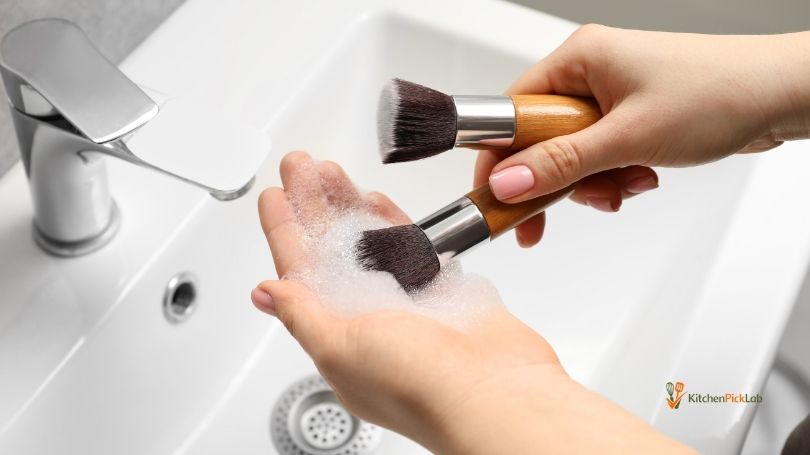
- Apply one drop of dish liquid to a textured silicone mat or the palm of your hand. You’ll see a small pool of concentrated soap ready for use.
- Swirl the bristles gently across your palm using light, circular motions for roughly 20 seconds. Makeup will release into the lather, turning the white bubbles into a tinted paste.
- Rinse thoroughly under running water until the runoff is clear. Squeeze the bristles gently; no leftover foam should appear between your fingers.
- Reshape the head with your fingers to return the fibers to their original shape. The brush will look neat, with all hairs pointing straight forward.
- Lay it flat on a clean towel with the bristles hanging slightly off the counter edge to dry for 8 to 12 hours. The tool is ready when the center hairs feel completely dry to the touch.
This method isn’t for high-end animal hair blending brushes, which need mild shampoo and brush conditioner instead.
The drying angle mistake
The single biggest mistake people make is drying their brushes upright in a cup or jar. When you stand wet brushes upright, water and residual soap run straight downward into the metal ferrule. This moisture dissolves the water-soluble glue and rots wooden handles from the inside out, making the wood swell and peel. You’ll avoid this completely by laying brushes flat on a clean dry towel. Never set them upright until the center hairs are bone dry.
When to stop and get help
- The metal ferrule separates completely from the wooden handle, which requires industrial water-resistant epoxy rather than basic glue.
- Green, white, or black spots appear near the base of the bristles, meaning deep mold has formed inside the damp ferrule.
- Your skin shows severe allergic reactions, swelling, or sudden painful breakouts after using cleaned brushes.
- The brush hairs shed constantly in chunks across your face, which means the inner binding has disintegrated beyond repair.
A board-certified dermatologist should treat persistent skin infections caused by contaminated beauty tools.
Frequently asked questions
Can Dawn dish soap ruin makeup brushes?
Yes, on natural animal hairs. Dawn contains concentrated degreasers that strip moisture from natural cuticles, leaving bristles brittle and scratchy. On synthetic nylon fibers, it cleans heavy cream foundations safely without melting the material.
How often should you wash makeup brushes?
Every 7 to 10 days for tools used with liquid products. Brushes used for powders can go two weeks between deep washes. Washing on this schedule prevents oil buildup and stops bacteria from multiplying inside the bristles.
Can you use dish soap on beauty blenders?
Yes, liquid dish soap works well on makeup sponges. Sponges trap thick oils and foundations deep inside their porous structure. Dish soap breaks down those stubborn cosmetic oils, but you must rinse thoroughly until the water runs clear.
Does dish soap sanitize makeup brushes?
No, standard dish soap lifts dirt rather than sanitizing. It removes surface grease, cosmetic pigments, and trapped dead skin cells, carrying bacteria down the drain. It doesn’t sterilize the tool like medical-grade alcohol or an autoclave would.
Why do my brushes feel stiff after using dish soap?
Soap residue stayed behind in the bristles. When dish soap isn’t washed out completely, the liquid dries hard inside the fibers. Rinse the brush head again under warm running water for 30 seconds to dissolve the trapped soap.
Is regular hand soap better than dish soap for brushes?
No, hand soap often leaves behind moisturizing lotions. Bar soaps and creamy hand washes coat brush bristles with oils that cause streaky makeup application later. Mild baby shampoo works better than hand soap for delicate brush hairs.
What to do next
Rinse your synthetic foundation brushes under warm water right now and work a single drop of soap through the ends. You’ll see thick foundation release into the lather, leaving the bristles soft and completely free of pigment. If hairs start pulling out from the ferrule during washing, stop immediately and replace the brush.