Can You Boil Potatoes In A Dutch Oven? Yes, Here Is How
Yes, you can cook them this way without damaging your cookware. Anyone who wants to know if you can safely boil potatoes in a dutch oven can use either enameled cast iron or bare cast iron with water. Chipping or thermal shock will only happen if you heat the dry pot empty on high heat or drop cold water into a screaming hot pot. Set your pot on the burner with the potatoes and cold water already inside before you turn on the flame.
When it’s yes and when it’s no
Choose your cookware based on the coating and your recipe plans.
| Your situation | Answer | Why |
|---|---|---|
| Enameled cast iron pot | Yes | Smooth glass enamel handles boiling water easily. |
| Bare cast iron with solid seasoning | Yes | Quick boiling won’t strip thick oil layers. |
| Unseasoned bare iron pot | Yes | Requires immediate drying and oiling after use to prevent rust. |
| Boiling whole large potatoes | Yes | Heavy cast iron walls hold heat very steady. |
| Making potato soup in one pot | Yes | You can boil, mash, and simmer together. |
| Chipped interior enamel coating | No | Loose glass shards can enter your food easily. |
Heat retention and enamel care
Cast iron holds thermal energy better than thin stainless steel or aluminum. Once a heavy pot reaches 212°F, the water stays at a rolling boil even after you drop in heavy vegetables. This constant temperature cooks dense root crops evenly from the peel to the center. Rapid temperature changes can cause thermal shock in enameled cast iron, so you should avoid placing a cold pot on high heat.
Boiling also creates an honest trade-off: a heavy five-quart Dutch oven keeps water hot longer, but it takes several extra minutes to reach a boil compared to thin aluminum. Acidic foods sometimes react with bare metal, but plain water and starchy spuds are safe for seasoned surfaces. This method isn’t for someone who wants a fast five-minute side dish, because heating thick iron walls requires extra patience.
Check your pot’s interior before cooking. If your enamel shows hairline cracks or bare spots, leave it on the shelf; if the enamel is smooth, use it without worry.
Boiling potatoes in heavy cookware
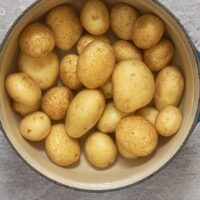
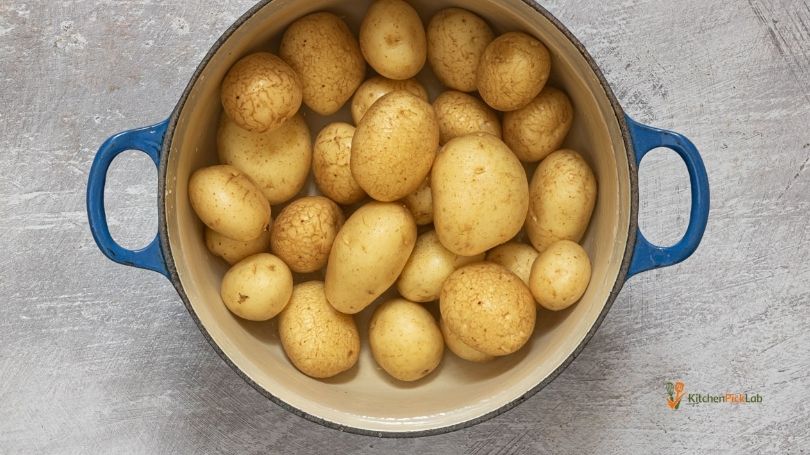
- Place cold potatoes in the pot before adding liquids so they heat at the same rate as the heavy cast iron. A flat, single layer across the bottom shows they have enough space.
- Pour in enough cold tap water to cover the tops by at least 1 inch. Seeing water clearly over the highest potato peak shows the level is correct.
- Add 1 tablespoon of salt for every 2 pounds of potatoes to season them during boiling. Small salt grains dissolving quickly on the bottom shows the water is ready.
- Heat over medium heat rather than high to protect the pot’s interior surface. Bubbles rising steadily across the surface shows the water has reached a safe, rolling boil.
- Cook for 15 to 20 minutes for cubed pieces, or 30 to 40 minutes for large, whole spuds. A metal fork sliding easily into the center without resistance shows the potato is done.
- Drain the hot water immediately using a colander or by venting the lid carefully. Dry steam rising off the pale potato skins shows all excess surface moisture has left the pot.
Dropping spuds into boiling water
Dropping cold potatoes into pre-boiled water ruins your food and risks breaking your pot. This mistake costs you an entire batch of wasted food and about 40 minutes of prep time. Thermal shock from adding cold water to a dry, preheated enameled pot can cause the enamel to crack. You can prevent this failure with one simple rule: always start your potatoes in cold water before lighting the stove burner.
When to stop and get help
- The enamel coating chips or flakes off inside, because loose glass fragments ruin food safety.
- The cast iron pot cracks through the base, because thermal stress breaks the structural metal beyond home repair.
- Bare iron develops severe, deep pitting rust, because heavy corrosion requires mechanical wire-brushing or professional sandblasting.
If your pot suffers structural iron cracks or peeling enamel, stop using it immediately. Broken enamel can’t be recoated safely at home, so recycle the piece or contact the cookware manufacturer for warranty replacement.
Frequently asked questions
Can you boil red potatoes in a Dutch oven?
Yes, red potatoes cook very well in heavy iron pots. Their waxy texture helps them keep their shape during cooking. Keep the skins on and slice them into equal two-inch chunks so every piece finishes boiling at the same time.
How long does it take to boil potatoes in a Dutch oven?
About 15 to 25 minutes after the liquid starts bubbling. Small cubes take roughly 15 minutes, while large whole russets require up to 40 minutes. Check doneness by pushing a fork into the thickest section.
Does boiling water ruin a cast iron Dutch oven?
No, boiling water won’t ruin seasoned or enameled cast iron during normal cooking. Bare cast iron might look dull if boiled for hours, but a quick wipe of cooking oil restores the dark finish right away.
Is it safe to leave boiled potatoes in the pot?
No, you should drain them right after cooking. Leaving warm, wet potatoes sitting inside bare iron causes surface rust. In enameled pots, leftover soaking water turns the tender cooked spuds soggy and waterlogged.
What happens if you boil a Dutch oven dry?
The enamel coating will crack, craze, or pop off the metal core. Without water absorbing the heat, iron temperatures spike dangerously fast. Always keep at least 1 inch of liquid covering the bottom while cooking.
Can you mash potatoes inside the Dutch oven?
Yes, but only use wood, silicone, or nylon mashing tools. Metal mashers scratch bare seasoning and chip glass enamel layers easily. Soft silicone tools protect the smooth finish while the heavy iron keeps your mashed potatoes warm.
What to do next
Place your washed, cut potatoes into the Dutch oven and cover them with cold water right now. Expect an even boil over medium heat, and look for a kitchen fork to pierce the potato centers easily when finished. If you notice flecks of enamel floating in the water, stop cooking immediately and discard the batch.
Related guides