How Do You Clean a Wooden Cutting Board Properly?

Your wooden cutting board is more than just a kitchen tool—it’s where you prepare your meals, chop fresh ingredients, and bring your recipes to life. But are you cleaning it the right way?
If not, bacteria can hide in the wood, risking your health and ruining your board over time. You want your cutting board to stay safe, fresh, and long-lasting. Keep reading to discover simple, effective steps that will help you clean your wooden cutting board properly every time.
Your kitchen—and your family’s health—will thank you.
In this article
Choosing The Right Cleaning Supplies
Read More – Why Do Kitchen Knives Rust and How Can You Prevent It?
Choosing the right cleaning supplies is key to keeping a wooden cutting board in great shape. The wrong products can damage the wood or leave harmful residues. Using gentle, natural cleaners and the right tools will protect the board and keep it safe for food. Cleaners and tools should work well without harming the wood’s surface.
Safe Cleaners For Wood
Use mild soap with warm water to clean the board. Avoid harsh chemicals like bleach or ammonia. These can dry out or crack the wood. White vinegar is a natural cleaner that kills bacteria without damage. Lemon juice also helps remove stains and smells.
Baking soda can scrub gently without scratching. Mix it with water to form a paste. Rub it on the board, then rinse well. Always dry the board fully after cleaning to stop bacteria growth.
Tools You’ll Need
Choose soft sponges or cloths to clean the board. Avoid steel wool or rough scrubbers that can scratch wood. A scrub brush with soft bristles works well for stuck-on food. Use a clean towel to dry the board quickly and thoroughly.
Keep a small bowl handy for mixing cleaning pastes. A plastic scraper helps remove tough bits without damaging the surface. These simple tools make cleaning easier and protect your wooden cutting board for years.
Daily Cleaning Steps
Cleaning a wooden cutting board every day keeps it safe and lasts longer. Simple daily steps stop germs and stains from building up. Follow these easy tips to keep your board fresh and clean.
Washing With Soap And Water
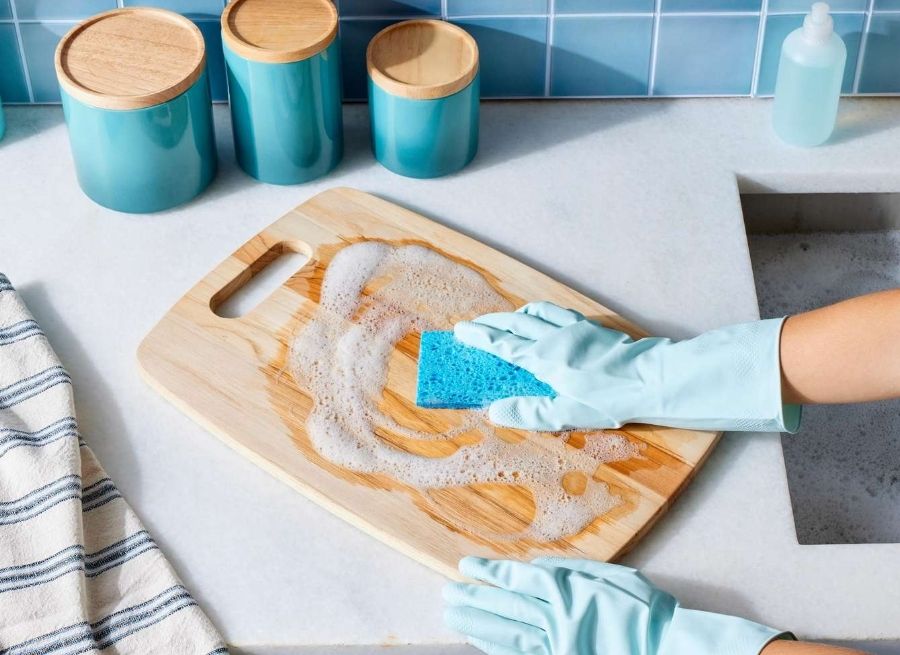
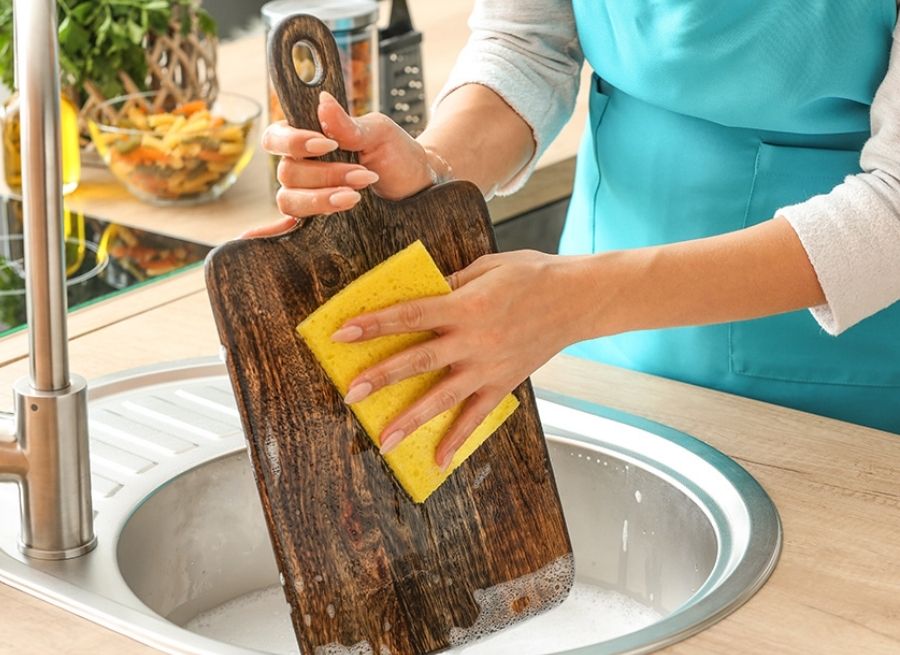
Start by rinsing the board under warm water. Use a mild dish soap and a soft sponge. Scrub both sides to remove food bits and oils. Avoid soaking the board in water. This stops wood from swelling and cracking. Rinse off all soap to prevent residue. Wipe the surface with a clean cloth or paper towel.
Drying Techniques
Dry the board immediately after washing. Use a towel to soak up excess water. Stand the board upright or lean it against a wall. This lets air flow around it and helps dry faster. Avoid laying the board flat to dry. Moisture can stay trapped and cause mold or warping. Let the board dry fully before storing it away.
Deep Cleaning Methods
Read More – 6 Kitchen Storage Ideas for a More Organized Home
Deep cleaning a wooden cutting board removes tough stains and kills bacteria. This keeps the board safe and fresh for food preparation. Regular washing may not reach all the dirt hidden in the wood grain. Deep cleaning uses natural ingredients to clean and deodorize the board without damage. These methods are simple and use items found in most kitchens.
Using Salt And Lemon
Sprinkle coarse salt over the cutting board’s surface. Cut a lemon in half and rub it firmly on the salt. The lemon juice breaks down stains and odors. The salt acts as a gentle scrub to lift dirt. Let the mixture sit for five minutes. Rinse the board with warm water and dry it well. This method brightens the wood and removes smells naturally.
Vinegar And Baking Soda Treatments
Pour white vinegar over the cutting board and spread it evenly. Vinegar kills bacteria and helps clean the wood. After a few minutes, sprinkle baking soda on the board. Baking soda works as a mild abrasive and deodorizer. Use a soft brush or sponge to scrub the surface gently. Rinse the board with warm water and dry it completely. This treatment cleans deeply and keeps the board fresh.
Removing Stains And Odors
Wooden cutting boards need special care to stay clean and fresh. Stains and odors can build up from food. Removing these helps your board last longer and stay safe. Simple, natural methods work best for cleaning wooden boards. They keep the wood strong and looking good.
Dealing With Tough Stains
Use coarse salt to scrub the board gently. Sprinkle salt on the stain. Rub with half a lemon. The salt scrubs, the lemon brightens. Let it sit for five minutes. Rinse with warm water and dry well. Repeat if the stain stays. Baking soda also helps. Make a paste with water. Apply it to the stain. Let it sit for a few minutes. Scrub lightly and rinse off.
Eliminating Lingering Smells
Odors hide in wood pores. To remove smells, use vinegar. Wipe the board with white vinegar. Let it air dry. Vinegar kills bacteria and neutralizes smells. Another way is to use baking soda. Sprinkle it on the board. Leave for 15 minutes. Then scrub and rinse. Fresh air helps too. Leave the board outside or near an open window. This dries the wood and clears odors.
Maintaining Your Cutting Board
Maintaining your wooden cutting board helps it last longer and stay safe for food use. Wood can dry out, crack, or warp without proper care. Simple steps keep your board strong and clean. Regular upkeep protects the wood and keeps your kitchen hygienic.
Oiling And Conditioning
Apply food-safe mineral oil to your board every few weeks. The oil keeps the wood moist and prevents it from drying out. Rub oil evenly over the surface with a clean cloth. Let it soak in for several hours or overnight. Wipe off any extra oil before use. Conditioning with beeswax or a special board cream adds extra protection and shine. This creates a barrier against water and stains.
Preventing Cracks And Warping
Keep your cutting board away from direct heat or sunlight. Heat can dry the wood and cause it to crack. Avoid soaking the board in water for long periods. Instead, wash it quickly with warm water and mild soap. Dry the board immediately with a towel. Store it standing up or on its side to let air circulate. This stops moisture buildup and warping. Regular maintenance helps your board stay flat and strong.
Avoiding Common Mistakes
Cleaning a wooden cutting board properly means avoiding common mistakes that can damage it. These errors can cause cracks, warping, or bacteria build-up. Knowing what to avoid helps keep your board safe and long-lasting. Here are some common mistakes and useful tips.
What Not To Do
Do not soak your wooden cutting board in water. It can make the wood swell and crack. Avoid putting your board in the dishwasher. The heat and water can warp the wood. Never use harsh chemicals or bleach. They can damage the wood and leave harmful residue. Do not cut raw meat directly without cleaning afterward. It can cause bacteria growth. Skip using steel wool or rough scrubbers. They scratch and harm the surface. Avoid leaving the board damp after cleaning. Dry it well to stop mold.
Tips For Longevity
Clean your board with mild soap and warm water after each use. Use a soft sponge to wipe it gently. Dry the board upright or on a rack to air dry fully. Oil the board regularly with food-safe mineral oil. This keeps the wood from drying out and cracking. Use separate boards for raw meat and vegetables. It prevents cross-contamination. Store the board in a dry place away from heat. Rotate the board to use all sides evenly. Sand the surface lightly if it becomes rough or stained.
Read More – Top 5 Pantry Organization Tips for Small Kitchens
Frequently Asked Questions
How Often Should You Clean A Wooden Cutting Board?
You should clean your wooden cutting board after every use. This prevents bacteria buildup and keeps it hygienic. Regular cleaning also maintains the board’s appearance and longevity. Always wash with warm, soapy water and dry immediately to avoid warping or cracking.
Can I Use Bleach To Sanitize Wooden Boards?
It’s best to avoid bleach on wooden cutting boards. Bleach can damage the wood and cause it to crack. Instead, use a mixture of vinegar and water or a food-safe sanitizer to disinfect without harming the board’s surface.
What Is The Best Way To Remove Odors From Wooden Boards?
To remove odors, sprinkle coarse salt or baking soda on the board. Rub it with a lemon half and let it sit for a few minutes. Rinse with warm water and dry thoroughly. This natural method neutralizes smells effectively.
Should Wooden Cutting Boards Be Oiled Regularly?
Yes, oiling wooden boards regularly prevents drying and cracking. Use food-grade mineral oil or beeswax to maintain moisture and protect the wood. Apply oil once a month or when the board looks dry to extend its lifespan.
Conclusion
Cleaning a wooden cutting board properly keeps it safe and long-lasting. Use warm water and mild soap after each use. Scrub gently to avoid damage. Dry the board well to stop cracks and warping. Treat it with mineral oil regularly to keep the wood healthy.
Avoid soaking or using harsh chemicals. These simple steps help your board stay clean and strong. A clean board means safer food and better cooking every day.