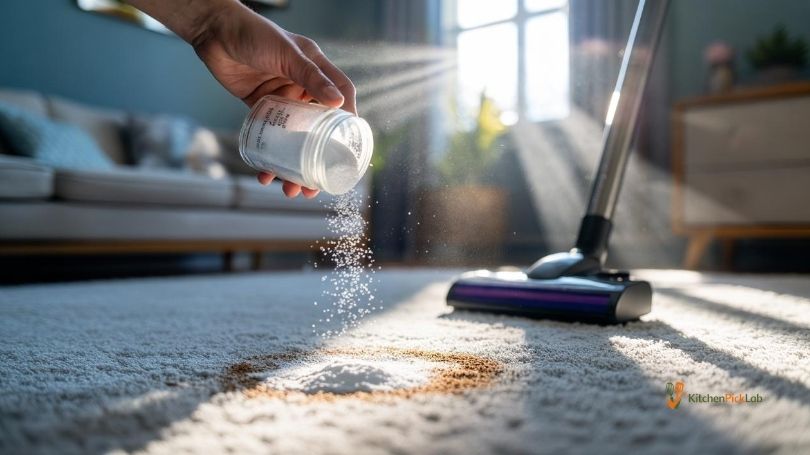
Can You Sprinkle Baking Soda On Carpet?
Yes, but only on completely dry synthetic fibers. You can sprinkle baking soda on carpet to absorb mild odors, but wet spills turn the powder into a stubborn paste that ruins vacuum motors. Vacuum your floor first to clear surface dirt before opening the box.
When it’s safe to sprinkle baking soda
Match your floor fiber and moisture level to the right action below.
| Your situation | Answer | Why |
|---|---|---|
| Dry synthetic carpet with pet smell | Yes | Dry powder lifts odor without clumping. |
| Wet pet urine stain | No | Liquid forms paste that traps deep. |
| Wool or silk rugs | No | High pH weakens natural protein fibers. |
| Humid room above 70 percent moisture | No | Air dampness makes the powder cake. |
| Low-pile carpet with smoke smell | Yes | Fine grains reach base of short fibers. |
| Thick shag carpet pile | No | Vacuum can’t pull small grains back out. |
Fiber chemistry and particle size
The risk comes down to fiber chemistry and the tiny size of sodium bicarbonate grains. Baking soda measures around 50 to 100 microns across, which lets it slip past carpet weave and settle directly against the primary backing. While the powder neutralizes acidic odor molecules in the air, natural fibers like wool react poorly to alkaline substances. Wool carries a slightly acidic surface structure; resting a basic powder on it can weaken the natural sheen and cause discoloration.
Synthetic yarns like nylon or polyester handle the alkalinity fine, but modern vacuum filters struggle with fine dust. Standard filters allow microscopic dust to pass directly into the motor housing. The motor fan then struggles to maintain airflow as dust clogs the filters, causing the motor to work harder and potentially overheat. The trade-off is clear: you gain a cheap, fragrance-free room deodorizer, but you shorten your vacuum cleaner’s service life if you do it often. The EPA indoor air quality guidance notes that small airborne particles easily spread through indoor air when disturbed, meaning poor vacuum filtration blows dust right back into your breathing space.
If your carpet is completely dry nylon or polyester, then apply a light dusting; if the floor is damp, wool, or high-pile shag, then skip the powder entirely and use plain warm water extraction.
Safe application steps
Follow these numbered steps to treat odors without destroying your rug or appliance. This method isn’t for high-pile shag or natural wool carpets.
- Dry the floor fully by pressing dry white paper towels onto the area until no moisture transfers over. The towel comes up bone-dry when it’s ready.
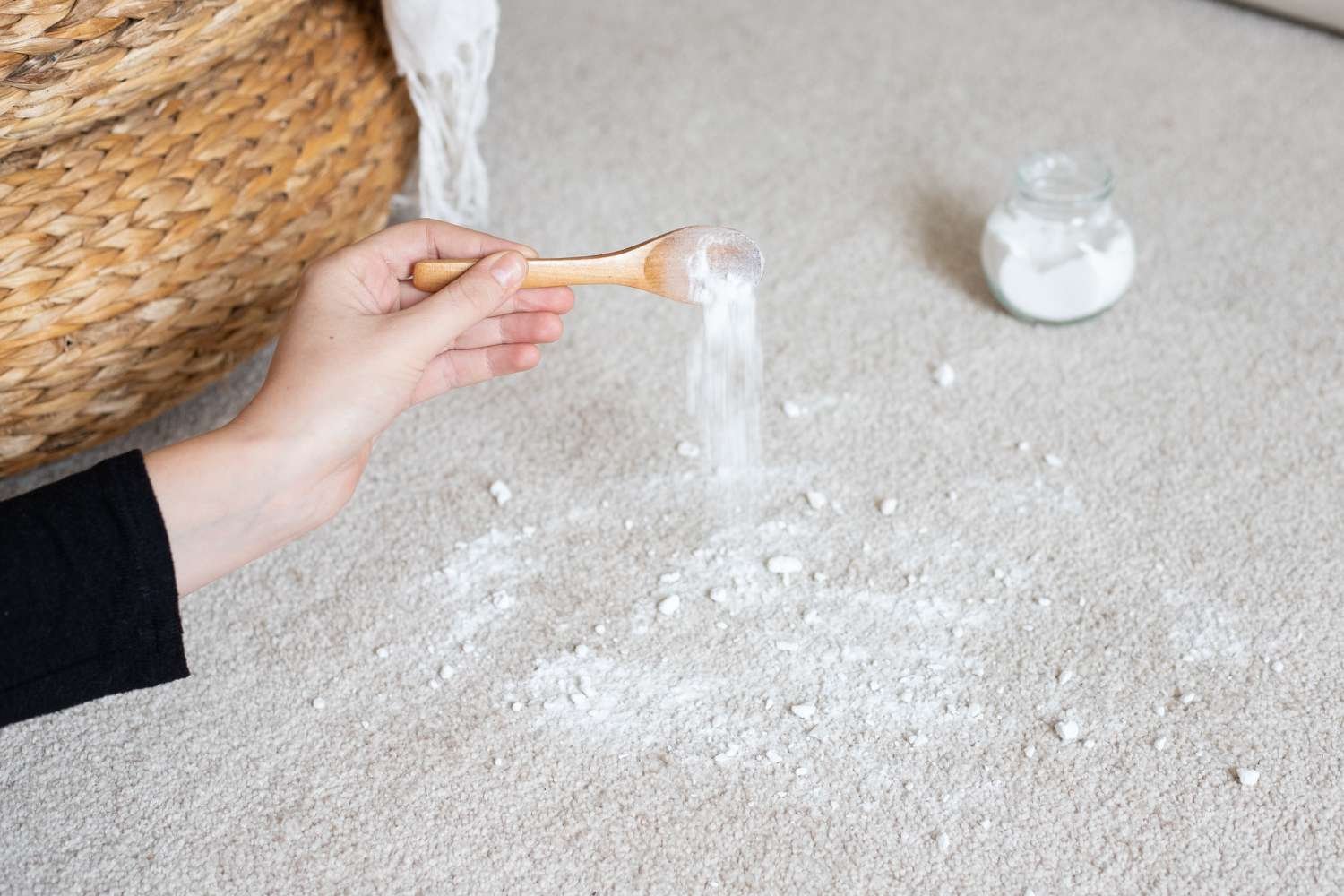
- Dust the surface lightly using half a cup of powder for an eight-by-ten foot area through a fine kitchen sifter. You’ll see a faint, even haze across the fiber tips rather than solid white mounds.
- Wait thirty minutes while keeping pets and children out of the room so nobody grinds particles deep into the backing. The room will smell noticeably less sharp when the time ends.
- Empty your vacuum chamber and clean its primary filter before starting so airflow remains at maximum strength. You’ll hear the motor run at a smooth, high pitch without straining.
- Vacuum across two directions by making slow forward-and-back passes, then repeating the path at a right angle. The carpet shows zero white residue when you finish brushing it with your hand.
The vacuum motor clog
The single biggest mistake is dumping thick layers of powder directly onto wet stains to soak up moisture. Baking soda pulls in liquid instantly, turning into a dense compound similar to drying cement deep inside the carpet pile. When owners try to suck this sludge out, the wet dust bypasses bag walls and coats the vacuum motor bearings. This mistake burns out the vacuum motor, costing a significant amount for a replacement unit, while leaving a white crust permanently embedded in the carpet backing. Run a dry finger across the carpet base first; if your skin picks up any dampness, don’t spread dry powder over that spot.
When to stop and get help
- Water soaked down into the subfloor or underlayment pad, because home vacuums can’t pull liquid through dense padding.
- Pet urine dried days ago, as urine salts chemically bond with backing adhesives and require professional chemical flushes.
- The rug tag lists one hundred percent woven wool, silk, or antique cotton dyes that run easily.
When waste reaches past the backing, stop self-cleaning immediately; call an Institute of Inspection Cleaning and Restoration Certification (IICRC) certified professional cleaner who uses high-pressure truck-mount extraction units to flush the pad safely.
Frequently asked questions
Can baking soda ruin your vacuum cleaner?
Yes, fine baking soda dust slips right through ordinary paper bags and basic filters. The microscopic grains can pass through poor filtration and cause abrasive wear on internal components.
How long should baking soda sit on carpet?
About 30 minutes works best for neutral synthetic fibers. Leaving it down for hours gives humidity time to turn dry grains into hard clumps that lock tightly around the lower yarn loops.
Does baking soda remove old pet urine smells?
No, it only absorbs mild airborne acids near the surface. Old urine leaves uric acid crystals deep inside padding that only dedicated enzymatic cleaners or deep hot-water extraction can break apart.
What happens if you get baking soda wet on carpet?
It turns into a sticky, paste-like sludge that glues carpet strands together. Once dry, this sludge forms a hard white residue that ordinary home vacuum brushes can’t break loose.
Is baking soda safe around dogs and cats?
Yes, in light dustings, but it irritates animal paws and nasal passages if dumped in heavy piles. Keep pets out of the room while the powder sits on the floor.
Can you use baking soda on wool rugs?
No, while baking soda is mildly alkaline, it’s generally not recommended for wool or silk because it’s difficult to remove completely from natural fibers. This high pH level strips natural oils, making wool brittle and dull over time.
What to do next
Vacuum your dry synthetic carpet slowly right now to pull up loose dirt before opening your pantry box. Expect a noticeable drop in stale household odors once you run two slow passes across the treated floor. If white residue remains stuck in the backing after vacuuming, stop scrubbing and rent an upright hot-water extractor.