Can Pyrex Go From Fridge To Microwave? Safety Tips for Glass
Yes, but only with care. Rapid temperature shifts cause thermal shock, which can shatter glass containers. To protect yourself and your dish, take the cold food out and remove the tight plastic lid right now. Can Pyrex go from fridge to microwave? Modern soda-lime glass needs a brief rest or lower power to avoid breakage.
Moving Pyrex from fridge to microwave
Your dish’s age, glass type, and starting temperature determine whether moving it directly into heat is safe.
| Your situation | Answer | Why |
|---|---|---|
| Room temperature dish | Yes | No sudden temperature jump occurs |
| Chilled food with loose lid | Yes | Power heats food without trapping steam |
| Dish straight from freezer | No | Extreme cold causes immediate thermal shock |
| Chilled dish with tight lid | No | Trapped steam pressure cracks cold glass |
| Chilled dish with visible chips | No | Existing cracks spread under fast heating |
| Chilled dish on high power | Usually not | Uneven heating expands hot spots fast |
Why thermal shock breaks glassware
Thermal shock decides whether your glassware survives the shift from cold to hot. Glass conducts heat slowly. When cold glass contacts intense heat, the heated surface expands while the cold inner core stays rigid. This uneven movement creates mechanical stress inside the material. If that stress exceeds the glass strength, the container shatters into small, sharp pieces.
Most modern Pyrex uses tempered soda-lime glass rather than older borosilicate. Tempered soda-lime resists drops and blunt impacts better, but it handles sudden temperature swings worse than borosilicate. A refrigerator stays around 37°F to 40°F. If you expose a 40°F soda-lime dish to high microwave energy, hot spots form within seconds. Thick foods like mashed potatoes or dense casseroles make this worse by heating the outer layers rapidly while the center remains cold. Reheating leftovers to 165°F creates a 125°F jump from fridge temperatures. Soda-lime glass offers high impact strength but sacrifices resistance to fast heat shifts. This direct fridge-to-microwave method isn’t for frozen dishes or dry, empty glass. If the dish is straight from the fridge, warm it gradually; if it has sat on the counter for 15 minutes, standard reheating is safe.
Steps for safe reheating
- Inspect the glass surface carefully under good light to ensure there are no hairline cracks, chips, or deep scratches. The step worked if the entire dish is smooth and structurally intact.
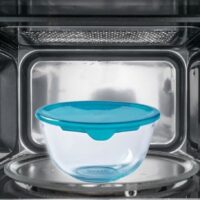
- Remove the plastic storage lid completely, because cold storage lids form airtight seals that build dangerous pressure. The step worked if the top of the glass rim is fully exposed to open air.
- Rest the dish on a wooden cutting board or dry cloth for 10 to 15 minutes at room temperature. The step worked if the outer glass feels cool to the touch rather than freezing cold.
- Cover with a paper towel or loose microwave-safe plate to catch food splatters without sealing steam. The step worked if steam can escape freely around the edges.
- Set the microwave to medium power, roughly 50% power, assuming a standard 1,000-watt microwave. The step worked if the display confirms 50% power or setting 5.
- Heat in short two-minute intervals, stirring the food between each cycle to spread the heat evenly across the dish. The step worked if your food thermometer reads 165°F throughout the food with no cold pockets left.
The common heating mistake
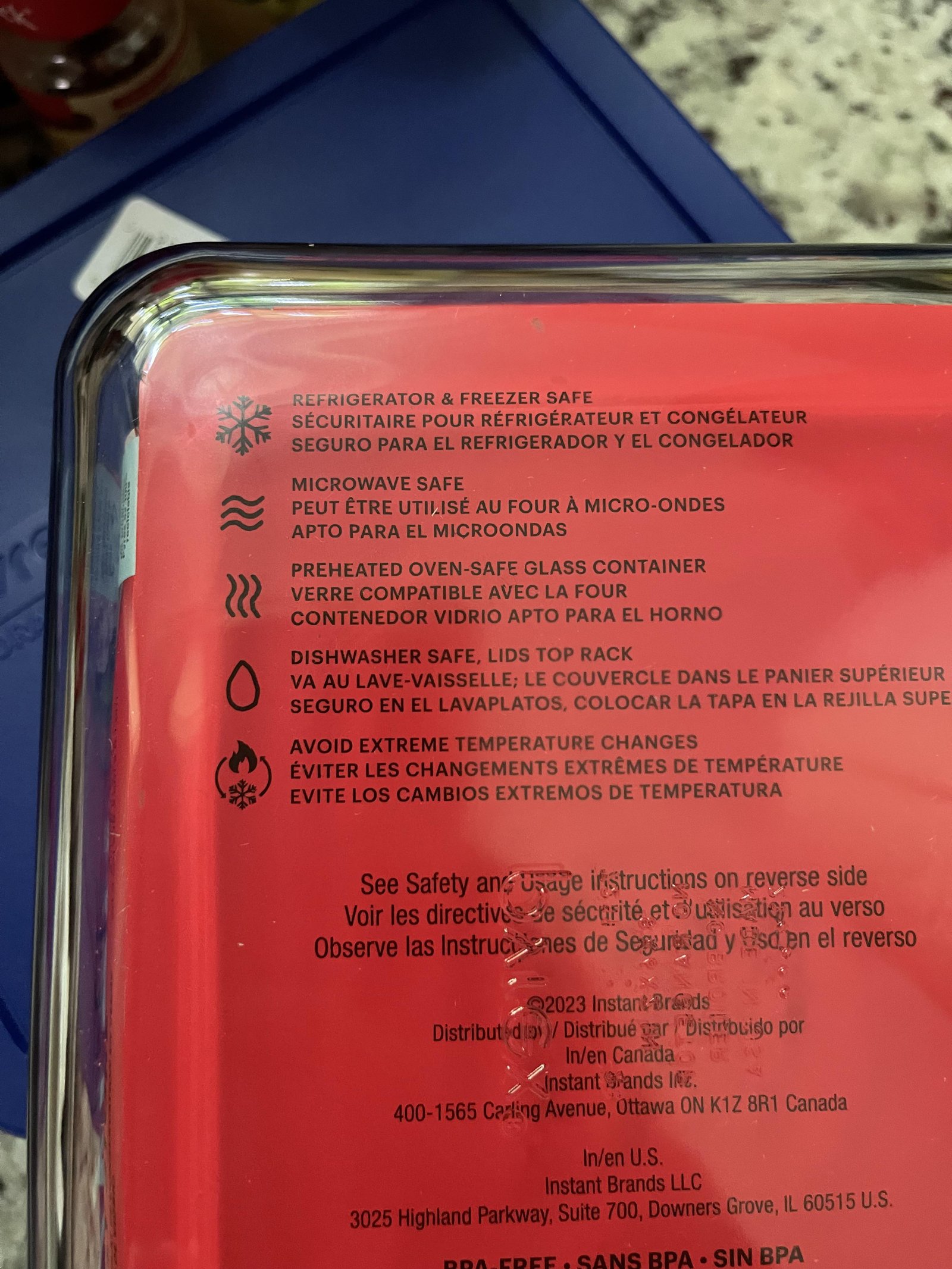
Heating chilled food on full power on a cold turntable breaks containers. Running the microwave at 100% power for several minutes is dangerous. The cold base remains rigid while the food above rapidly heats, creating an extreme temperature contrast across the glass. Check your dish bottom before heating: if it says “Microwave Safe,” that rating still requires you to avoid sudden temperature spikes.
When to stop and get help
- Deep cracks or chips appear along the rim or base, because structural integrity is permanently compromised.
- The glass makes an audible ticking or popping sound during heating, which indicates internal stress fractures forming.
- Food has baked onto damaged glass, meaning small glass shards may have shed into the meal.
- The dish broke inside the appliance cavity, which requires unplugging the unit before cleaning to avoid shock.
Throw damaged glass into the trash immediately; cracked tempered glass can’t be repaired or glued safely.
Can cold Pyrex crack in the microwave?
Yes, cold Pyrex can crack if heated too quickly. Sudden heat expansion stresses cold glass walls. Setting your microwave to 50% power prevents hot spots that trigger sudden cracks.
How long should Pyrex sit out before microwaving?
About 10 to 15 minutes on a dry counter is enough. This rest period lets the outer surface warm slightly above chilling temperatures. Never place the cold dish on wet stone surfaces.
Is it safe to microwave Pyrex with the lid on?
No, standard plastic Pyrex storage lids aren’t made for tight microwave heating. They seal in expanding steam, creating pressure that can warp plastic or crack cold glass edges.
What happens if you put cold glass in the microwave?
The glass expands unevenly and may shatter into pieces. Microwaves heat water in food rapidly, which creates hot zones beside cold zones. That temperature gap causes thermal stress failure.
Can vintage Pyrex go from fridge to microwave?
Yes, vintage borosilicate Pyrex handles temperature shifts better than modern soda-lime glass. However, sudden 100°F jumps still carry risks. Letting vintage pieces warm slightly protects them from accidental damage.
Does microwave wattage matter for Pyrex safety?
Yes, high-wattage microwaves heat food much faster and increase thermal stress. These steps assume a 1,000-watt microwave.
What to do next
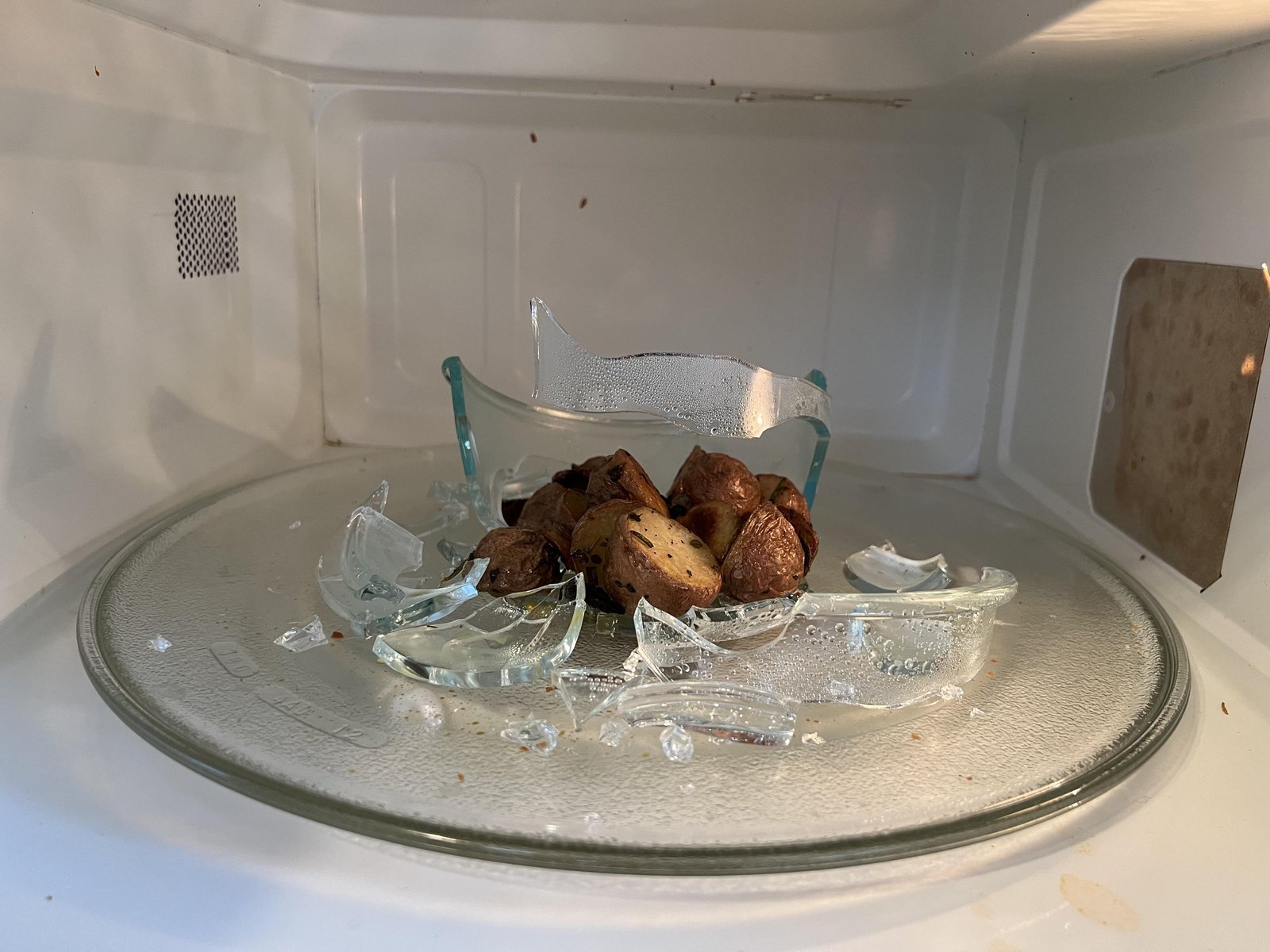
Take your Pyrex dish out of the refrigerator and set it on a dry wooden board right now. Expect the outer glass surface to lose its deep chill within 10 to 15 minutes, which shows it’s ready for low-power heating. If you hear a ticking sound or spot any new line in the glass, stop immediately and discard the dish.
Final Thoughts
If you’re still worried about your glass breaking, it’s best to let the container sit on the counter for a few minutes before heating. You’ll keep your kitchen safer and your favorite dishes in one piece. Next time you’re prepping meals, try using room-temperature glass to avoid any unwanted surprises.