Can Baking Soda Unclog A Drain?
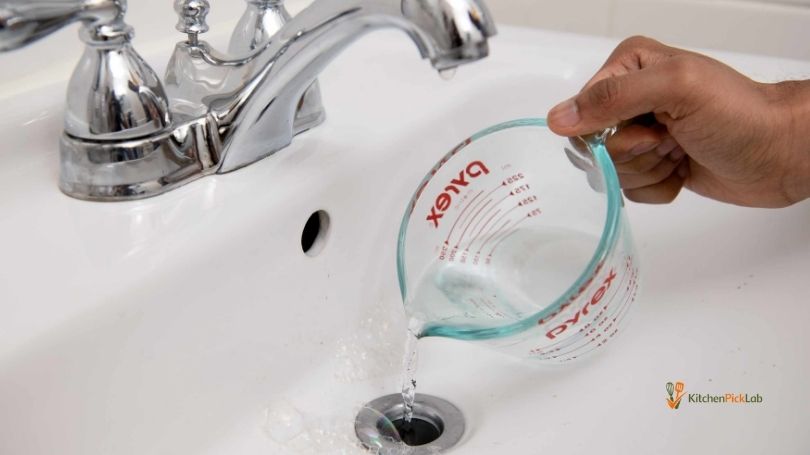
Usually not, because the chemical reaction produces mostly salt water and carbon dioxide gas rather than pipe-clearing force. That said, whether baking soda can unclog a drain depends on whether the blockage is only a light layer of grease or a complete physical obstruction. If your sink is completely backed up right now, bail out the sitting water instead of pouring baking soda into the pool.
When baking soda can unclog your drain
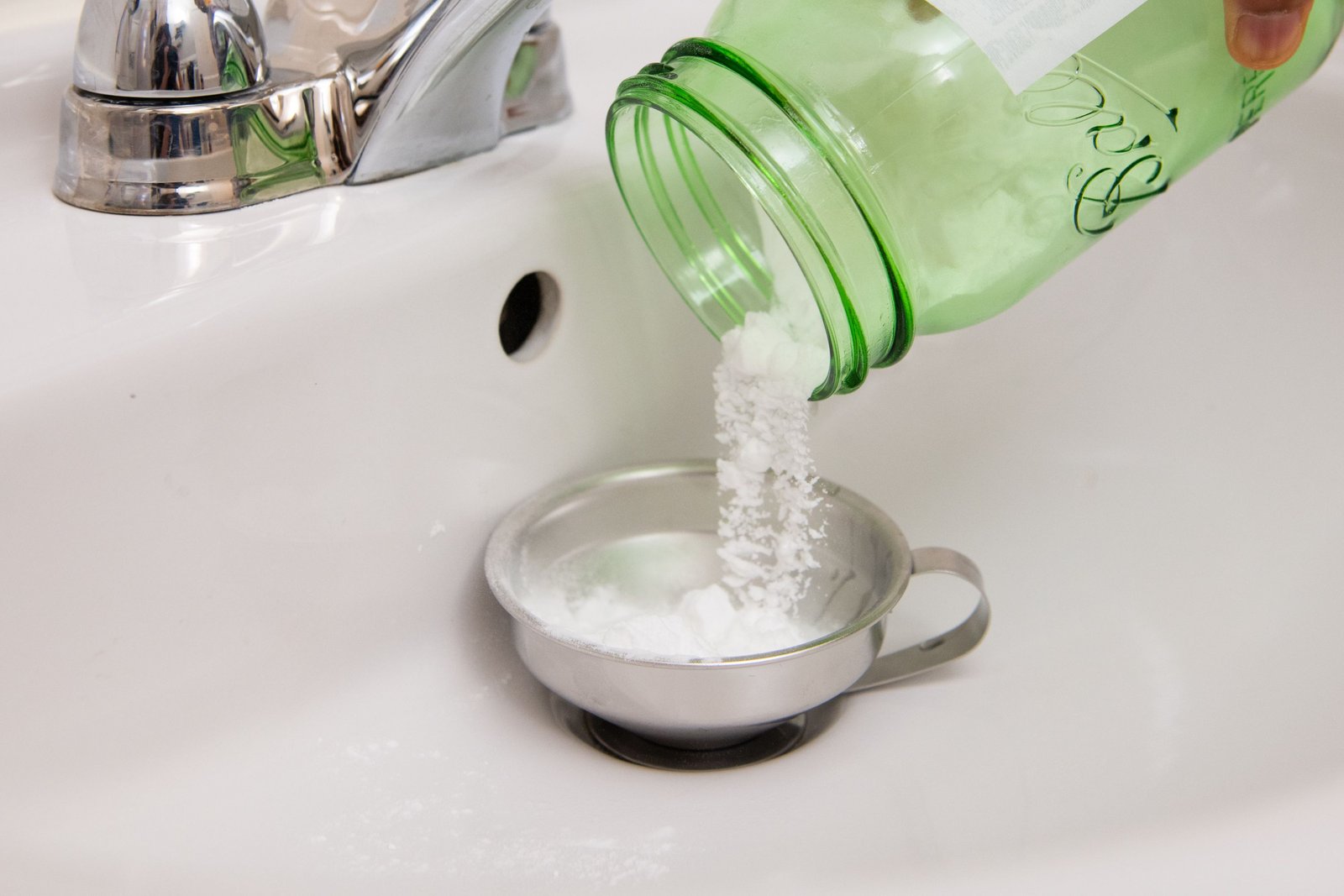
Check the condition of your fixture to see if home chemicals will help.
| Your situation | Answer | Why |
|---|---|---|
| Sink drains slowly with mild odors | Yes | Soda deodorizes and breaks thin slime |
| Standing water fills the entire basin | No | Powder can’t reach the blockage point |
| Shower drain blocked by hair clumps | No | Minerals can’t dissolve human hair strands |
| Kitchen trap blocked with cooled fat | Yes, but | Needs boiling water to melt grease |
| Main house sewer line backing up | No | Deep blockages require mechanical power augers |
| Toilet bowl filled near the rim | No | Weak foam can’t push heavy waste |
How the chemical reaction works
Baking soda is sodium bicarbonate, a mild base, while household vinegar is diluted acetic acid. Mixing them creates sodium acetate, water, and carbon dioxide gas that bubbles up vigorously. That fizzing looks like hard work, but an open pipe vent allows the gas pressure to escape harmlessly into the air instead of pushing against the clog. The remaining liquid is mostly salty water, which carries no special cleaning power beyond ordinary tap water.
For light bathroom buildup, the trade-off is clear: you trade the instant power of harsh drain chemicals for a mild abrasive that won’t corrode fixtures. The EPA Safer Choice standard highlights such non-corrosive methods for home cleaning because strong caustic chemicals burn skin and damage household plumbing. However, this natural mix lacks the alkalinity needed to liquefy human hair or solid food scrap mats. If the pipe is merely sluggish from soap films, then a hot flush can clear it; if roots or dense clumps block the pipe, then chemical home remedies will completely fail.
Steps for clearing mild buildup
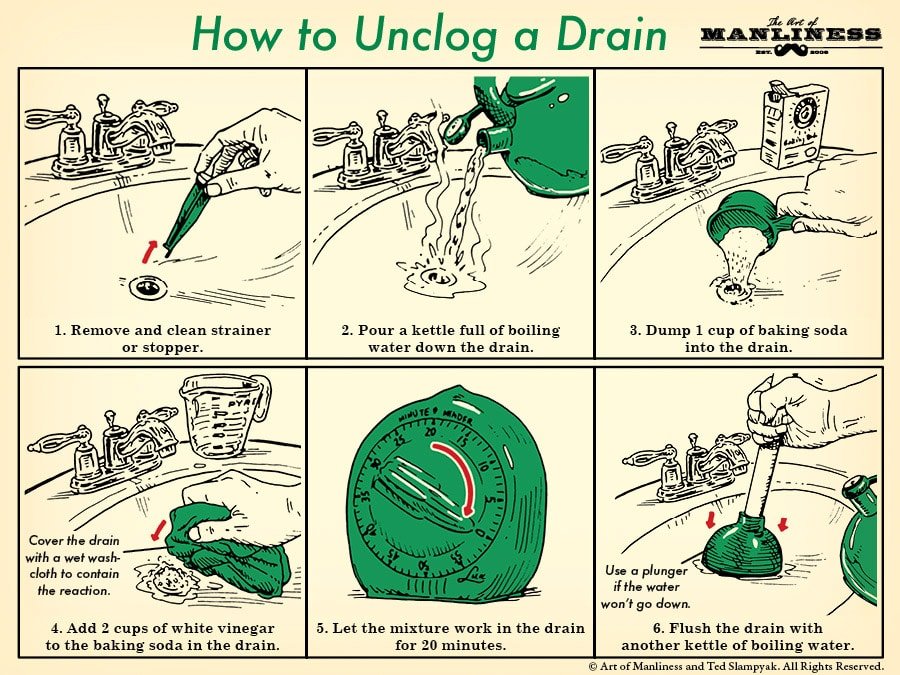
- Boil tap water on the stove, using a full 2-quart kettle. The bubbling surface shows the liquid reached boiling point.
- Pour the hot water slowly down the drain opening in a steady stream. A slight increase in draining speed confirms loose surface gunk has softened.
- Dump half a cup of dry baking soda straight down the drain opening using a funnel. The powder settling directly into the grate shows it reached the trap.
- Add one cup of white distilled vinegar immediately over the powder and cover the drain opening tightly with a flat rubber stopper. A muffled fizzing sound inside the pipe shows the trapped gas is working against the walls.
- Wait fifteen minutes while the chemical mix loosens sticky grime along the bend. A timer chime shows the rest period is finished.
- Flush with a second 2-quart kettle of boiling water poured straight down the center. Water swirling smoothly down the pipe without pooling confirms the wash worked.
Pouring dry powder into standing water
Dumping baking soda directly into a basin full of standing water is the single most common mistake. The powder dissolves in the standing pool near the surface, never reaching the actual obstruction down in the P-trap. Always bail the fixture dry with an old cup before treating the drain, or use a manual plunger instead.
When to stop and get help
- Water backs up into nearby tubs or sinks when you flush a toilet, which shows a blocked main sewer stack.
- A physical plunger brings up dark mud or foul sewer grit, which points to broken underground pipes.
- The sink remains completely full after three manual plunging attempts, meaning an auger must clear the line.
Licensed residential plumbers handle deep blockages using motorized drain cables and diagnostic pipe cameras safely.
Frequently asked questions
Can baking soda damage PVC pipes?
No, baking soda is a mild, non-corrosive powder that won’t weaken plastic plumbing. However, pouring rolling boiling water immediately afterward can soften thin PVC joints, so let the water cool for two minutes first.
Why did baking soda make my clog worse?
The powder mixed with grease and settled into a thick paste without dissolving. When dry chemicals sit in standing water, they pack together tightly and turn slow drains into total clogs.
How long should baking soda sit in a drain?
About 15 minutes is plenty for the initial gas reaction to work against pipe walls. Leaving it overnight doesn’t add extra cleaning strength because the active fizzing stops after a few minutes.
What happens if I use baking soda on hair clogs?
Nothing useful happens because hair consists of tough keratin proteins that acid and base foams can’t break down. This method isn’t for shower drains clogged with long hair, which need a plastic barbed snake.
Is vinegar necessary with baking soda?
No, boiling water and dish soap cut fresh kitchen grease just as well on their own. Vinegar merely adds a short-lived bubbling action that mechanically jostles thin layers of loose grime.
Can I mix baking soda with commercial drain cleaner?
No, never mix household cleaners with store-bought chemical drain gels. The acid-base reaction can splash toxic liquid or generate hazardous gas that burns skin, eyes, and lungs.
Does baking soda remove bad drain smells?
Yes, half a cup of powder neutralizes acidic odors caused by rotting food scraps trapped in kitchen sink pipes. A warm water rinse five minutes later leaves the drain smelling clean.
What to do next
Bail out any pooled water in your fixture, grab a standard cup plunger, and try five firm strokes over the opening. You should expect water to drain away rapidly with a clean gurgle once the rubber seal dislodges the obstruction. If foul wastewater immediately bubbles back up into the basin, stop working and call a local drain service.