Can You Mix Apple Cider Vinegar And Baking Soda?
Yes, but only for certain jobs. If you blend them ahead of time in a sealed bottle, you’ll ruin their cleaning power and create high pressure. You should decide whether you want a physical bubbling action right now or a strong disinfectant before grabbing your supplies. Can you mix apple cider vinegar and baking soda to solve daily household chores? The answer depends strictly on using the reaction immediately rather than storing it.
When mixing apple cider vinegar and baking soda

Your goal determines whether this bubbling mixture helps you or wastes your time.
| Your situation | Answer | Why |
|---|---|---|
| Unclogging a slow sink drain | Yes | Fizzing gas pushes through loose debris |
| Lifting burnt food from pans | Yes | Bubbles loosen charred crust from metal |
| Storing a homemade counter cleaner | No | Chemicals neutralize into salty water |
| Disinfecting kitchen prep surfaces | No | Acid gets weakened by the base |
| Drinking as an acid-reflux cure | No | Sudden gas distends stomach tissue painfully |
| Leavening quick breads in baking | Yes | Trapped carbon dioxide gas lifts batter |
Chemical neutralization and gas release
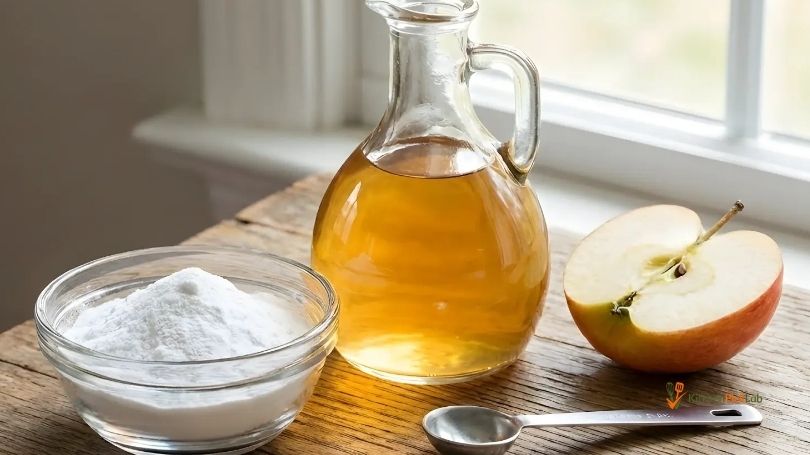
Combining these two household staples triggers an immediate acid-base reaction. Apple cider vinegar contains acetic acid, which sits at a low pH between 2 and 3. Baking soda, or sodium bicarbonate, is a chemical base with an alkaline pH near 9. When you pour the acidic vinegar over the alkaline powder, the molecules trade hydrogen ions instantly. This chemical trade produces water, sodium acetate (a harmless salt), and carbon dioxide gas.
That sudden release of carbon dioxide creates the vigorous bubbling you see. These expanding bubbles act like microscopic scrubbers that lift grease, dislodge grit, and push grime off hard surfaces. However, that physical lifting action lasts only as long as the liquid fizzes, which usually stops within two minutes.
How to use the active fizz safely
- Clear standing water from the sink basin so the ingredients reach the clog without dilution; you’ll know this worked when the drain opening is dry and visible.
- Pour 1/2 cup of baking soda directly down the drain pipe opening; you’ll see the white powder resting just inside the drain grate.
- Add 1/2 cup of apple cider vinegar into the pipe immediately; you’ll hear a sharp hissing sound and see thick white foam form at the rim.
- Cover the drain opening tightly with a flat rubber plug or a wet washcloth; you’ll feel slight upward pressure against the plug as gas directs down the pipe.
- Wait exactly 15 minutes while the chemical reaction loosens grease inside the pipe; the sound of active hissing will completely fade away.
- Flush with 4 cups of boiling water poured straight into the center of the drain; the water will swirl rapidly down the pipe without backing up.
Trapping gas inside sealed containers
Don’t store this mixture in a closed spray bottle. Trapped gas can bulge plastic or shatter glass. Always check that any vessel you use stays completely open to the air while the ingredients interact.
When to stop and get help
- Liquid backs up into other household fixtures, showing a deep sewer clog that needs a licensed plumber.
- You feel sharp abdominal cramps after drinking homemade remedies, which requires an immediate doctor visit.
- The mixture splashes into your eyes and burns, which requires fifteen minutes of running water and emergency eye care.
- Thick mineral scale remains glued to your fixtures, meaning you must buy commercial scale remover instead.
This mixture reaches its limit against tree roots, solid plastic blockages, or hardened grease deep within plumbing lines. If simple foam doesn’t budge a clog, you must call a licensed plumber with motorized drain snakes.
Frequently asked questions
Can you drink this mixture to help digestion?
No. Drinking this foaming mixture releases massive amounts of carbon dioxide gas inside your stomach. That sudden expansion can cause severe bloating, painful gas cramps, and dangerous stomach wall irritation. Plain water remains far safer for your digestive tract.
Why does the mixture start foaming right away?
Acetic acid in the vinegar reacts instantly with the sodium bicarbonate powder. This rapid chemical trade breaks the molecules down into water, salt, and carbon dioxide gas. The escaping gas bubbles through the liquid, creating thick white foam.
How long does the bubbling reaction last?
About two minutes. The heavy fizzing starts the moment both ingredients touch, peaks within thirty seconds, and dies down completely as the acid neutralizes. You must apply the mixture immediately to use the physical scrub of the bubbles.
Is it safe to clean my skin with it?
No. Apple cider vinegar is harsh on your natural skin barrier, and baking soda disrupts the slightly acidic balance your skin needs. Scrubbing your face or body with this abrasive paste often causes red patches, burning, and peeling.
What happens if you store it in a bottle?
The trapped carbon dioxide gas builds intense pressure against the bottle walls. Within minutes, the expanding gas can crack the plastic or blow the sprayer top off violently.
Does it matter if I use white vinegar instead?
No. White distilled vinegar contains the same acetic acid as apple cider vinegar, usually at an identical 5% acidity level. White vinegar works just as well for household jobs, costs less, and avoids leaving behind sweet apple fruit sugars.
Can you use it to clear toilet clogs?
Usually not. The large volume of standing water inside a toilet bowl dilutes the vinegar and powder far too much.
What to do next
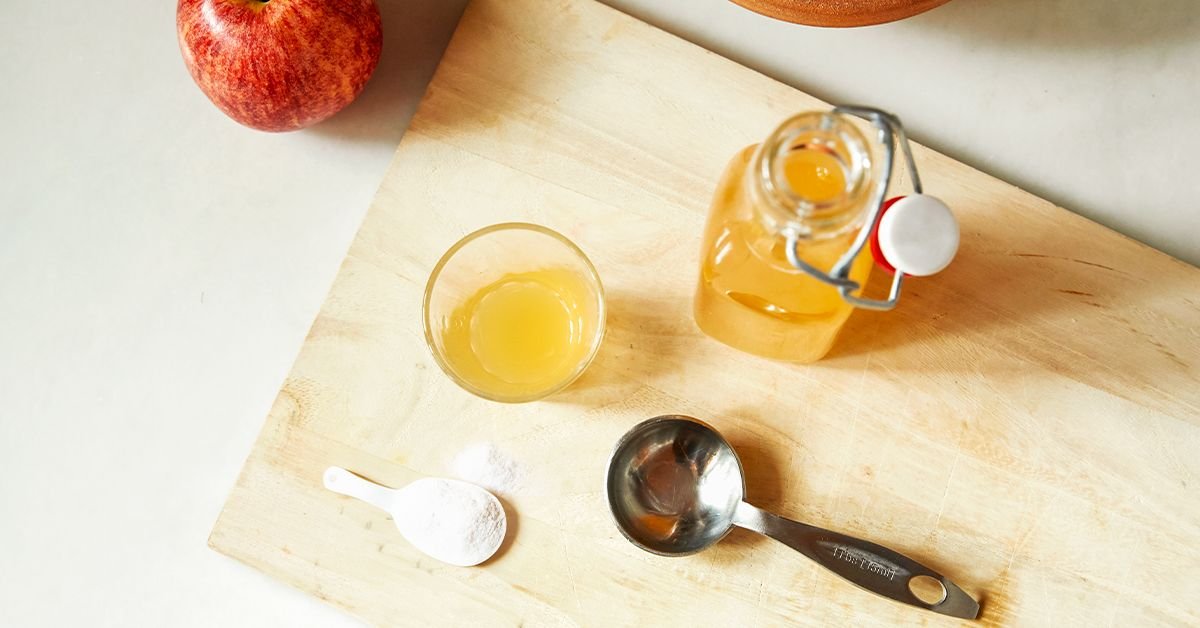
Pour half a cup of powder onto the targeted grime and immediately follow with half a cup of vinegar to start working. Expect an aggressive, hissing white foam that quickly lifts surface dirt and wipes away clean with a damp cloth. Stop immediately and call a licensed plumber if wastewater backs up into your sinks or tubs during drain cleaning.
Final Thoughts
Keep these two ingredients separate until you’re ready to tackle a specific mess. Since the fizzing reaction doesn’t last, you’ll get the best results by applying them one after the other. Try this method on your next stubborn sink clog, and you’ll see how well they work when used at the right moment.