
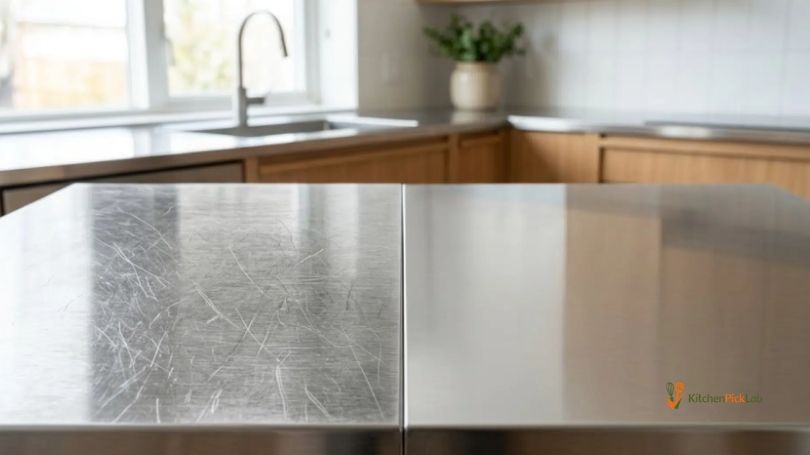
Can You Fix Scratches On Stainless Steel? A Simple Guide
Yes, but only shallow marks. You can fix scratches on stainless steel when they sit inside the surface grain, but deep gouges that catch your fingernail will never rub away cleanly. Wipe the area with a wet cloth right now to see if dirt simply mimics a scratch before you reach for abrasive pads.
When you can fix stainless steel scratches
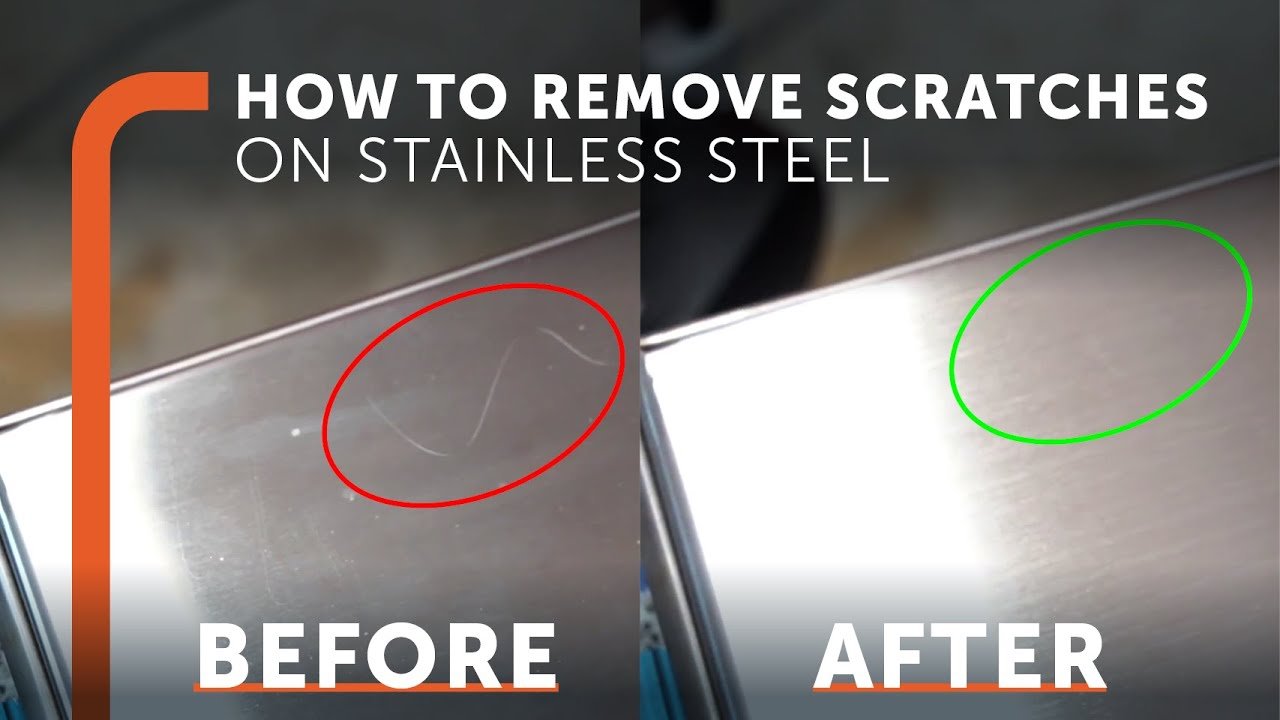
Your surface type and scratch depth decide what works.
| Your situation | Answer | Why |
|---|---|---|
| Fine surface haze on brushed steel | Yes | Light buffing compound blends tiny marks easily. |
| Single scratch catches your fingernail | No | Deep metal gouges require professional grinding tools. |
| Mirror-finish steel has swirl marks | No | Hand sanding leaves cloudy, uneven patches behind. |
| Coated steel shows dark scratches | No | Clear protective films peel once rubbed through. |
| Cookware shows light interior utensil trails | Yes | A non-scratch metal polish smooths dull spots. |
| Refrigerator door has multiple hairline lines | Yes | Sanding along the grain hides light wear. |
Scratch depth and surface finish
Repair success depends on scratch depth and surface finish. Stainless steel gets its clean look from either a brushed pattern or a polished, mirror surface. Brushed steel features tiny micro-grooves running in one direction, while mirror finishes carry no grain at all.
When a scratch stays shallow, it only marks the very top ridges of that brushed texture. You can rub it out because you’re simply flattening those ridges slightly until the metal levels out. Deep marks cut past the factory lines into the solid core of the panel. Removing deep marks requires sanding the entire panel to match the deepest point. That trade-off means you lose your original factory sheen to erase one single line.
Surface coatings also change the outcome. Many modern appliances use a clear, smudge-proof film over the metal. If you sand coated steel, you’ll tear right through that barrier and leave a dark, blotchy stain that never washes off. Check your owner guide to confirm if your appliance has a protective film.
Restoring light marks by hand
Light marks disappear if you follow the metal grain closely. This procedure is NOT for black stainless steel or clear-coated panels, which will ruin instantly under friction.
- Clean the entire panel with warm water and two drops of dish soap using a soft microfiber towel. A clean surface shows zero grease or dust specks when you dry it off.
- Locate the metal grain by shining a flashlight sideways across the steel to spot the linear brush marks. You’ll clearly see tiny parallel lines pointing either side-to-side or up-and-down.
- Rub a light non-abrasive compound such as Bar Keepers Friend into the scratch using a damp cloth along the grain path. The scratch fades and blends within about 60 seconds of gentle rubbing.
- Step up to a fine abrasive pad like a maroon Scotch-Brite hand pad if paste fails to remove the mark. Push with light, even pressure strictly parallel to the grain lines for 10 to 15 strokes until the line disappears into the brushed pattern.
- Rinse and wipe the steel dry with a fresh damp rag followed by a dry cloth. The metal shows an even, consistent shine with no hazy halos around the treated spot.
Rubbing against the metal grain
The single most common mistake is rubbing steel in circular motions or across the grain lines. Circular scrubbing permanently cuts across the factory pattern. This mistake can require complete panel replacement. A small mark can quickly turn into a large, cloudy patch. Place painter’s tape along the grain to guide your hand in straight strokes.
When to stop and get help
Some damage can’t be fixed at home without making the steel look worse. Stop working immediately if you notice any of these signs:
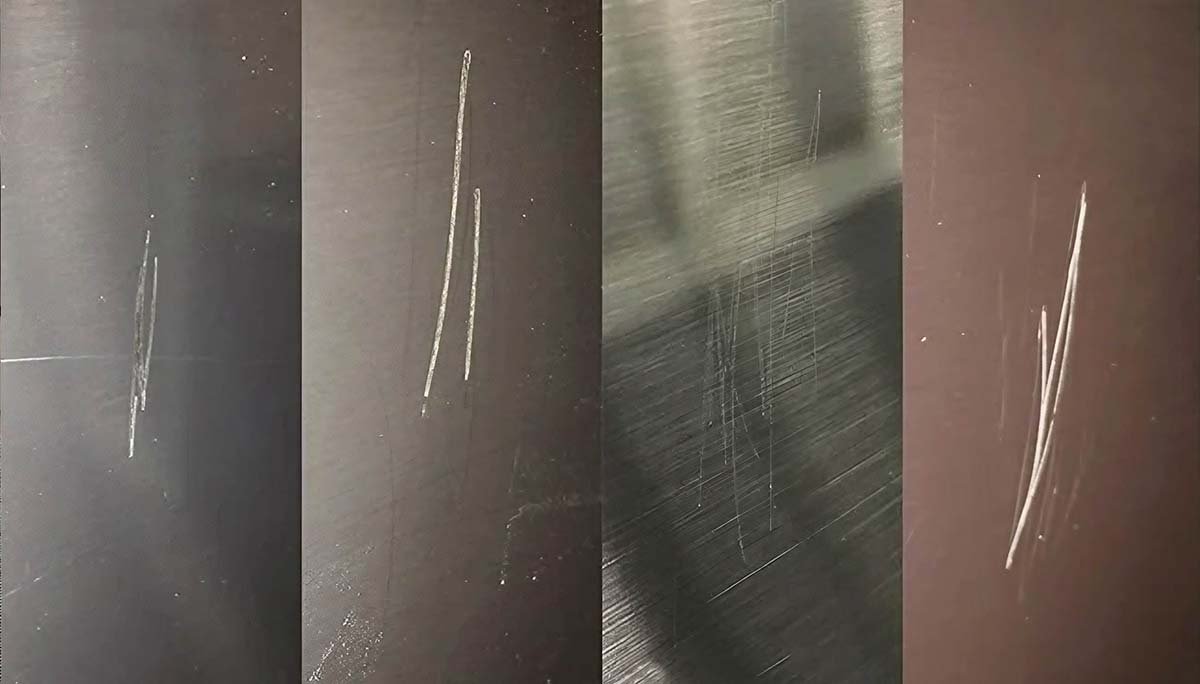
- Your fingernail drops deep into the groove, because filing down the surrounding metal will create an obvious dent.
- The metal turns black or shows peeling plastic, which means you tore through a fingerprint-resistant coating.
- The steel features a shiny mirror finish, because hand pads leave permanent cloudy swirls.
A licensed appliance repair technician or an architectural metal refinisher handles these problems properly with power graining tools.
Frequently asked questions
Can toothpaste remove scratches from stainless steel?
Yes, for very faint surface scuffs. Regular white paste acts as a gentle buffing agent. Rub it strictly along the grain using a damp cloth for 45 seconds, then wash it off completely. Toothpaste won’t fix deeper grooves that catch your fingernail.
How long does scratch repair take?
Deep gouges require professional refinishing tools.
Is it safe to use steel wool on stainless steel?
No, never use ordinary carbon steel wool. It leaves microscopic iron particles behind that will rust and stain your surface. Use synthetic nylon pads instead.
What happens if I sand against the grain?
You’ll create permanent white scuffs across the factory finish. Rubbing across them creates visible cross-scratches that dull the surface.
Does baking soda fix metal scratches?
Yes, on very faint hairline marks. Mix two tablespoons of baking soda with one tablespoon of water to create a thick paste. Rub this paste gently along the grain with a soft cloth for one minute, then rinse completely with clean water to remove all chalky residue.
Why did my repair leave a dark stain?
You likely sanded through a clear protective layer. Many appliance brands add a thin plastic coating to stop fingerprints. When abrasive pads wear that clear layer away, the bare metal underneath oxidizes differently and looks like a permanent dark patch.
What to do next
Check your appliance panel with your fingernail first to confirm the scratch is shallow and runs with the grain. If the mark is light, rub it gently with a damp cloth and mild paste until the surface matches the original brushed look. Stop immediately and call a metal refinisher if you spot any peeling clear coat or cloudy patches.
Related guides