Can Dish Soap Be Used In Dishwasher?
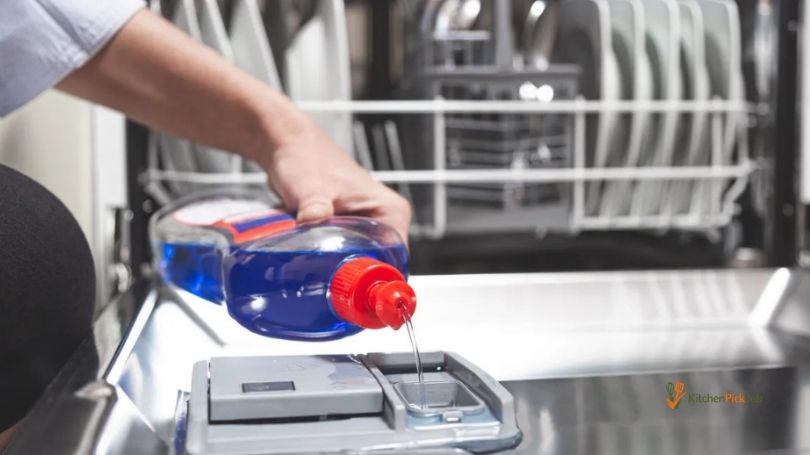
No, dish soap can’t go into a machine. Answering whether dish soap can be used in dishwasher systems requires looking at how standard liquid soaps foam. Running regular liquid dish soap creates thick suds that will overflow past the door seal within minutes. Shut the appliance off right away if you just poured it in.
Can you use dish soap in your dishwasher
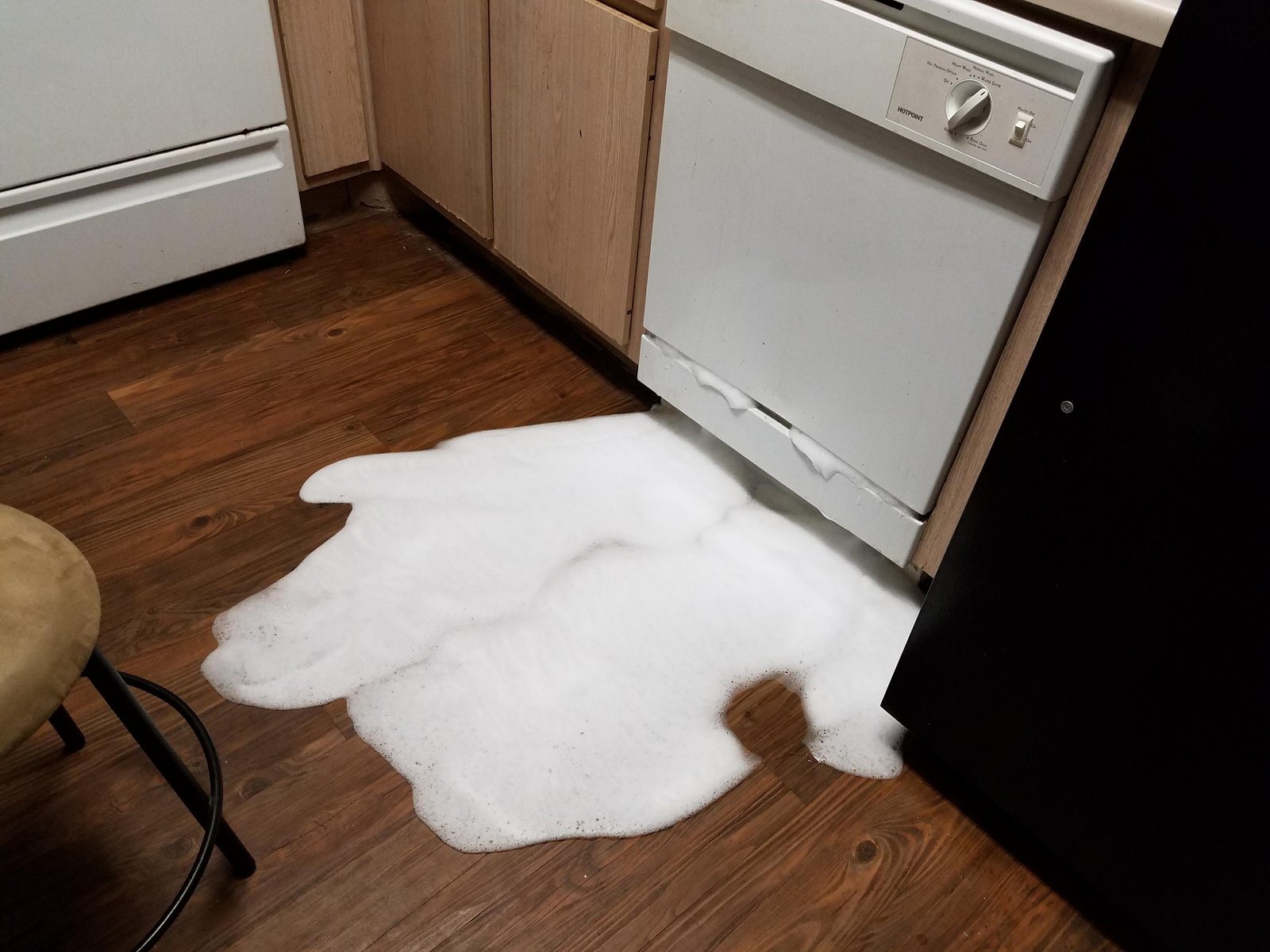
Your choice of cleaning product determines whether the appliance cleans properly or floods your kitchen floor.
| Your situation | Answer | Why |
|---|---|---|
| Ran out of detergent | No | Liquid hand soap creates suds |
| Washing heavily greasy pans | No | Degreasers foam uncontrollably inside pumps |
| Using liquid laundry detergent | No | Laundry liquid creates heavy suds |
| Using dishwasher-safe powder pods | Yes | Formulated not to create suds |
| Pre-washing dishes by hand | Yes, if rinsed | Residue left behind will foam |
Suds mechanisms and pump design
Liquid dish soap uses chemical agents that generate large amounts of bubbles to lift grease in an open sink. A dishwasher circulates water continuously through rotating spray arms using a high-speed electric motor. When foaming soap mixes with these high-pressure water jets, it acts like a giant blender, turning a few drops of soap into mountains of thick foam. Dishwasher pumps can’t move air or light foam; they require solid water to build pressure. The foam fills the entire cabinet, pushes past the bottom door gasket, and spills out onto your floor.
The honest limit is that this varies by model — check the label on your inner door frame to see what your machine allows. Premium appliances often shut down when sensors detect suds, while basic units keep running until water ruins the surrounding cabinets. Dishwasher detergents clean by using enzymes and water softeners rather than foaming bubbles, which appliance makers like Whirlpool dishwashers product guidance state plainly in their user care manuals. If the bottle creates thick foam in your sink, then keep it out of the machine; if the label says automatic dishwasher detergent, then it’s safe to load.
Safe alternatives for dirty dishes
- Run a cycle with plain hot water. Close the dispenser latch empty and select your machine’s hottest cycle to wash away light sauces with water pressure alone, which leaves dishes warm and free of suds.
- Wash the items by hand in the sink. Fill your sink basin with warm water and standard dish soap to clean tough, baked-on food manually, which leaves the plates fully clean immediately.
The plain hot water cycle isn’t for plates covered in thick animal fats. Baking soda isn’t for burnt pots that need heavy scrubbing. Hand washing isn’t for anyone who can’t stand at the sink to wash dinnerware individually.
Adding vinegar to kill bubbles
The single mistake people make is pouring cups of cold water or vinegar into a foaming machine while running the drain cycle again. Adding plain liquids causes the wash pump to whip the leftover soap into even taller suds, which pushes water deeper beneath your kitchen baseboards and floorboards. That oversight can rot subflooring and ruin electric pump motors, costing hundreds of dollars in repair bills.
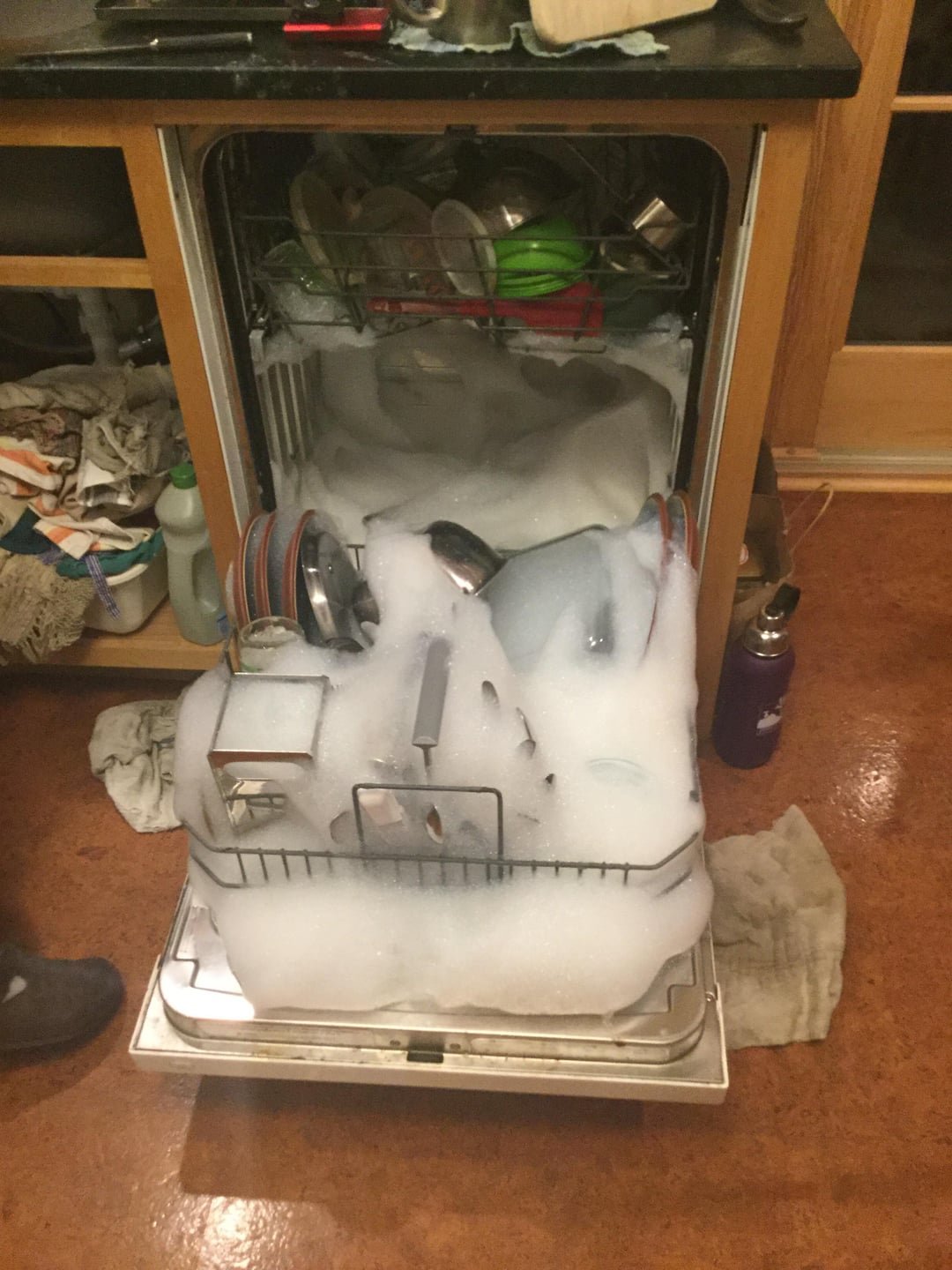
The trade-off here is clear: taking thirty minutes to physically scoop out suds saves you from replacing a broken drain motor. Grab a clean towel and physically scoop out every handful of suds from the bottom of the tub before running any liquid down the drain.
When to stop and get help
- Foam continues to bubble up through the kitchen sink drain during draining cycles, which points to a main plumbing pipe obstruction that needs a licensed plumber.
- Water leaks directly beneath the machine into the subfloor, which can ruin electrical components and requires an appliance technician.
- The machine displays an active leak error code that won’t clear after drying, which means internal sensors got wet and need professional service.
The next step needs electrical training if the drain pump hums loudly without pumping water, so call a factory-certified technician immediately.
What happens if you put dish soap in the dishwasher?
Thick foam fills the machine and pours onto the floor. Liquid dish soap is built to foam up, while dishwashers need non-foaming detergent. The foam ruins the pump’s water pressure, stops the cleaning process, and leaks out through the bottom door seams within ten minutes.
How do I stop a dishwasher overflowing with dish soap?
Cancel the cycle and turn the machine off right away. Open the door, scoop out all the suds with a bowl, and towel dry the bottom.
Can you use Dawn in the dishwasher if you only use a drop?
No, even a single drop produces enough foam to cause problems. Small amounts of high-concentration hand soap foam rapidly under the machine’s high-pressure water jets. The resulting suds will push past the lower door seal and trigger the float switch, stopping the appliance mid-wash.
How long does it take for suds to go away in a dishwasher?
Suds take several hours to settle naturally if left alone in the tub. You can clear them out in about twenty minutes by wiping the cabinet with dry towels and running a short drain cycle to flush the lines.
Is it safe to run a dishwasher with just water?
Yes, running an empty cycle with plain hot water is completely safe for the machine. Plain water removes dust, light crumbs, and fresh drink residues from your cups without damaging the motor. It will not, however, break down heavy animal fats or sticky food grease without detergent.
Why is dishwasher detergent different from sink dish soap?
Dishwasher detergent uses non-foaming surfactants and enzymes to dissolve food without creating bubbles. Sink soaps use heavy foaming agents to trap oils in open air. If you use sink soap inside a sealed appliance, the pressure builds foam instead of circulating clean water over plates.
Does vinegar get rid of dish soap suds?
Yes, white distilled vinegar helps break down soap suds when added to the tub. The light acid breaks the surface tension of the bubbles so water drains easily.
What to do next
Turn your dishwasher off right away and open the door to check for soap suds. Expect to wipe out the tub floor completely until you see bare metal with no foam left behind. Call an appliance technician if your machine still shows an error code after the floor has dried.