Top 5 Pantry Organization Tips for Small Kitchens
Last Updated on September 9, 2026
A small kitchen can quickly feel crowded, especially when pantry items are stored without a clear system. Cans, spices, snacks, grains, oils, and baking supplies can take over shelves, drawers, and countertops if everything does not have a proper place.
The good news is that you do not need a large walk-in pantry to keep your kitchen organized. With the right storage habits, even a small cabinet, shelf, or narrow pantry can hold your daily essentials neatly and efficiently.
In this guide, we’ll share the top 5 pantry organization tips for small kitchens to help you save space, reduce clutter, and make cooking easier.
Why Pantry Organization Matters in Small Kitchens
Pantry organization is important in any kitchen, but it becomes even more valuable when space is limited. In a small kitchen, one messy shelf can make the whole space feel difficult to use.
When your pantry is organized, you can quickly see what you have, avoid buying duplicates, and reduce food waste. It also makes meal preparation easier because ingredients are easier to find.
A well-organized pantry can help you:
- Save storage space
- Find ingredients faster
- Avoid expired food
- Reduce duplicate purchases
- Keep countertops clear
- Make cooking less stressful
- Improve the overall look of your kitchen
Small kitchens work best when every inch has a purpose. Pantry organization is not just about making shelves look nice—it is about making your kitchen more practical.
Quick Overview: Best Pantry Organization Tips
| Pantry Tip | Best For | Main Benefit |
|---|---|---|
| Declutter First | Removing expired or unused items | Creates instant space |
| Use Clear Containers | Dry goods, snacks, pasta, rice, flour | Makes food easy to see |
| Group Similar Items | Cans, spices, baking items, breakfast foods | Helps you find things faster |
| Use Vertical Space | Small shelves, cabinets, pantry doors | Increases storage capacity |
| Label Everything | Containers, baskets, shelves | Keeps the pantry organized long-term |
1. Declutter Your Pantry Before Organizing
Read More – 7 Food Storage Mistakes That Can Waste Space and Food
Before buying containers, baskets, or shelf organizers, start by decluttering your pantry. This is the most important first step because organizing items you do not need only wastes valuable space.
Small kitchens cannot afford to store expired food, empty boxes, duplicate seasonings, or ingredients you rarely use. When you remove unnecessary items, your pantry immediately becomes easier to manage.
How to Declutter Your Pantry
Start by taking everything out of your pantry, cabinet, or storage shelf. Place all items on a table or countertop so you can see what you actually have.
Then sort items into simple categories:
- Keep
- Use soon
- Donate if unopened and safe
- Throw away if expired or spoiled
- Move elsewhere if it does not belong in the pantry
Check expiration dates carefully, especially on spices, flour, baking powder, sauces, oils, and canned goods. Some pantry items last a long time, but they still lose flavor or quality over time.
What to Remove From a Small Pantry
To create more space, remove:
- Expired food
- Stale snacks
- Empty or nearly empty packaging
- Duplicate items you do not need
- Ingredients bought for one recipe but never used again
- Damaged cans or leaking packages
- Non-food items that belong elsewhere
If you find multiple open bags of the same item, combine them if they are still fresh and safe. For example, two bags of rice or pasta can often be stored in one container.
Why Decluttering Saves Space
Decluttering helps you understand your real storage needs. Many people think they need more pantry space, but the real problem is that too many unused items are taking up room.
Once you remove unnecessary products, you may discover that your small pantry has more usable space than you expected.
Decluttering Tip for Small Kitchens
Use the one-in, one-out rule. When you buy a new pantry item, try to use or remove an older item first. This helps prevent overcrowding and keeps your pantry from becoming messy again.
2. Use Clear Containers for Dry Goods
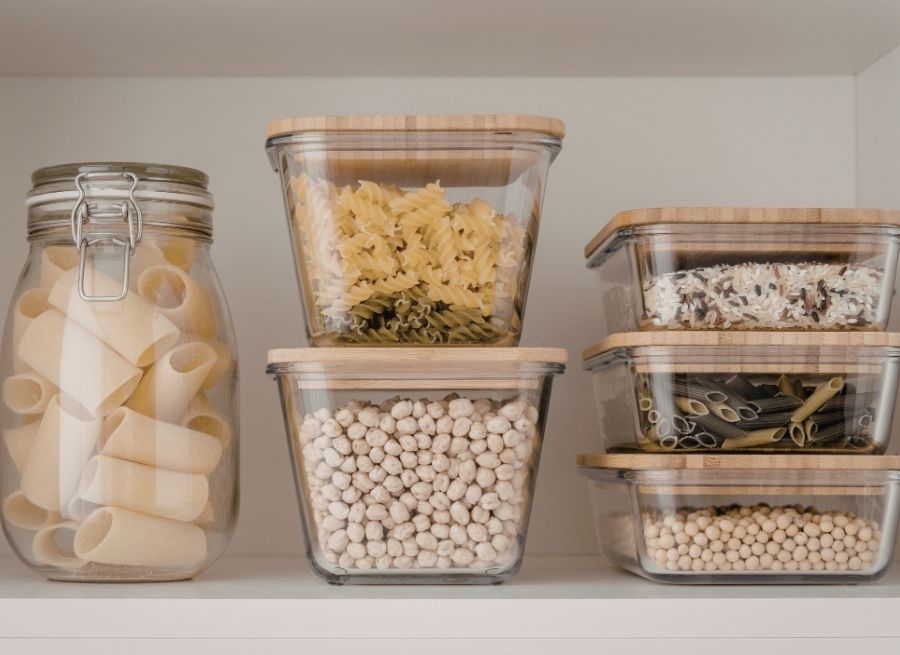
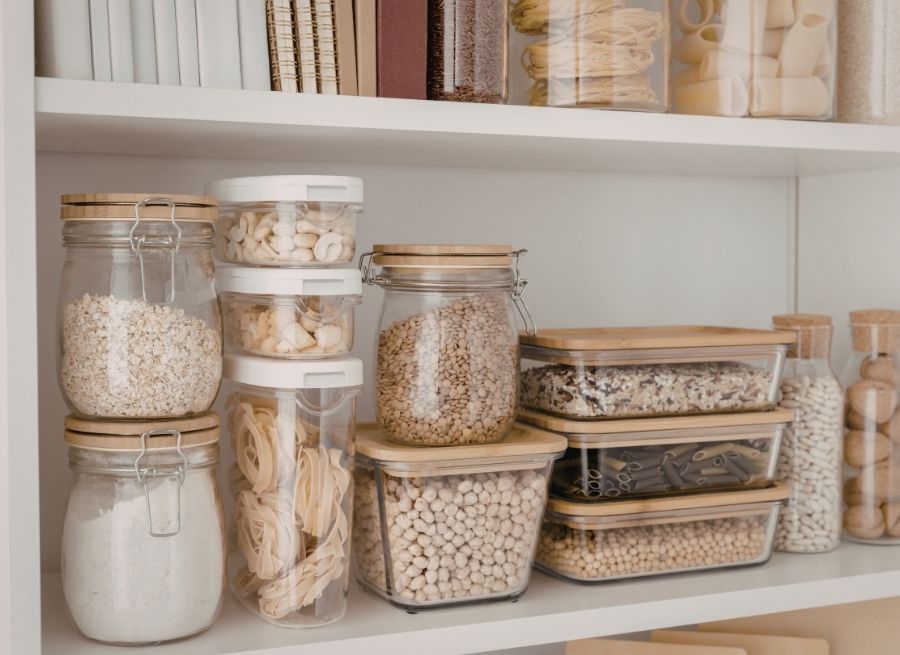
Clear containers are one of the best pantry organization tools for small kitchens. They make shelves look neater and help you see exactly how much food you have.
Dry goods often come in bulky bags or boxes that do not stack well. Items like rice, pasta, flour, sugar, oats, cereal, lentils, and snacks can take up more space than necessary when stored in original packaging.
Best Pantry Items to Store in Clear Containers
Clear containers work well for:
- Rice
- Pasta
- Flour
- Sugar
- Oats
- Cereal
- Lentils
- Beans
- Nuts
- Seeds
- Crackers
- Snacks
- Baking ingredients
Using containers also helps protect food from spills, moisture, and pests. Airtight containers are especially useful for ingredients that need to stay fresh.
Benefits of Clear Pantry Containers
Clear containers can help you:
- See food levels easily
- Reduce bulky packaging
- Stack items more neatly
- Keep dry goods fresher
- Make shelves look cleaner
- Avoid buying duplicates
- Create a more uniform pantry system
For small kitchens, square or rectangular containers are usually better than round ones because they use shelf space more efficiently.
How to Choose the Right Containers
When choosing pantry containers, look for:
- Airtight lids: Help keep food fresh.
- Stackable design: Saves vertical space.
- Clear material: Makes contents easy to identify.
- Different sizes: Works better for different ingredients.
- Easy-pour shape: Useful for cereal, rice, and pasta.
- Wide opening: Easier to refill and clean.
You do not have to buy all containers at once. Start with the items you use most often, such as rice, flour, pasta, oats, or cereal.
Budget-Friendly Container Ideas
If you are organizing on a budget, you can also reuse clean glass jars, mason jars, or sturdy food containers. The goal is not to create a perfect social-media pantry. The goal is to make your small kitchen more functional.
3. Group Similar Items Together
Read More – 5 Useful Storage Containers for Everyday Kitchen Use
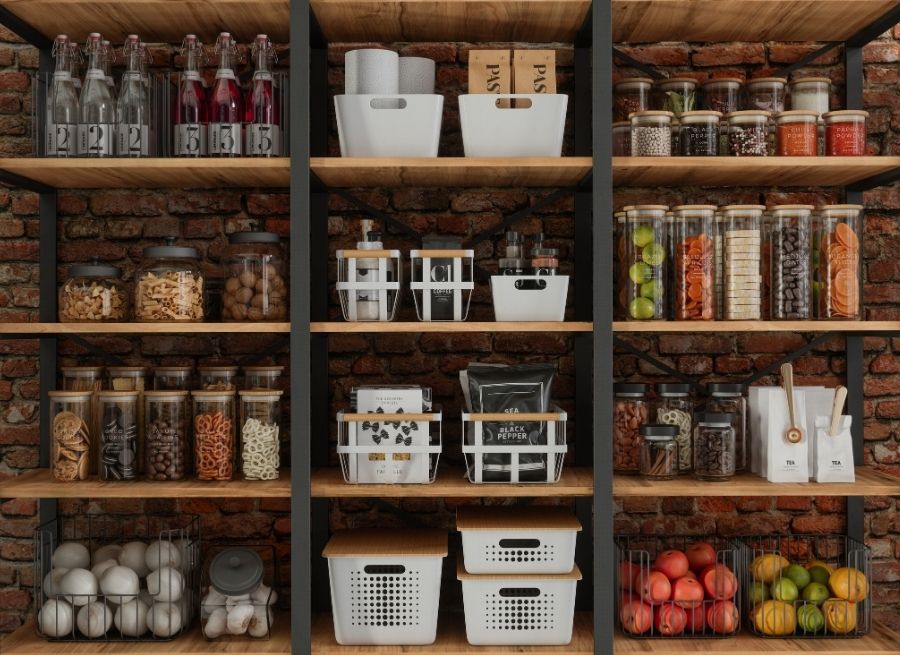
Grouping similar pantry items is a simple but powerful way to keep a small kitchen organized. When items are placed randomly, you waste time searching for ingredients and may forget what you already have.
By creating zones, every type of food has a clear home.
Pantry Categories to Create
You can organize your pantry into categories such as:
- Baking supplies
- Breakfast items
- Snacks
- Pasta and grains
- Canned goods
- Spices and seasonings
- Oils and sauces
- Tea and coffee
- Nuts and dried fruits
- Meal prep ingredients
- Kids’ snacks
- Quick dinner items
The categories you choose should match your cooking habits. If you bake often, your baking section should be easy to access. If your family snacks frequently, keep snacks in one simple zone.
Why Pantry Zones Work Well
Pantry zones make your kitchen easier to use. When all similar items are together, you can quickly check what you have before shopping.
For example, if all canned goods are in one area, you can easily see whether you already have tomatoes, beans, coconut milk, or soup. This helps prevent overbuying and keeps shelves from becoming overcrowded.
Use Baskets or Bins for Groups
Baskets and bins are especially helpful in small kitchens because they keep loose items contained. Instead of having snack bars, spice packets, sauce mixes, or small bags scattered across a shelf, you can store them together in a bin.
Good pantry bin ideas include:
- Snack bin
- Baking bin
- Pasta night bin
- Breakfast bin
- Spice packet bin
- Tea and coffee bin
- Kids’ lunchbox bin
Bins also make deep shelves easier to use. You can pull out the whole bin instead of moving several items one by one.
Keep Daily-Use Items at Eye Level
Place your most-used ingredients where they are easiest to reach. Items used less often can go on higher or lower shelves.
A practical pantry layout may look like this:
- Eye level: Daily ingredients, snacks, breakfast items
- Upper shelves: Backup supplies, baking ingredients, less-used items
- Lower shelves: Heavy items, large containers, extra cans, oils
This keeps your small pantry convenient and safe to use.
4. Maximize Vertical Space
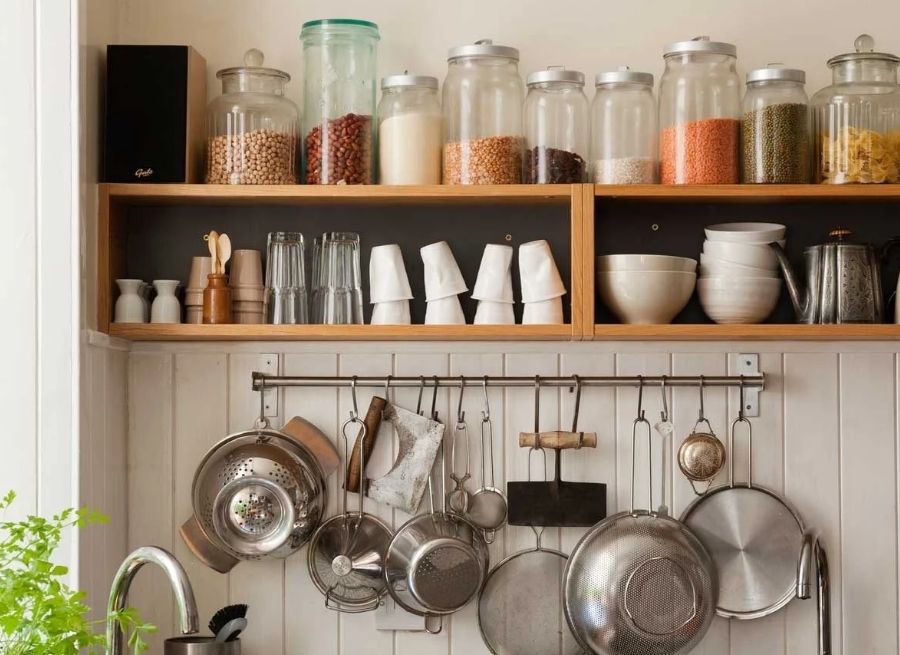
In small kitchens, vertical space is extremely valuable. Many pantry shelves have unused height between items, especially when short cans, jars, or boxes sit on tall shelves.
Using vertical space helps you store more items without making the pantry feel messy.
Best Ways to Use Vertical Pantry Space
You can maximize vertical space with:
- Stackable containers
- Shelf risers
- Tiered spice racks
- Under-shelf baskets
- Door-mounted organizers
- Wall-mounted racks
- Stackable bins
- Lazy Susans for corners
These tools help you use the full height of cabinets and shelves.
Use Shelf Risers for Cans and Jars
Shelf risers create an extra level inside your pantry. They are useful for cans, jars, mugs, spices, and small containers.
Instead of placing everything in one flat row, you can create two levels. This makes items easier to see and helps prevent small products from getting hidden in the back.
Add Storage to the Pantry Door
If your pantry has a door, use it. The back of the door can hold lightweight items and free up shelf space.
Door organizers are useful for:
- Spices
- Sauce packets
- Tea bags
- Small snacks
- Foil and plastic wrap
- Seasoning mixes
- Small jars
- Measuring spoons
Just avoid placing very heavy glass jars or large bottles on a weak door rack.
Use Lazy Susans for Corners
A lazy Susan, or turntable organizer, is helpful for small bottles and jars. It works especially well for oils, vinegars, sauces, spreads, and spices.
Instead of reaching into the back of a shelf, you can rotate the organizer and find what you need quickly.
Think Up, Not Out
In a small kitchen, spreading items across counters and extra surfaces creates clutter. Instead, think vertically. Use shelves, cabinet height, doors, and stackable storage to keep more items organized in less space.
5. Label Everything Clearly
Read More – 8 Things to Consider Before Buying Food Storage Containers
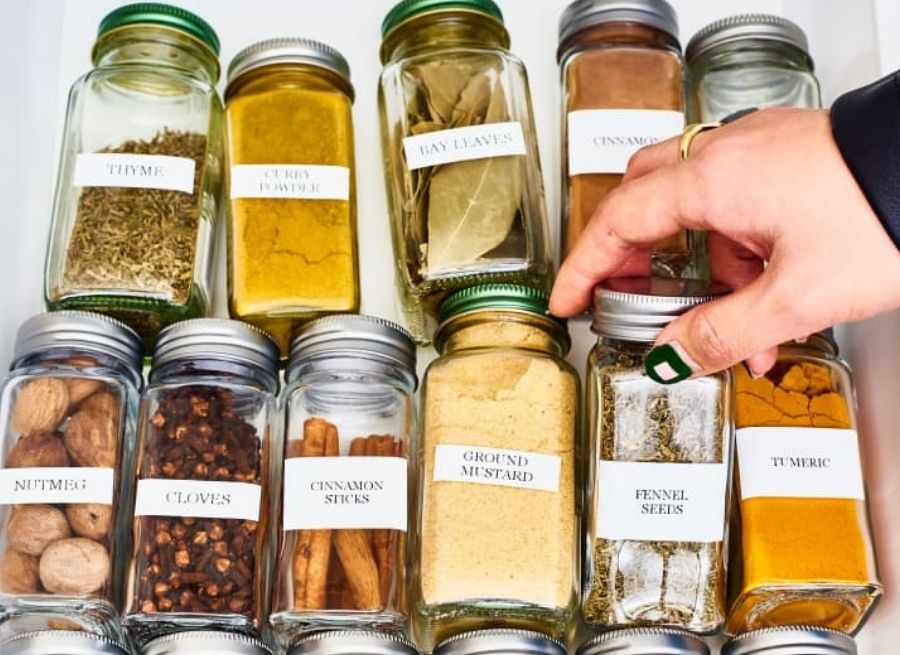
Labels may seem like a small detail, but they make a big difference in pantry organization. Once items are removed from original packaging, labels help everyone in the household know what is inside each container.
Labels also help maintain your pantry system over time. Without labels, containers and bins can quickly become confusing.
What to Label in Your Pantry
You can label:
- Clear containers
- Baskets
- Bins
- Spice jars
- Shelf zones
- Snack boxes
- Baking supplies
- Bulk ingredients
- Opened food containers
For dry goods, it is also helpful to include the expiration date or purchase date, especially for flour, grains, nuts, seeds, and baking ingredients.
Benefits of Pantry Labels
Labels help you:
- Identify ingredients quickly
- Avoid mixing up similar items
- Keep family members organized
- Refill containers correctly
- Track expiration dates
- Maintain pantry zones
- Reduce food waste
For example, flour, powdered sugar, cornstarch, and baking powder can look similar in containers. Labels prevent mistakes while cooking or baking.
Simple Labeling Ideas
You can use:
- Sticker labels
- Chalkboard labels
- Masking tape
- Label maker labels
- Clip-on bin labels
- Washable marker labels
- Printed labels
The style does not need to be fancy. Clear, readable labels are more important than decorative ones.
Label by Category, Not Just Product
For baskets and bins, category labels are often better than individual product labels. For example:
- Snacks
- Baking
- Breakfast
- Pasta
- Cans
- Spices
- Sauces
- Tea and Coffee
This makes it easier to return items to the correct place after shopping or cooking.
Keep Labels Flexible
Your pantry needs may change over time. Choose labels that are easy to update, especially if you often rotate ingredients. Removable stickers or erasable labels work well for small kitchens.
Extra Pantry Organization Ideas for Small Kitchens
Once you apply the main tips above, a few extra habits can help keep your pantry organized for the long term.
Use First In, First Out
The first in, first out method means older items should be used before newer items. When you buy new groceries, place them behind older items so the older products get used first.
This is especially helpful for:
- Canned goods
- Pasta
- Rice
- Snacks
- Sauces
- Baking ingredients
- Breakfast items
This simple method helps reduce expired food and saves money.
Avoid Overbuying Bulk Items
Buying in bulk can save money, but it is not always practical for small kitchens. Large bags and boxes can quickly take over pantry space.
Before buying bulk items, ask yourself:
- Do I use this often?
- Do I have enough storage space?
- Can I store it in an airtight container?
- Will I finish it before it expires?
Bulk buying works best for ingredients you use regularly, such as rice, oats, flour, pasta, or beans.
Keep Countertops Clear
If pantry items spill onto countertops, your kitchen can feel smaller than it actually is. Try to keep only daily-use items on the counter, such as coffee supplies or cooking oil.
Everything else should have a place in a cabinet, pantry shelf, drawer, or basket.
Do a Monthly Pantry Check
A quick monthly pantry check can prevent clutter from building up. You do not need to reorganize everything every week. Just spend a few minutes checking for expired items, empty containers, and products that need to be used soon.
Common Pantry Organization Mistakes to Avoid
Even with good intentions, some pantry organization methods can create more problems than they solve. Here are a few mistakes to avoid.
Buying Organizers Before Measuring
Before buying bins, containers, or shelf risers, measure your pantry shelves. Small kitchens often have narrow or unusual cabinet sizes, so not every organizer will fit.
Measure:
- Shelf width
- Shelf depth
- Shelf height
- Door clearance
- Space between shelves
This helps you avoid wasting money on storage products that do not work in your kitchen.
Using Too Many Different Container Shapes
Different container shapes can make shelves harder to organize. For small kitchens, matching or similar-shaped containers usually stack better and use space more efficiently.
Square and rectangular containers are often the best choice.
Hiding Items in Deep Shelves
Deep shelves can be tricky because items in the back are easy to forget. Use pull-out bins, lazy Susans, or tiered organizers to make deep shelves more accessible.
Keeping Too Many “Just in Case” Items
Many pantry shelves are crowded with ingredients saved for “someday.” If you have not used an item in months and do not have a plan for it, it may be time to remove it.
Not Maintaining the System
Pantry organization is not a one-time project. It needs simple maintenance. Put items back in their zones, check dates occasionally, and avoid overfilling shelves.
Best Pantry Setup for a Small Kitchen
A simple pantry setup is often the most effective. You do not need complicated storage systems to keep a small pantry neat.
A practical small-kitchen pantry setup may include:
- Clear airtight containers for dry goods
- Baskets or bins for snacks and small packets
- Shelf risers for cans and jars
- Door organizer for spices and lightweight items
- Lazy Susan for oils, sauces, or condiments
- Labels for containers and categories
This setup helps you use shelf height, reduce packaging clutter, and make everything easier to find.
FAQs About Pantry Organization for Small Kitchens
1. How do I organize a pantry in a very small kitchen?
Start by removing expired and unused items. Then group similar foods together, use clear containers for dry goods, add shelf risers for vertical space, and label bins or shelves. Keep daily-use items at eye level and store less-used items higher or lower.
2. What containers are best for a small pantry?
Clear, stackable, airtight containers are best for a small pantry. Square or rectangular containers usually save more space than round ones. Use them for rice, pasta, flour, sugar, oats, cereal, lentils, and snacks.
3. How can I organize pantry items without buying expensive organizers?
You can use clean jars, reused food containers, baskets, small boxes, or simple labels made from tape. Decluttering and grouping similar items together can improve organization even without buying new products.
4. What should not be stored in a pantry?
Avoid storing items that need refrigeration, heat-sensitive foods near the stove, cleaning chemicals with food, or expired products. Also avoid keeping too many bulk items if your pantry space is very limited.
5. How often should I clean and organize my pantry?
A quick pantry check once a month is helpful. Look for expired items, empty containers, stale snacks, and ingredients that should be used soon. A deeper pantry clean can be done every few months.
Conclusion
A small kitchen can still have a well-organized and functional pantry. The key is to use space wisely and keep only what you truly need.
Start by decluttering your pantry, then use clear containers, group similar items, maximize vertical space, and label everything clearly. These simple habits can make your pantry easier to use, easier to clean, and much more efficient.
You do not need a large pantry or expensive organizers to create a better system. With a few smart changes, even a small kitchen can feel more spacious, organized, and enjoyable to cook in.