Can You Use Baking Soda On Carpet?
Yes, but you should only use it on dry synthetic rugs. If your rug is wool or wet, the answer to whether you can use baking soda on carpet shifts to no because it damages the pile. Check your rug’s fiber tag right now to see what material it’s made from.
When to use baking soda on carpet
Your carpet fiber and moisture level decide if powder is safe.
| Your situation | Answer | Why |
|---|---|---|
| Dry nylon or polyester carpet | Yes | Powder absorbs smells and lifts easily |
| Wool or silk carpet | No | High pH weakens delicate natural protein fibers |
| Damp or wet carpet spill | No | Powder turns into paste inside pile |
| Cheap vacuum with standard filter | No | Fine dust clogs motor and exhausts out |
| Heavy pet urine soak | No | Traps moisture underneath carpet backing |
| Low-pile commercial hallway rug | Yes | Short fibers release dry powder quickly |
Carpet fibers and vacuum filters
The physical size of the powder grain and the carpet fiber type decide whether this method works. Baking soda, or sodium bicarbonate, has an alkaline pH of roughly 8 to 9. Synthetic fibers like nylon and polyester handle high pH levels without breaking down. Wool and silk are natural protein fibers that weaken and become brittle when alkaline substances touch them. You trade deep fiber safety for surface odor control whenever you put alkaline powder on wool.
The other major factor is the filter on your cleaning equipment. Baking soda grains measure around 50 to 100 microns across, but tiny broken dust particles fall below 10 microns. Standard vacuum filters let these tiny particles blow straight through the bag and into the motor chamber. The EPA indoor air quality guide notes that true HEPA filters capture particles down to 0.3 microns, which stops fine powders from blowing back into your living room. If you have dry synthetic pile and a HEPA vacuum, then go ahead; if you have wet spots, wool rugs, or a bagless vacuum without a sealed filter, then skip the powder entirely.
Steps for dry synthetic carpet
Follow these steps to clean odors safely on standard synthetic fibers.
- Test a hidden spot behind a door by applying 1 teaspoon of powder, waiting 15 minutes, and vacuuming. The step worked if the rug color looks completely unchanged.
- Sprinkle a thin layer using about 1 cup of powder across the entire 100-square-foot space.
- Wait 20 minutes so the powder can trap trapped odor molecules in the air pockets. The room will smell noticeably less musty before you even turn the vacuum on.
- Empty your vacuum bag or dirt cup before you begin cleaning so airflow stays high. Strong suction shows your machine is ready for fine dust.
- Vacuum slowly over the rug making two slow passes over each section of flooring. The carpet pile will feel soft and leave no white dust on your hand when brushed.
This method is NOT for anyone dealing with standing liquid, thick shag wool rugs, or homes using filtered-water vacuums that can’t trap mineral dust.
Clogging the vacuum motor
The single biggest mistake people make is dumping powder directly onto wet carpet to soak up liquid spills. When baking soda mixes with liquid deep in the fibers, it forms a thick paste that sinks down into the carpet pad. Once it dries, it turns into a rock-hard mineral layer that resists suction. This mistake costs homeowners hundreds of dollars when they have to replace their vacuum motor after dust bypasses the filter, or when they must pay to replace the underlying pad. Check the spill with a dry paper towel first; if any moisture transfers to the paper, don’t put dry powder on the spot.
When to stop and get help
Stop trying to clean the rug yourself if you notice these warning signs: * Pet urine has soaked through to the subfloor, because home vacuums can’t reach deep backing pad contamination. * A white crust remains visible after three vacuum passes, which means moisture bound the powder to the fibers. * Your vacuum motor emits an electrical burning smell, which means fine dust entered the motor housing.
Call a certified professional carpet cleaner with truck-mounted steam extraction equipment when deep pad contamination occurs.
Frequently asked questions
Can baking soda ruin carpet?
Yes, it can ruin wool fibers and carpet backing. The alkaline mineral crystals fray natural fibers and form a hard paste if wet. Always verify your rug fiber on the manufacturer tag before using any dry powders.
How long should baking soda sit on carpet?
About 20 minutes is enough time for dry synthetic rugs.
Is baking soda safe for pets on carpet?
Yes, but only in very small amounts after thorough vacuuming. Inhaling large amounts of loose dust irritates an animal’s nose and lungs. Keep cats and dogs in another room until you finish vacuuming all powder away.
What happens if you get baking soda wet on carpet?
It creates a chalky paste that clings to the base of the pile. When that paste dries, normal vacuum suction can’t lift it out. You’ll need hot water extraction equipment to dissolve and rinse the dried salt out.
Why does my carpet feel gritty after using baking soda?
Your vacuum lacked the suction or filtration needed to pull the small particles out of the dense pile. Run a vacuum with a clean HEPA filter across the area slowly, making passes in opposite directions to lift the grains.
Does baking soda remove carpet stains?
No, dry baking soda only absorbs odors and loose greasy surface films. Removing set-in pigment stains requires liquid spot cleaners matched to the specific fiber type rather than dry household powders.
What to do next
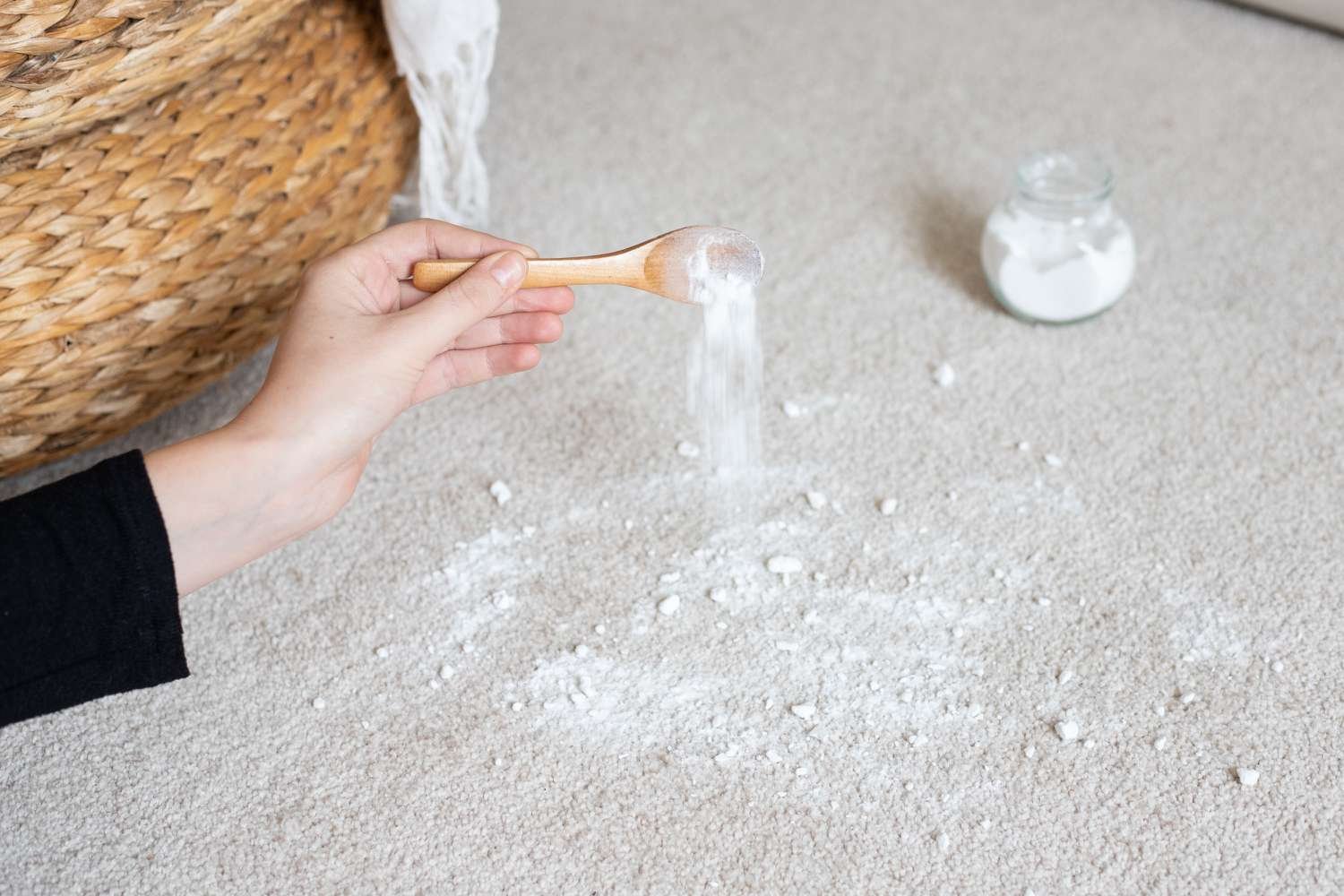
Check the tag on the back of your rug to confirm it’s synthetic and completely dry. Sprinkle a light dusting across the surface, wait 20 minutes, and vacuum it up using a clean filter to remove household odors. If the carpet feels crunchy or white residue stays trapped deep in the pile, stop vacuuming and hire an extraction service.
Final Thoughts
Once you’ve finished cleaning, don’t forget to store your vacuum cleaner properly so it’s ready for next time. Keeping your floors fresh doesn’t have to be a chore when you’ve got the right tools on hand. You’ll be surprised how much brighter your living space looks after a quick, simple refresh.