Can You Season Cast Iron With Bacon Grease? The Expert Verdict
Yes, but rarely recommended. Commercial pork fat contains salt, water, and proteins that can leave your skillet sticky or smelling rancid over time. You can season cast iron with bacon grease only when the fat is thoroughly strained and free from curing additives. If your pan smells like old meat right now, wash it with warm water and soap immediately.
When to season cast iron with bacon grease
Your pan’s surface condition and your fat source decide whether this method works.
| Your situation | Answer | Why |
|---|---|---|
| Fresh bacon fat straight from breakfast pan | No | Unfiltered salt and meat bits burn onto iron |
| Home-rendered bacon grease strained through fine mesh | Yes | Straining removes solids that spoil at room temperature |
| Bare, stripped cast iron needing first layer | No | Pure unsaturated plant oils bond much harder initially |
| Maintenance wipe after cooking and drying pan | Yes | Strained fat coats iron against moisture between meals |
Fat chemistry and food solids
Seasoning isn’t just wiping grease onto hot metal; it’s a chemical reaction called polymerization. When you heat unsaturated fats past their smoke point, they break down, link together, and form a hard, plastic-like protective layer over the porous iron. Bacon fat consists mainly of monounsaturated and saturated fatty acids. Saturated fats form a softer, less durable surface than high-polyunsaturated alternatives like grapeseed or sunflower oil.
The bigger problem comes from additives. Store-bought bacon is cured with salt, sugar, nitrates, and liquid smoke. When you heat unrendered grease in your oven, those suspended sugars char into abrasive black specks rather than bonding into a smooth film. Sodium draws in ambient moisture, which can cause surface rust under your newly applied coat. Unstrained microscopic proteins also spoil when exposed to air, leaving a foul odor on your cookware.
How to apply bacon fat safely
This process requires clean fat and an oven running at 400°F (204°C). This method is NOT for cast iron collectors restoring antique, stripped pans that require rock-hard base layers.
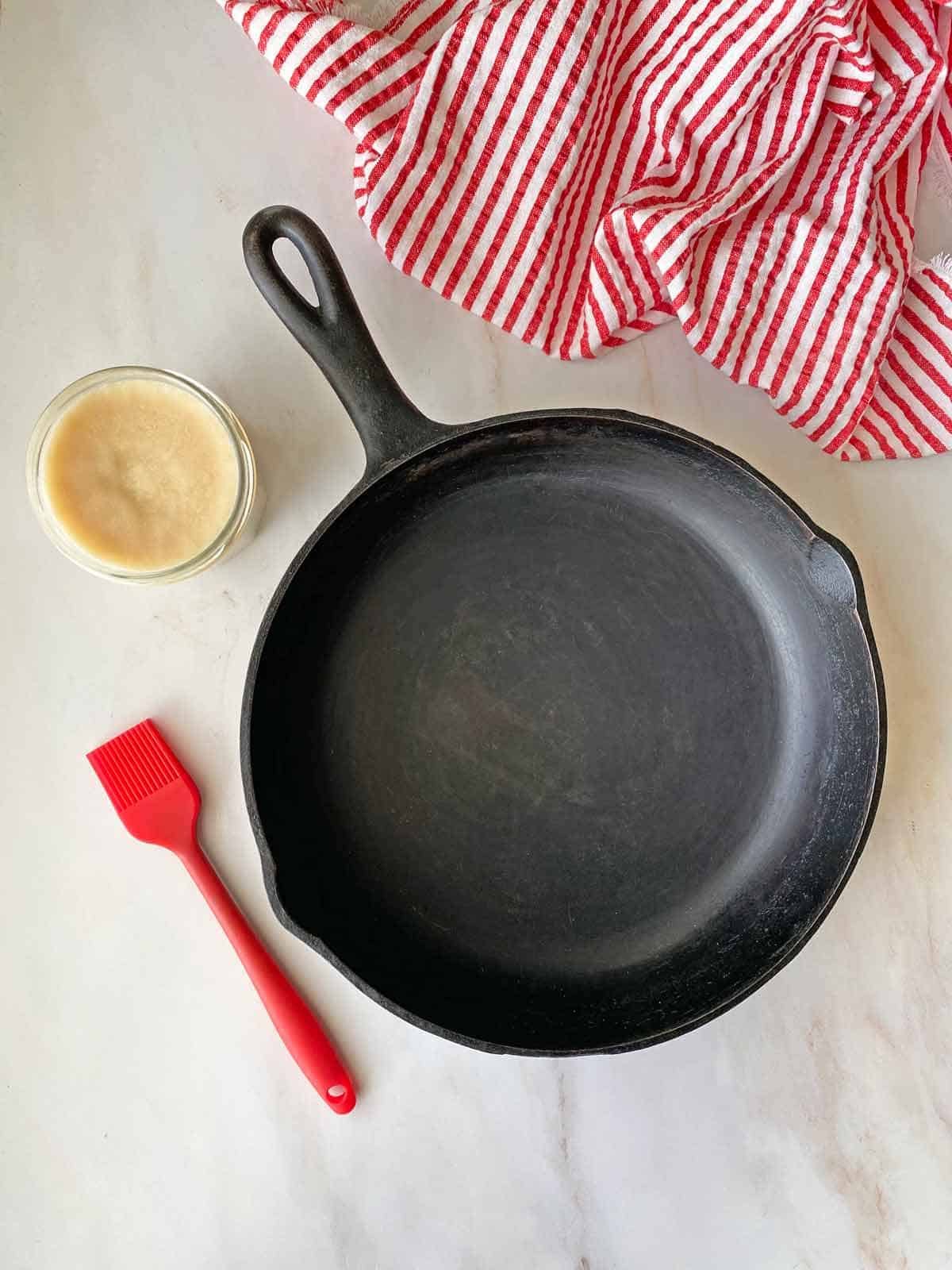
- Strain warm bacon fat through a coffee filter or tight double-mesh sieve into a clean glass jar. The liquid should look clear and amber without any brown flecks settled at the bottom.
- Wash the skillet using hot water, mild dish soap, and a stiff brush, then dry it on your stovetop over medium heat for 3 minutes. The surface looks completely matte and releases no steam when fully dry.
- Rub 1 teaspoon of liquid fat across the entire skillet using a clean paper towel. The metal will look wet and glossy across the inside, sides, and bottom.
- Wipe off the grease using a fresh, dry cloth until the pan looks completely dry again. The pan should show a faint sheen with no visible puddles or wet spots remaining.
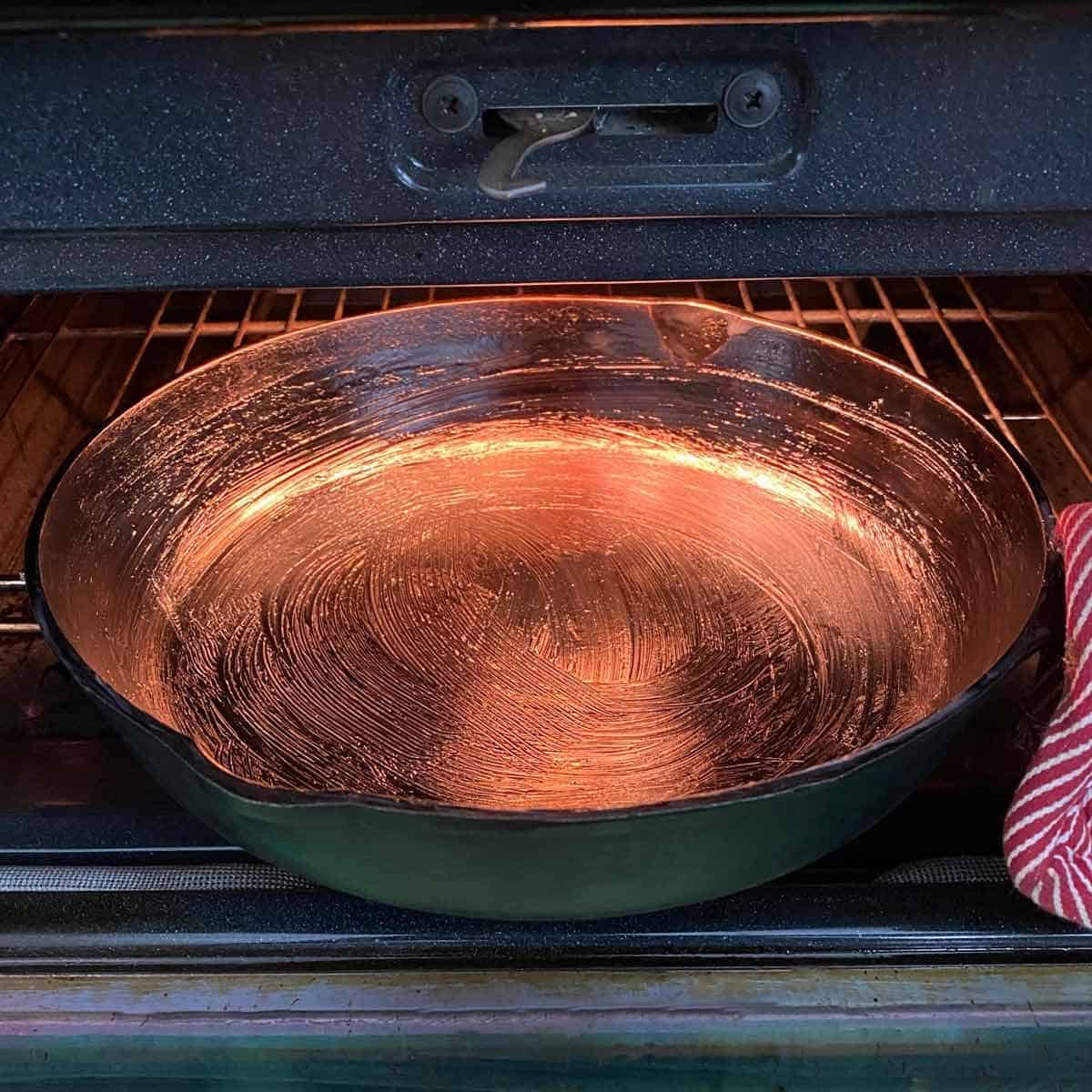
- Bake inverted at 400°F (204°C) on the middle oven rack for 60 minutes, placing foil on the lower rack. A smooth, non-tacky finish indicates the fat has successfully polymerized.
Leaving excess grease on the surface
The most common mistake is leaving too much fat on the metal. People leave a visible pool, expecting a thick shell. Excess grease turns into a sticky, gummy sludge. Stripping that mess ruins the base coat. If the paper towel picks up wet residue, the surface has too much fat.
When to stop and get help
Some pan problems can’t be resolved by wiping fat or baking the skillet in a home oven:
- The pan has warped along the bottom and rocks on flat glass cooktops, which means the iron structure took permanent thermal damage.
- Deep orange rust has pitted the metal surface, requiring chemical electrolysis or mechanical wire-wheel grinding rather than regular cooking oils.
- You see hairline cracks along the base or where the handle joins the rim, which makes the pan unsafe to hold hot food.
When you notice structural cracks or extreme warping, stop cooking with the pan immediately.
Frequently asked questions
Can bacon grease go rancid on cast iron?
Yes. Animal fats contain proteins and residual moisture that break down when exposed to room-temperature oxygen. If you store a bacon-coated skillet inside a dark cupboard for several weeks without use, the grease breaks down into smelly free fatty acids that taint food cooked afterward.
What happens if you season with salted bacon fat?
The pan becomes sticky and may develop tiny rust spots. Salt acts as an abrasive contaminant that draws ambient moisture straight into the microscopic pores of the metal. It also prevents the fat molecules from linking smoothly, creating a patchy, rough, and uneven surface.
Why does my skillet feel sticky after baking?
You used too much grease or didn’t bake it hot enough. Fats must reach their smoke point to polymerize into a hard layer. If excess fat sits on the iron below that temperature, it partially cures into a soft, gummy residue instead of a dry, non-stick glaze.
Is vegetable oil better than bacon grease for seasoning?
Yes. Vegetable oils like canola or grapeseed contain higher amounts of polyunsaturated fats than pork lard. These chemical bonds cross-link faster and form a much harder, tougher coating. Vegetable oils also lack animal proteins, so they won’t turn rancid if your skillet sits unused.
Can you cook bacon in a new cast iron pan?
Yes, but be aware that sugar-cured bacon may leave sticky residue that requires thorough cleaning. Factory coatings on modern pans are often slightly rough, and modern bacon contains high amounts of cured sugar. That sugar caramelizes, burns, and glues the meat directly to the iron floor. You should cook fatty meats without added sugars, like hamburger, until your seasoning matures.
Does it matter if I season the outside of the pan?
Yes. Bare cast iron rusts whenever it meets moisture in the air or water drops from your sink. You should rub a microscopic layer of fat across the outside walls and bottom base, wiping it completely dry before baking, to stop rust from attacking the exterior iron.
What to do next
Wash your skillet, dry it completely over a low burner, and inspect the surface for any sticky spots or dark residue. You should expect a smooth, dark, non-reflective surface that feels entirely dry to a bare fingertip. If you find sticky, gummy buildup that refuses to wipe away with a towel, stop adding fat and scrub the pan clean with coarse kosher salt and hot water.