Can You Mix Peroxide And Baking Soda?
Yes, but only right before you use it. Can you mix peroxide and baking soda? The simple answer is that the combination creates an effective, bubbly paste for lifting organic stains and scrubbing hard surfaces. But this holds only if you prepare the blend in an open container and use it immediately. Grab an open bowl now, mix just enough for your current task, and never put a lid on the leftover paste.
When to mix peroxide and baking soda
Your surface material and storage method determine whether combining these two household staples is safe or destructive.
| Your situation | Answer | Why |
|---|---|---|
| Grout with dark stains | Yes | Bubbles lift stuck dirt from porous cement |
| Storing leftovers in a jar | No | Trapped oxygen gas builds dangerous pressure |
| Polished natural marble counters | No | Gritty soda scratches soft stone surfaces |
| White cotton clothing stains | Yes | Peroxide bleaches organic yellowing safely |
| Colored silk or wool garments | No | Peroxide strips dyes and weakens natural fibers |
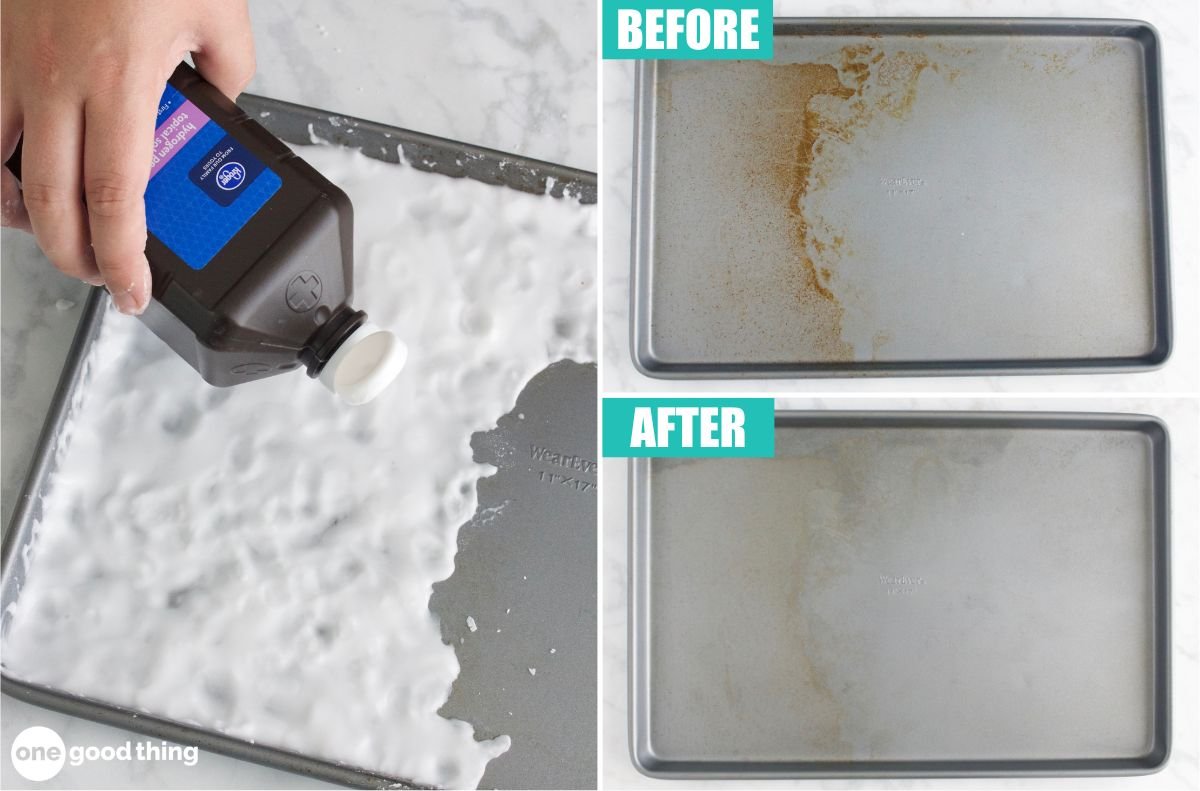
| Burnt oil on steel pans | Yes | Mild abrasives loosen baked-on cooking grease |
Chemical action and pressure limits
Oxygen gas production is the primary factor that governs how this mixture behaves. Household hydrogen peroxide contains about 3% peroxide and 97% water. When you add sodium bicarbonate (baking soda), the mild alkaline pH of the soda speeds up the breakdown of peroxide into water and pure oxygen gas. This reaction creates the fizzing foam that actively lifts dirt, blood, and grease off household surfaces.
Surface durability also dictates your success. The CDC guideline for chemical disinfection describes hydrogen peroxide as an effective oxidant, but its bleaching power ruins colored fabrics. At the same time, baking soda acts as a mechanical abrasive. While it can be used on some surfaces, it will dull soft car paint, aluminum, and limestone. If the surface is non-porous, colorfast, and unsealed, then apply the mix right away; if the item is fragile, dark-dyed, or sealed in a tight container, then leave the ingredients apart.
Preparing and applying fresh paste
Follow these simple steps to treat tough spots on ceramic tile, white fabric, or steel cookware.
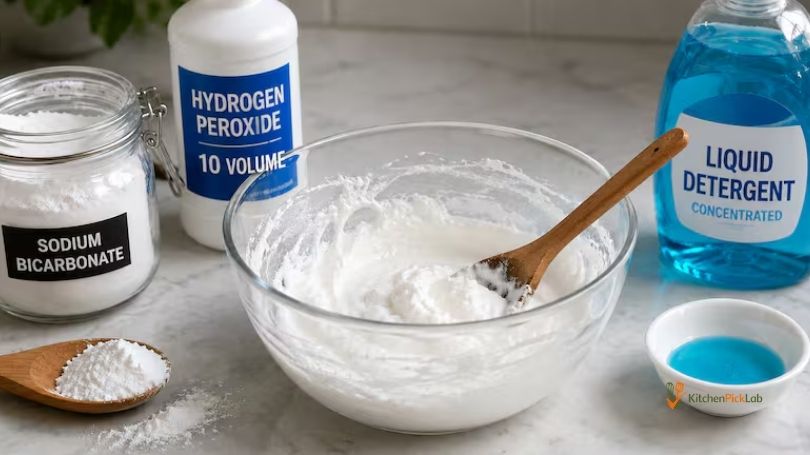
- Measure two parts baking soda to one part peroxide into an open glass bowl, using two tablespoons of soda and one tablespoon of 3% hydrogen peroxide for small stains. A thick, wet spread forms without running off the target area.
- Stir the mixture gently with a spoon for roughly ten seconds until the powder is fully damp. The paste begins to fizz lightly in the dish.
- Spread the paste directly onto the stain using an old toothbrush or a spatula, keeping the layer about an eighth of an inch thick. The paste rests flat against the grime.
- Let the paste sit for ten minutes so the bubbling action can break down the surface discoloration. The paste starts to dry around the edges as oxygen escapes.
- Wipe the area clean with a damp cloth and rinse with cool tap water to remove all chalky residue. The surface feels smooth and shows no gritty powder.
This DIY paste isn’t for anyone who needs to store cleaning products under the sink for quick daily use.
The risk of sealed containers
Storing this mixture in a sealed bottle is a dangerous mistake that can cause containers to burst. The chemical reaction continues inside a sealed bottle. Expanding gas warps plastic and shatters glass. Avoid this by preparing only what you need in an open bowl and discarding leftovers down the drain.
When to stop and get help
- Deep mold covers more than ten square feet of drywall or subflooring, because structural remediation requires certified hazardous waste contractors.
- Liquid peroxide splashes into an eye and stinging persists past fifteen minutes of continuous water flushing, which demands immediate emergency medical attention.
- Historic, antique, or delicate dry-clean-only fabrics suffer heavy stains, because home oxidizers permanently dissolve animal fibers.
- Natural stone installations like travertine or dark granite lose their factory polish, which calls for professional stone restoration specialists.
Always stop when materials start to pit or fade.
Frequently asked questions
Can you brush your teeth with peroxide and baking soda?
Yes, but don’t make it a daily routine. The paste can whiten surface stains, but the gritty texture wears down tooth enamel over time. Ask your dentist for safe usage intervals, and spit out all liquid thoroughly so you never swallow household peroxide.
Why does peroxide fizz when touching baking soda?
The alkaline baking soda speeds up the peroxide breakdown. The escaping gas creates thousands of bubbling pockets that mechanically loosen crusted dirt from surfaces.
How long does the mixed paste stay active?
About fifteen to twenty minutes in an open bowl. After the initial foaming subsides, the active peroxide mostly converts into plain water, leaving damp baking soda behind. Mix only what you can spread immediately, since older mixtures lose their stain-lifting chemical strength.
Is it safe to mix them on colored clothes?
Usually not. Hydrogen peroxide works as a mild, oxygen-based bleach that pulls dyes out of cotton, polyester, and wool. Test a tiny drop on an inside seam first. If color transfers to a white rag, rinse the fabric immediately and use mild laundry soap instead.
What happens if you add vinegar to the mix?
You create peracetic acid, which irritates your lungs, skin, and eyes. Stick strictly to two ingredients at a time to keep your home air completely safe to breathe.
Does the mixture clean burnt sheet pans?
Yes, it lifts baked-on cooking grease from stainless steel and bare aluminum sheet pans. Spread a thick layer over the brown spots, let it rest for two hours, and scrub with an abrasive pad. Avoid using it on non-stick Teflon coatings, which scratch easily.
What to do next
Mix your small batch in an open bowl and spread it over the stained area right now. Expect the paste to bubble gently and lift the spot within ten minutes of application. If you notice any fabric color bleeding or surface dulling on your item, stop immediately and rinse the area with cold water.
Final Thoughts
Keep a small bottle of peroxide and a box of soda in your utility closet so you’re always ready for those unexpected messes. Since the mixture won’t stay active, don’t try to save any for later. You’ll find it’s a handy, inexpensive way to keep your home sparkling clean and fresh.