Can You Boil Water In A Dutch Oven? Safe Usage Tips
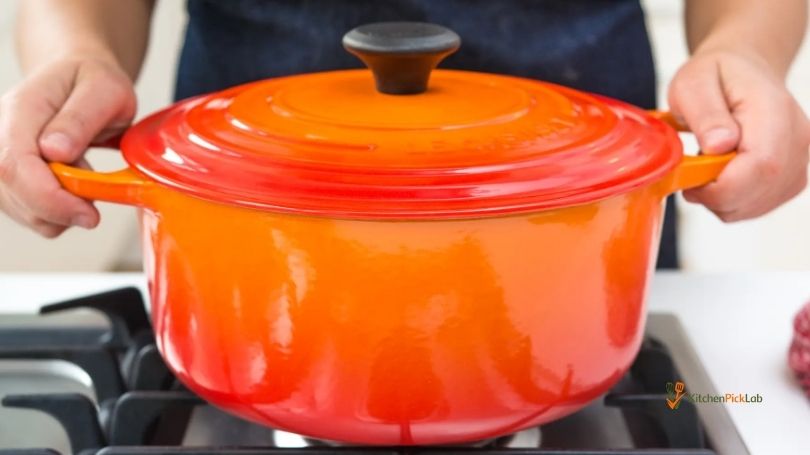
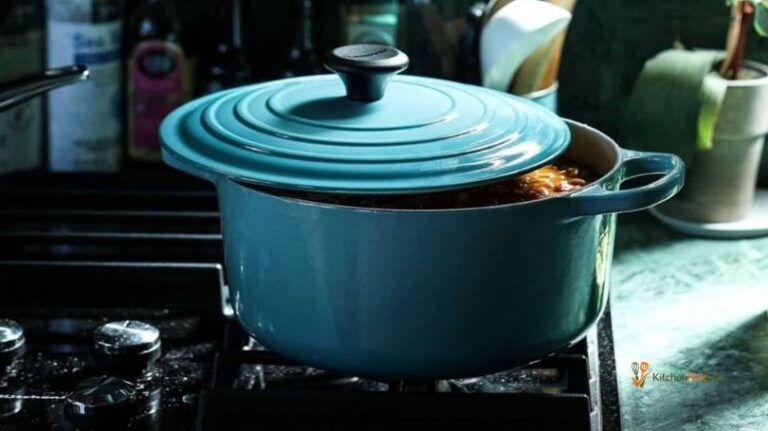
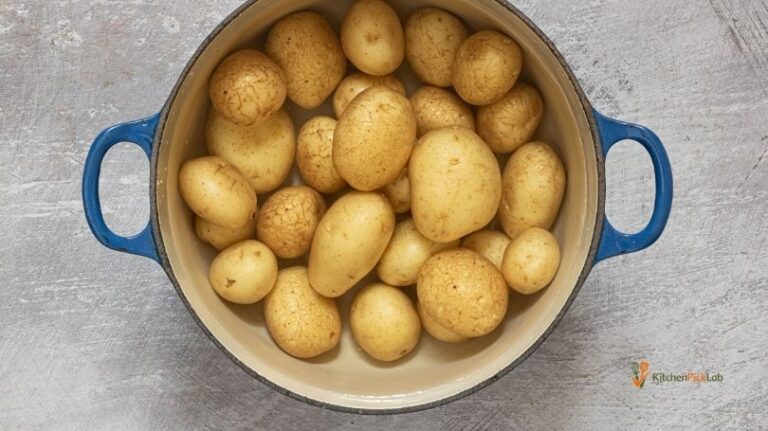
Yes, you can safely boil water in this cookware, and the question of whether you can boil water in Dutch oven pots comes down to surface type. Bare cast iron will lose its oily seasoning layer if water sits boiling inside it for too long. Place your pot on the burner right now, pour the water in before turning on the flame, and keep the heat at medium.
In this article
When it’s safe to boil water
Your cookware material sets the limit on what happens when liquid boils.
| Your situation | Answer | Why |
|---|---|---|
| Enamelled cast iron on stove | Yes | Glass coating protects metal from rust |
| Bare cast iron for pasta | Yes, but | Fast boil won’t strip tough seasoning |
| Bare cast iron long simmer | No | Standing boiling liquid dissolves oil layer |
| Empty pot preheating dry | No | Thermal shock cracks enamel coatings easily |
| Chipped interior enamel base | No | Glass flakes can enter your food |
| Stainless steel Dutch oven | Yes | Steel never rusts from plain boiling |
Enamel coating and seasoning limits
The surface lining decides if boiling liquid damages your pot. Enamelled cast iron features an interior layer of porcelain glass melted directly onto the heavy iron core. This barrier prevents bare metal from touching water, so rust never forms during a long simmer.
Bare cast iron relies entirely on polymerized oil for its protection. Extended boiling softens this oil film, pulling the dark seasoning away and exposing raw metal to moisture. According to cleaning guidelines from Lodge Cast Iron care instructions, boiling water for just a few minutes can loosen stubborn stuck food, but extended boiling breaks the finish down.
Using high heat also presents a trade-off: boiling water takes roughly 15 to 20 minutes for four quarts because the thick iron walls absorb immense energy before passing it to the liquid, though it holds that rolling boil longer once reached. If you have an enamelled pot, boil as long as your recipe requires; if you have bare black iron, keep your boiling under ten minutes to save the coating.
Steps for boiling without damage
- Fill the vessel first with room-temperature tap water before turning on the burner so you never heat dry enamel. You’ll see water covering the bottom completely.
- Set the burner to medium-high instead of maximum heat to let the thick iron base warm up evenly. The flame or element will match the base width without curling up the sides.
- Cover with the heavy lid to trap rising steam and cut your waiting time by several minutes. Steam will start puffing steadily around the rim.
- Drop in your ingredients using long tongs or a slotted spoon once large bubbles break across the surface. The liquid should return to a vigorous boil within two minutes.
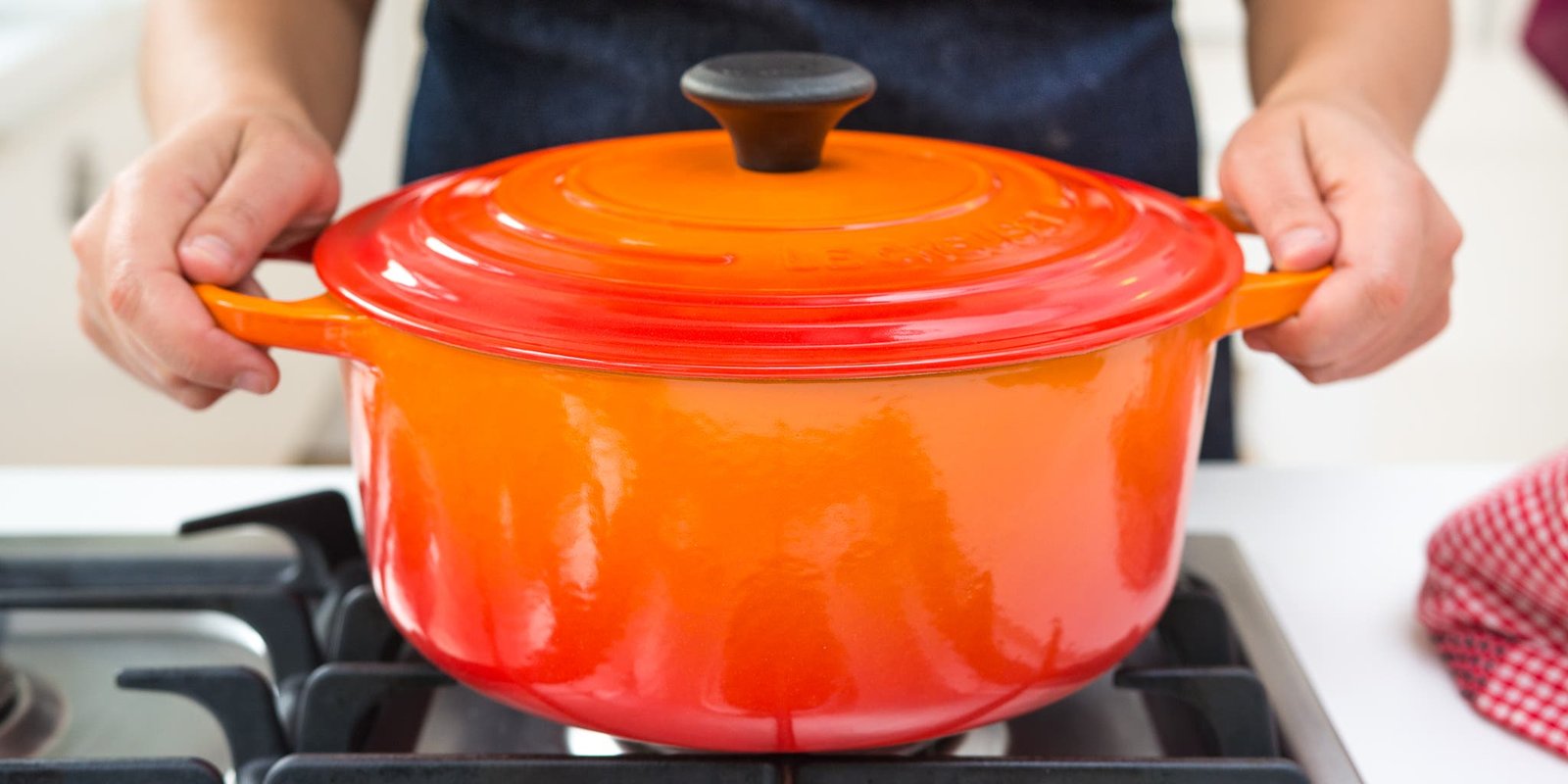
- Move the pot using dry oven mitts immediately after cooking finishes to stop residual heat from overcooking the food. The pot will sit securely on a heatproof trivet.

Boiling dry on high heat
People often crank the stove to maximum heat and walk away, letting the pot boil dry. This mistake causes rapid thermal shock that cracks porcelain enamel or warps the heavy base, ruining a costly kitchen tool instantly. Replacing a premium Dutch oven is a significant expense, yet the damage happens in seconds. Enamel expands at a different rate than the cast iron underneath it. When the water evaporates completely, the dry metal base spikes in temperature while the interior enamel shatters under tension.
When to stop and get help
- The interior enamel has chipped or cracked, because loose glass slivers can contaminate your boiling food.
- The cast iron base has cracked clean through the metal, which leaks scalding water onto live burners.
A damaged enamel lining can’t be repaired at home or recoated safely. Throw the damaged pot away or contact the pot manufacturer directly to check your lifetime replacement warranty.
Frequently asked questions
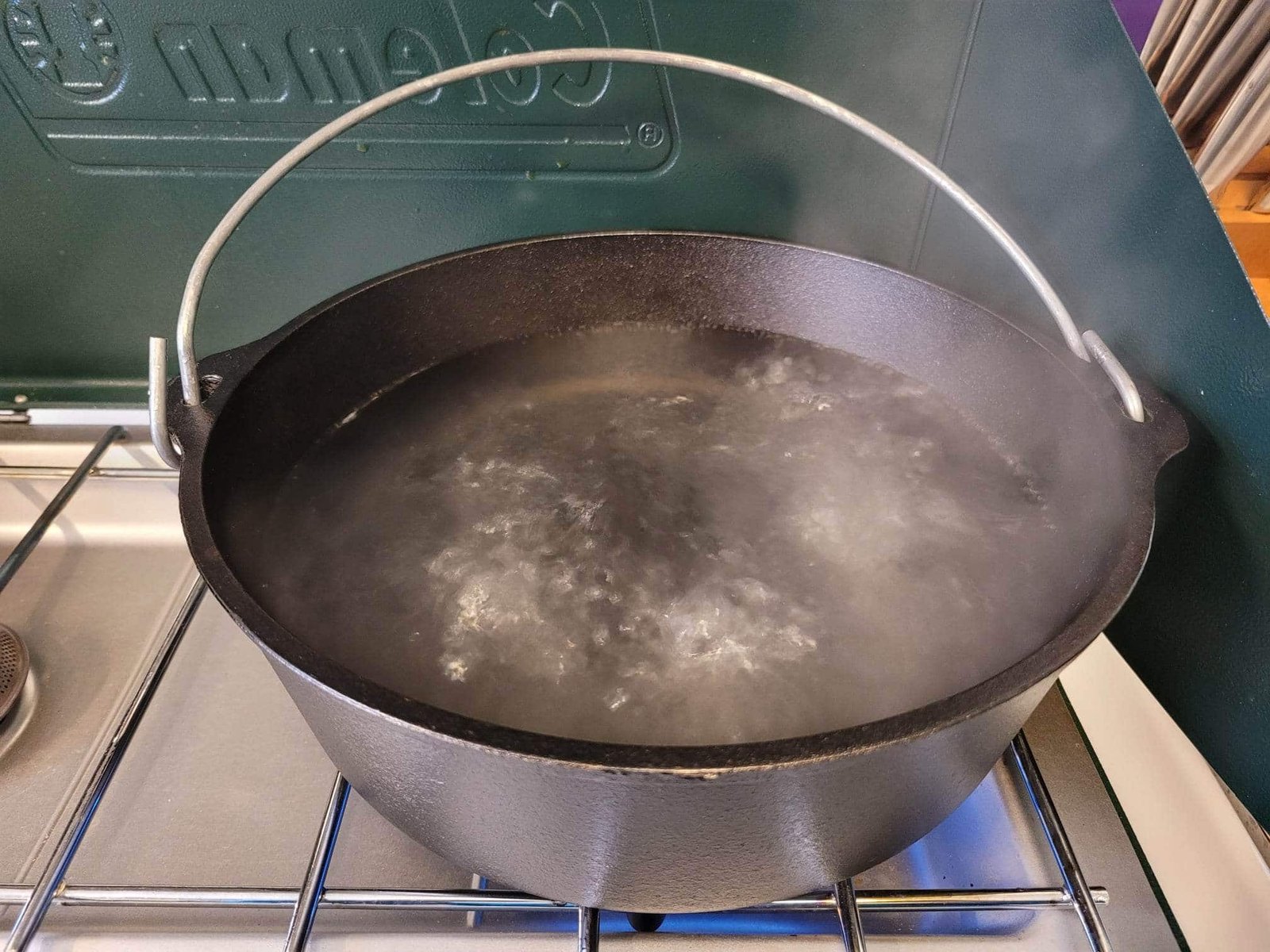
Can you boil water for pasta in a Dutch oven?
Yes, it works well because the heavy cast iron walls hold heat steady when you drop cold pasta into the water. Use four quarts of water for eight ounces of dry noodles, and keep an enamelled pot on medium-high heat until large bubbles break across the surface.
Why does boiling water take longer in cast iron?
Cast iron is dense and conducts heat slowly compared to thin aluminum or stainless steel. The burner must heat several pounds of heavy iron before that thermal energy reaches the water. Expect to wait roughly five extra minutes for a full boil compared to standard stockpots.
Does boiling water ruin cast iron seasoning?
Yes, boiling plain water in bare cast iron for more than ten minutes softens and dissolves the baked-on oil layer. If your pot turns gray or feels rough after boiling, dry it immediately on the stove and rub a drop of cooking oil into the warm iron.
Can you boil water in an enamelled Dutch oven?
Yes, porcelain enamel handles boiling water without any risk to the pot surface. The smooth glass layer stops water from touching raw iron, preventing rust. Avoid turning the heat to maximum on an empty pot, which can crack the enamel before the water warms up.
How long can you simmer soup in cast iron?
You can simmer all day in enamelled cast iron without causing any damage. Long cooking breaks down bare metal seasoning, leaving a metallic taste in light broth.
What happens if an enamelled pot boils completely dry?
The porcelain coating will crack, craze, or pop off the iron base due to sudden overheating. Cast iron expands under dry heat faster than fused glass can stretch. Once the enamel chips off the cooking floor, you can’t safely use the pot for cooking food again.
What to do next
Pour your water into the pot right now, set your burner to medium heat, and put the heavy lid on. Expect a full rolling boil within fifteen minutes, marked by steady steam venting out from underneath the lid rim. Turn the burner off immediately if you hear a sharp cracking sound from the enamel.