Can You Boil In A Dutch Oven? Safe Methods Explained
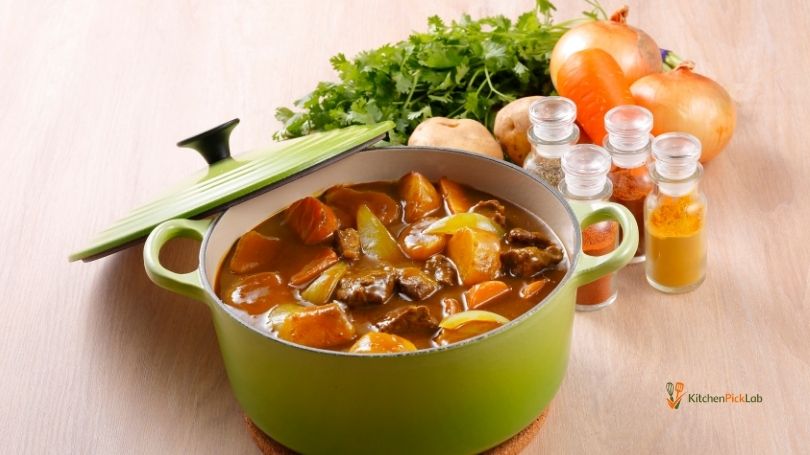
Yes, you can safely do it. A bare cast iron piece will lose its seasoning if you leave water inside it for too long, but enameled cookware has no such limit. Fill the pot with cool water first so you don’t shock the base, then turn on your burner. Boiling in a dutch oven is totally fine for daily water tasks because the glass coating on an enameled model protects the iron.
In this article
When you can boil in a dutch oven
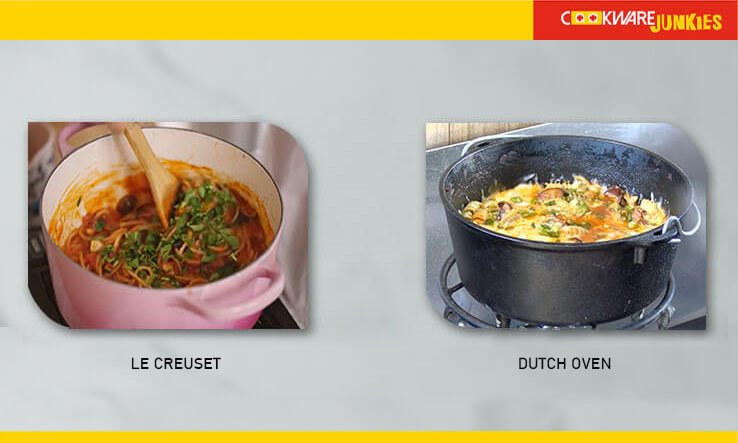
Your cookware type and your recipe determine how well this pot handles boiling liquids.
| Your situation | Answer | Why |
|---|---|---|
| Enameled pot for pasta | Yes | Smooth enamel coating blocks rust completely |
| Bare cast iron water | Yes, but | Water strips away baked oil seasoning |
| Rapidly boiling cold milk | Yes, but | Heavy base scorches sugars without stirring |
| Canning quart glass jars | No | Dutch ovens lack the depth and rack space required for safe water-bath canning |
| Blanching fresh green beans | Yes | Thick iron retains heat when food enters |
| Deep frying in oil | Yes | High walls prevent dangerous hot grease splashes |
Heat retention and enamel thermal shock
Cast iron holds heat longer than thin aluminum, but it conducts that heat slowly. When you place a heavy pot on a high burner, the base expands much faster than the sidewalls. On enameled pots, this sudden temperature jump causes thermal shock, which cracks or chips the glass layer right off the iron core. Bare iron won’t chip, but a rolling boil can soften and degrade the polymerized oil seasoning.
You also face a clear trade-off between heat stability and speed. A heavy dutch oven takes roughly twice as long to boil water as a thin stainless steel stockpot on the same burner. Once that liquid reaches 212°F, however, dropping cold pasta or vegetables into the water barely lowers the temperature. The water returns to a rolling boil far faster, preventing mushy food. This thermal balance also protects your food safety: according to FoodSafety.gov’s temperature rules, reheating any precooked soup, stew, or chili requires reaching a full 165°F throughout, which a heavy pot maintains steadily with zero cold spots.
Keep in mind that this varies by model — check the label on your lid knob, because plastic handles often fail above moderate heat. If you have enameled iron, boil any water-based food you like; if you have bare cast iron, stick to short boils and dry the metal immediately.
Boiling liquids step by step
- Add liquid first into the unheated vessel so the surface never warms up completely dry. A steady layer of water across the bottom shows the pot is ready for heat.
- Set the burner to medium heat instead of high to protect the inner coating from thermal stress. The liquid will begin releasing bubbles as the temperature rises.
- Cover the rim with the original heavy lid to trap escaping steam and cut boiling time in half. Steady steam escaping from beneath the lid edge confirms the interior has reached a rolling boil.
- Drop in ingredients in small batches to keep the liquid from splashing over the tall sides. The water should return to a vigorous boil shortly after adding ingredients.
- Move the vessel using thick dry potholders on both side handles once cooking ends. Placing the hot iron base on a dry wooden board or trivet ensures your countertop stays safe.

Blasting empty iron on high heat
Cranking an empty or dry burner to maximum heat ruins a dutch oven within minutes. Many cooks preheat their dry pot on high, hoping to speed up the process, before dumping in cold tap water. Doing this cracks the porcelain glaze, leaving loose glass shards in your food and permanently stripping the pot’s warranty protection. Replacing a damaged premium vessel can easily be a costly mistake. You can avoid this expensive failure with one quick habit: always pour your room-temperature liquid into the basin before you ever turn the burner knob.
When to stop and get help
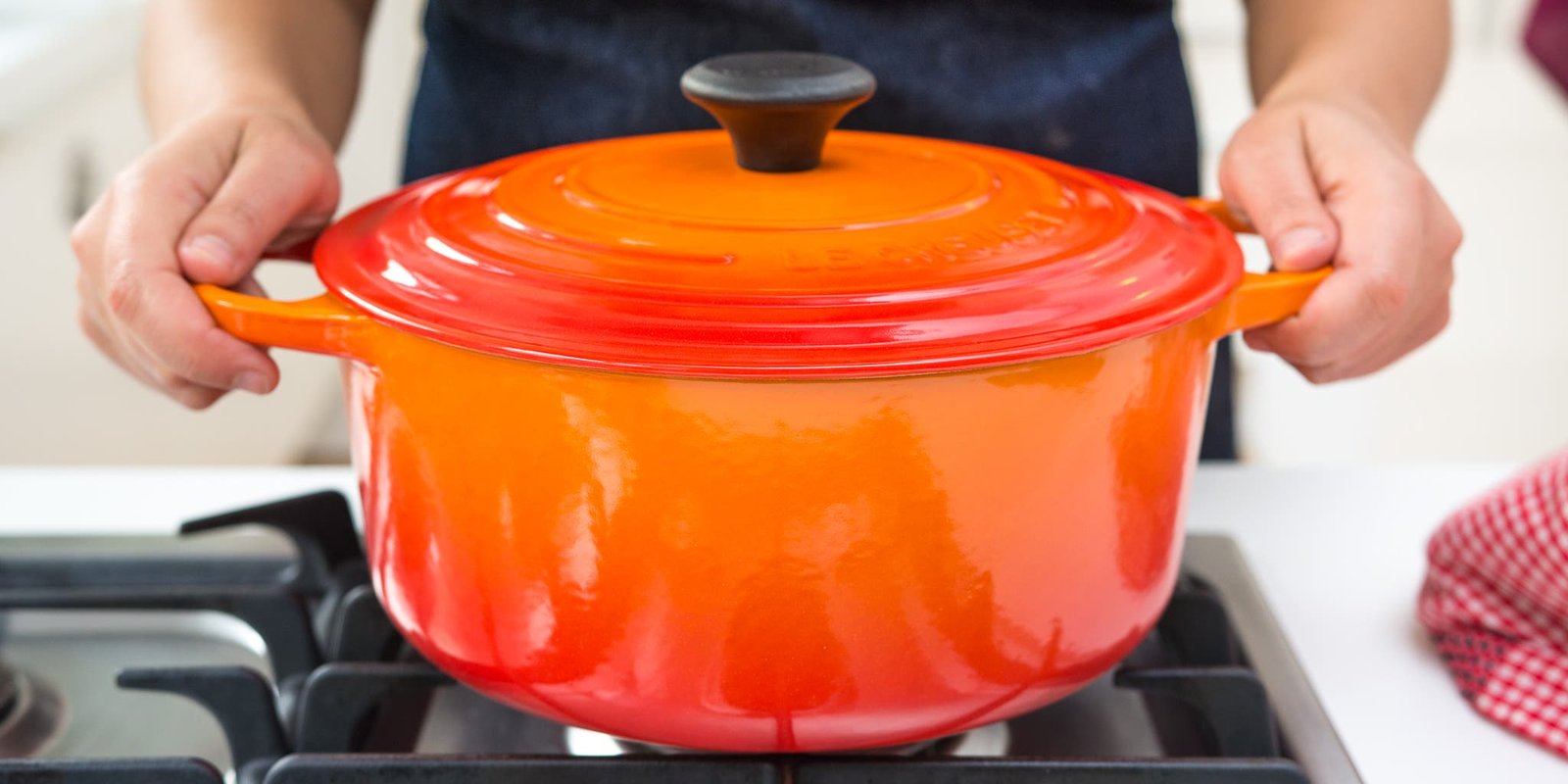
- Visible cracks or flake lines appear in the cooking surface, which sheds sharp glass chips into dinner.
- The factory knob melts, loosens, or splits, requiring an official replacement handle from the maker.
- The iron base warps and wobbles on a flat glass stove, meaning the metal underwent irreversible heat damage.
Repairs involving stripped porcelain, deep iron cracks, or structural flaws require industrial re-enameling equipment that home cooks don’t possess. Stop using damaged cookware immediately and reach out to the brand’s customer warranty team.
Can you boil pasta in a dutch oven?
Yes, it works well. The thick walls keep the water boiling hard after you add the cold noodles. You’ll simply need to budget extra minutes for the pot to reach a boil initially.
How long does water take to boil in a dutch oven?
About 15 to 20 minutes for four quarts of room-temperature tap water on a standard medium burner. A tight-fitting lid helps the water reach a boil faster.
Is it safe to boil water in bare cast iron?
Yes, but only for brief tasks like parboiling vegetables. Boiling water softens the polymerized oil seasoning on bare metal, leaving it open to surface rust if water sits too long inside.
Does boiling water ruin Le Creuset enamel?
No, boiling plain water won’t harm enameled surfaces. Just bring the water up to heat slowly on medium, rather than blasting an empty vessel on the highest stove setting.
What happens if you boil a dutch oven dry?
The intense dry heat cracks the interior enamel coating or scorches the seasoning down to raw iron. If this occurs, shut the stove off and let the metal cool naturally.
Why does my water boil slower in cast iron?
Because cast iron is thick and acts as a heat sink. It absorbs a huge volume of energy into its own walls before passing that heat into the liquid inside.
What to do next
Pour your cooking liquid into the pot while it rests cold on the stove. Turn your burner to medium heat and look for steady steam escaping from under the lid. If you notice chips of enamel loosening from the bottom, stop cooking immediately and replace the vessel.