Can You Scratch Stainless Steel Pans? How to Prevent Damage
Yes, you can scratch stainless steel pans quite easily with common kitchen tools. The pan’s durability protects it from cracking, but sharp metal utensils or coarse scouring pads readily abrade the surface finish. Check your cookware right now for grey marks or rough grooves to see if surface damage already exists.
In this article
When stainless steel pans scratch
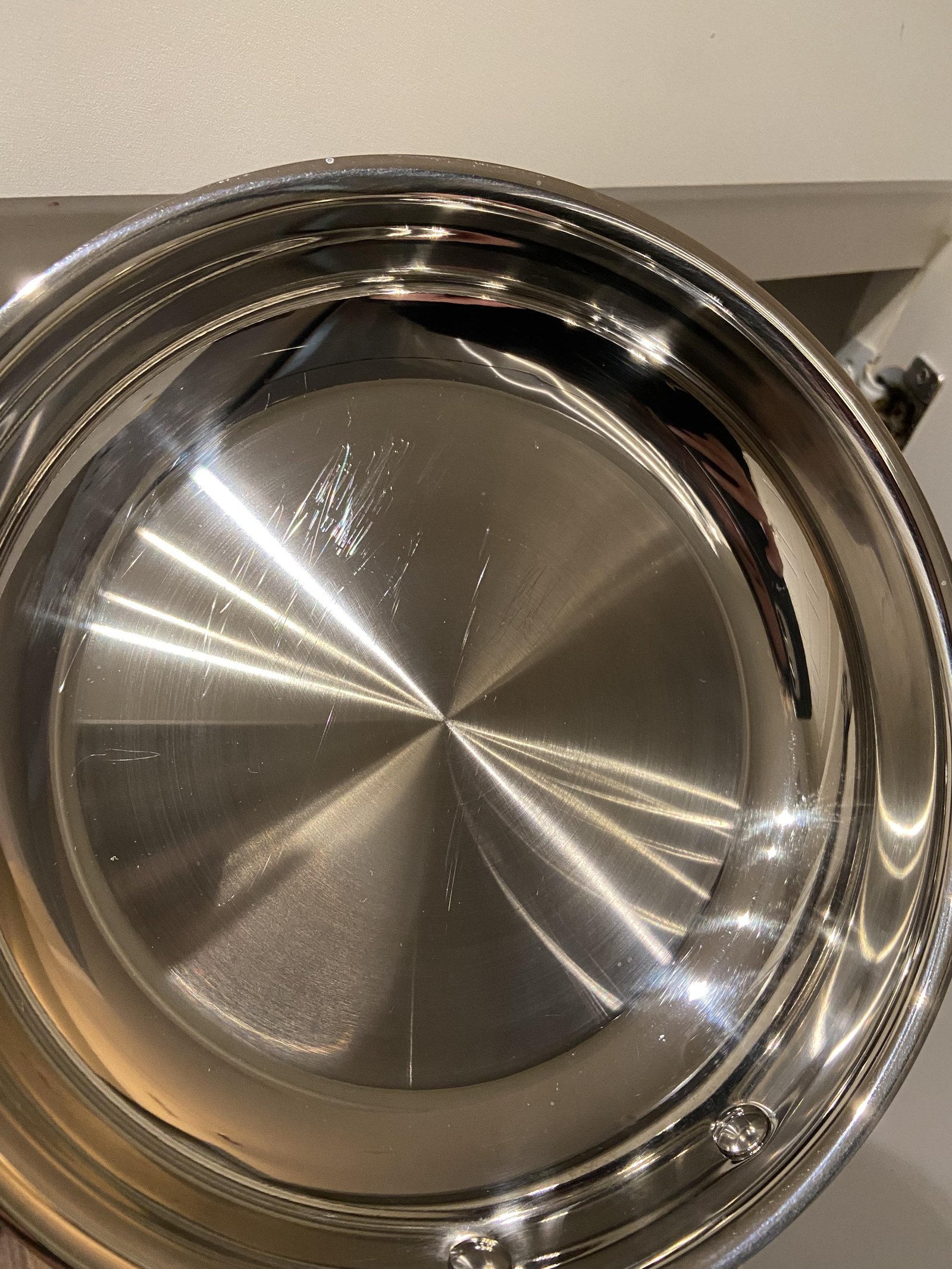
Your daily cooking habits determine whether your cookware stays smooth or develops visible marks.
| Your situation | Answer | Why |
|---|---|---|
| Using metal spatulas or forks | Yes | Hard steel points gouge the softer surface. |
| Cleaning with coarse steel wool pads | Yes | Coarse metal strands cut fine trenches across metal. |
| Stacking bare pans inside each other | Yes | Heavy bases rub grit against interior pan walls. |
| Using silicone, nylon, or wooden tools | No | Soft materials yield before scratching hard steel surfaces. |
| Scrubbing with non-scratch sponges | No | Soft polymer mesh can’t cut into bare steel. |
| Washing with mild soap and hot water | No | Liquid cleaners contain zero rough abrasives to scratch. |
Surface hardness and tool materials
The hardness difference between cookware and utensils determines if marks appear. Most quality cookware uses austenitic steel, such as 304 grade, which contains roughly 18% chromium and 8% nickel to stop rust. While this alloy resists oxidation, it remains relatively soft compared to hardened cutlery or rough abrasives. Cookware maker All-Clad’s care instructions warn that metal utensils can scratch the interior surface, recommending wood or heat-resistant plastic instead.
Scratching steel is a cosmetic issue, not a health hazard. A scuffed pan looks dull, but bare metal releases no toxins. Fine scratches create microscopic pockets where proteins grip, causing food to stick. Deep gouges expose more surface area, but the pan’s chromium forms a protective oxide layer.
Check your pan’s label to see if it uses brushed or mirror-polished steel. Mirror-polished surfaces show scuffs, while brushed finishes conceal them.
How to clean safely without scratching
Follow these steps to clean tough residues safely whenever food burns onto the surface:

- Simmer water and baking soda in the pan using 2 cups of water and 2 tablespoons of powder over medium heat for 10 minutes. The mixture lifts scorched grease, showing a loosened rim of food along the waterline.
- Pour out the hot liquid and let the steel pan cool down until you can safely touch the handle. The surface metal returns to room temperature so you avoid thermal shock damage.
- Apply non-abrasive powdered cleaner across the damp interior using 1 tablespoon of mineral-based powder like Bar Keepers Friend. The light paste sits evenly across the dull, scorched metal patches.
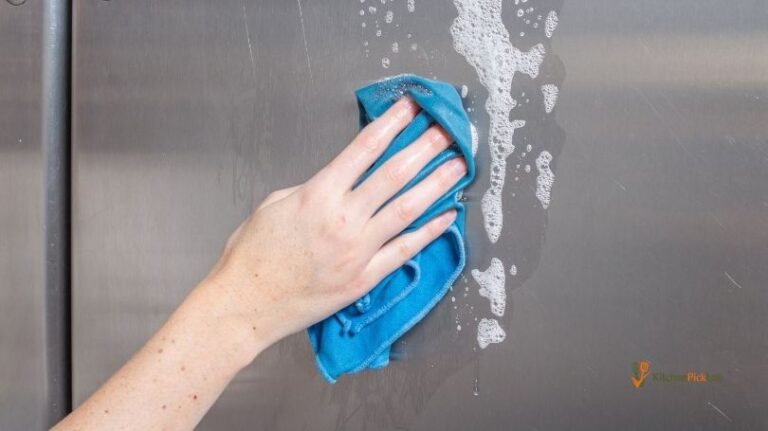
- Scrub with a damp non-scratch pad in gentle circular patterns for about 2 minutes. The burnt residue wipes away onto your sponge, leaving bare metal without any fresh scratch lines.
- Rinse with warm running water and dry immediately with a clean cotton towel. The metal shines smoothly with no cloudy chemical haze or trapped food left behind.
The cold water thermal shock mistake
Running cold water over a hot pan is a common mistake. This temperature swing causes thermal shock, which warps the base plate. A warped pan won’t sit flat on stoves, requiring a costly replacement. The metal structure can also pull apart at the seams. Check the heat before cleaning by waiting until the pan has cooled to a safe temperature.
When to stop and get help
- Deep gouges catch your fingernail firmly, showing mechanical wear that traps bacteria and food particles permanently.
- The layered base separates from the pan body, which creates uneven heating and hot spots.
- Pitting corrosion creates visible pinholes through the inner steel, usually caused by prolonged exposure to high concentrations of salt or acidic foods.
A pan with separated core layers or deep pinholes is unsafe to use, so contact the pan manufacturer to file a warranty claim or replace the item entirely.
Frequently asked questions
Can you use steel wool on stainless steel pans?
No, coarse steel wool will deeply score the smooth polished finish of your cookware. Fine grade 0000 wool causes fewer marks, but standard kitchen wire pads leave obvious cloudy swirls. Choose non-scratch synthetic sponges instead to remove stubborn burned food without gouging the metal.
Is it safe to cook on a scratched stainless steel pan?
Yes, cooking on scratched steel remains completely safe because pure cookware alloys contain no toxic chemical coatings. Scratches only affect how the pan looks and how easily food sticks to the surface. Clean the grooves thoroughly after use to prevent old grease from building up.
Why do spatulas leave grey marks on stainless steel?
Hard metal tools scrape off tiny metal particles when they rub hard against your pan. These surface friction lines look dark grey or silver against the bright cookware finish.
Does Bar Keepers Friend scratch stainless steel?
No, this cleaner uses mild feldspar abrasives and oxalic acid that dissolve grime without cutting steel. It removes mineral hazes and scorched oils while keeping the factory polish intact. Always use a wet sponge with it rather than applying the powder completely dry.
What happens if you scratch stainless steel deep?
Deep scratches won’t cause rust because the chromium inside the metal alloy quickly reacts with air to rebuild its protective surface layer. However, those deep channels grab food proteins aggressively, making regular eggs or fish stick hard every time you fry them.
Can you buff out scratches from a pan?
No, you can’t remove deep gouges at home without industrial polishing wheels and heavy abrasive compounds. Prevent the scratches initially by using soft wooden, nylon, or silicone spatulas.
What to do next
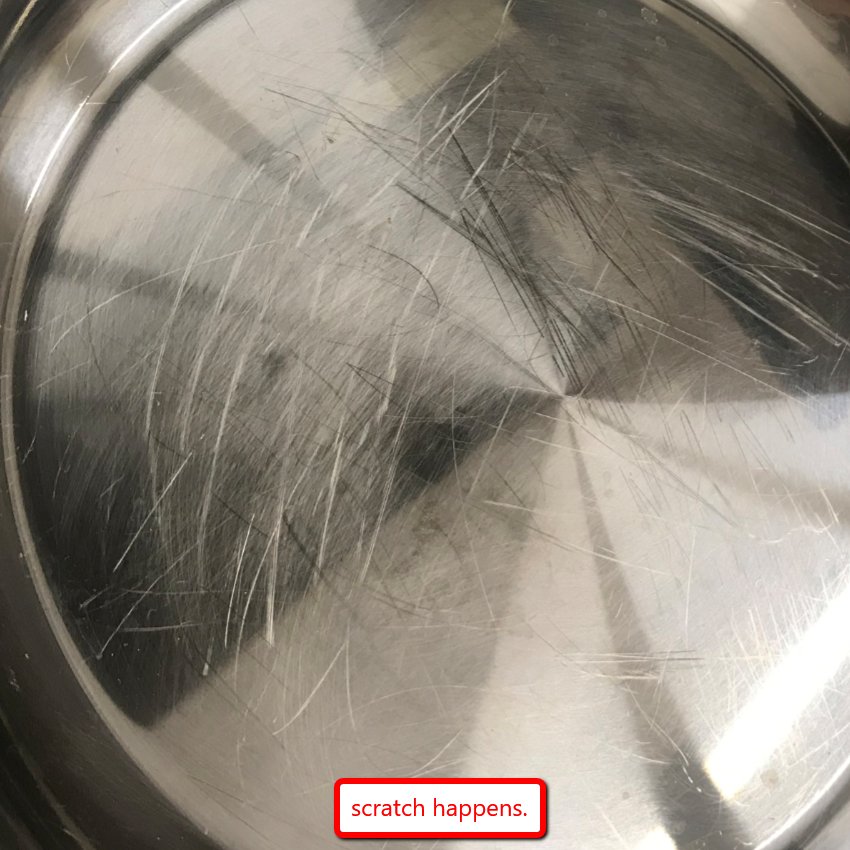
Put away your metal tongs and replace them with wooden or heat-resistant silicone spatulas before your next meal. You’ll notice fewer marks and your cookware will release meat or eggs far more smoothly over time. Stop using the pan immediately if you see the bottom plate separating from the cooking base.
Final Thoughts
Keep your cookware looking brand new by switching to silicone or wooden utensils today. These softer tools won’t leave behind unsightly marks, so your pans will stay smooth for years. It’s a simple change that’ll protect your investment and make every meal you cook feel a little more professional.