Can You Buff Out Scratches On Stainless Steel? The Expert Fix
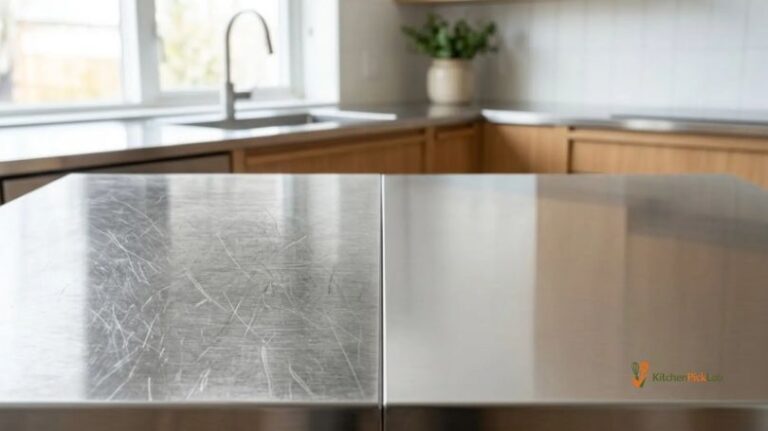
Yes, you can buff out scratches on stainless steel if they’re light surface marks on bare metal. The answer flips to no if your appliance has a clear protective coating or a fake printed finish, because rubbing will strip that layer off. Check your surface right now by running a fingernail across the mark to feel its depth.
In this article
- When you can buff out stainless steel scratches
- Scratch depth and metal finish
- Repair steps for bare brushed steel
- Rubbing against the grain direction
- When to stop and get help
- Frequently asked questions
- Can toothpaste remove scratches from stainless steel?
- Why did buffing leave a cloudy spot on my appliance?
- How long does it take to buff out a light mark?
- Is it safe to use steel wool on stainless steel appliances?
- What happens if you buff black stainless steel?
- Does olive oil remove scratches from stainless steel?
- What to do next
When you can buff out stainless steel scratches
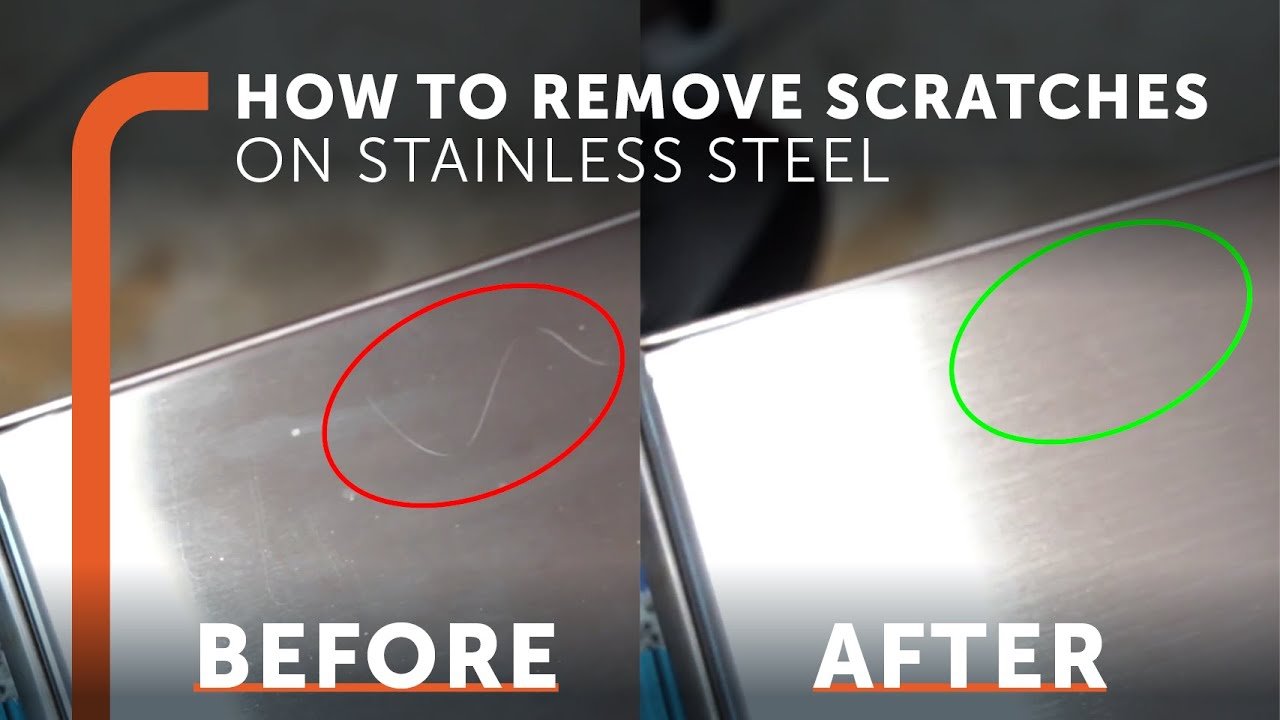
Your success depends on the metal finish and mark depth.
| Your situation | Answer | Why |
|---|---|---|
| Fine hairline marks on bare brushed steel | Yes | Light rubbing blends the surface line easily. |
| Deep gouge catching a fingernail firmly | No | Removing it requires grinding away too much metal. |
| Coated, fingerprint-resistant appliance surface | No | Abrasives peel off the protective clear film. |
| Mirror-polished shiny stainless steel | No | Home pads leave dull cloudy patches on mirrors. |
| Black stainless or tinted dark steel | No | Buffing scratches away the dark outer color layer. |
| Bare stainless steel kitchen sink basin | Yes | Uncoated sink steel tolerates gentle grain-direction blending. |
Scratch depth and metal finish
The depth of the cut and the outer finish of your steel decide if buffing works. Bare stainless steel has tiny directional lines running across it, known as the brushed grain. When a mark is shallow, rubbing a mild abrasive pad in the exact path of those lines shaves the surrounding high edges down until the scratch disappears.
This repair carries a real trade-off: you’re permanently removing a microscopic layer of metal, which changes the factory sheen. If the metal has a fingerprint-resistant layer, friction ruins it. The appliance maker explains these finish limits directly in the Whirlpool stainless steel care guide, warning owners that abrasive pads destroy protective barriers.
This process isn’t for owners of black stainless steel, because that dark look comes from an applied topcoat rather than solid dark metal underneath. Honest limits exist for standard models too; this varies by model — check the label or user manual before touching the metal with any abrasive tool. If the metal is bare and the mark is shallow, buff it out; if the surface feels like plastic film or catches your nail, stop immediately.
Repair steps for bare brushed steel
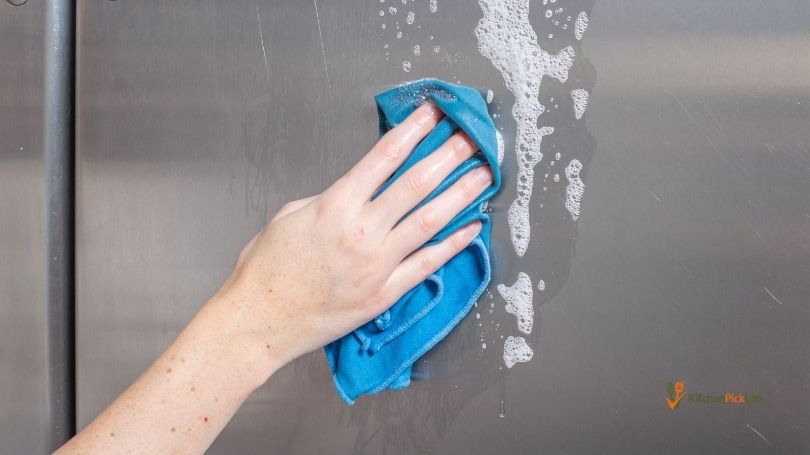
- Clean the entire panel with warm water and two drops of mild dish soap to wipe away grit that could gouge the surface further, leaving the steel bare and dry.
- Find the grain direction by looking closely at the metal under good light, making sure you see whether the faint factory lines run horizontally or vertically.
- Apply a non-abrasive compound such as baking soda mixed with water into a thick paste directly onto the scratch line.
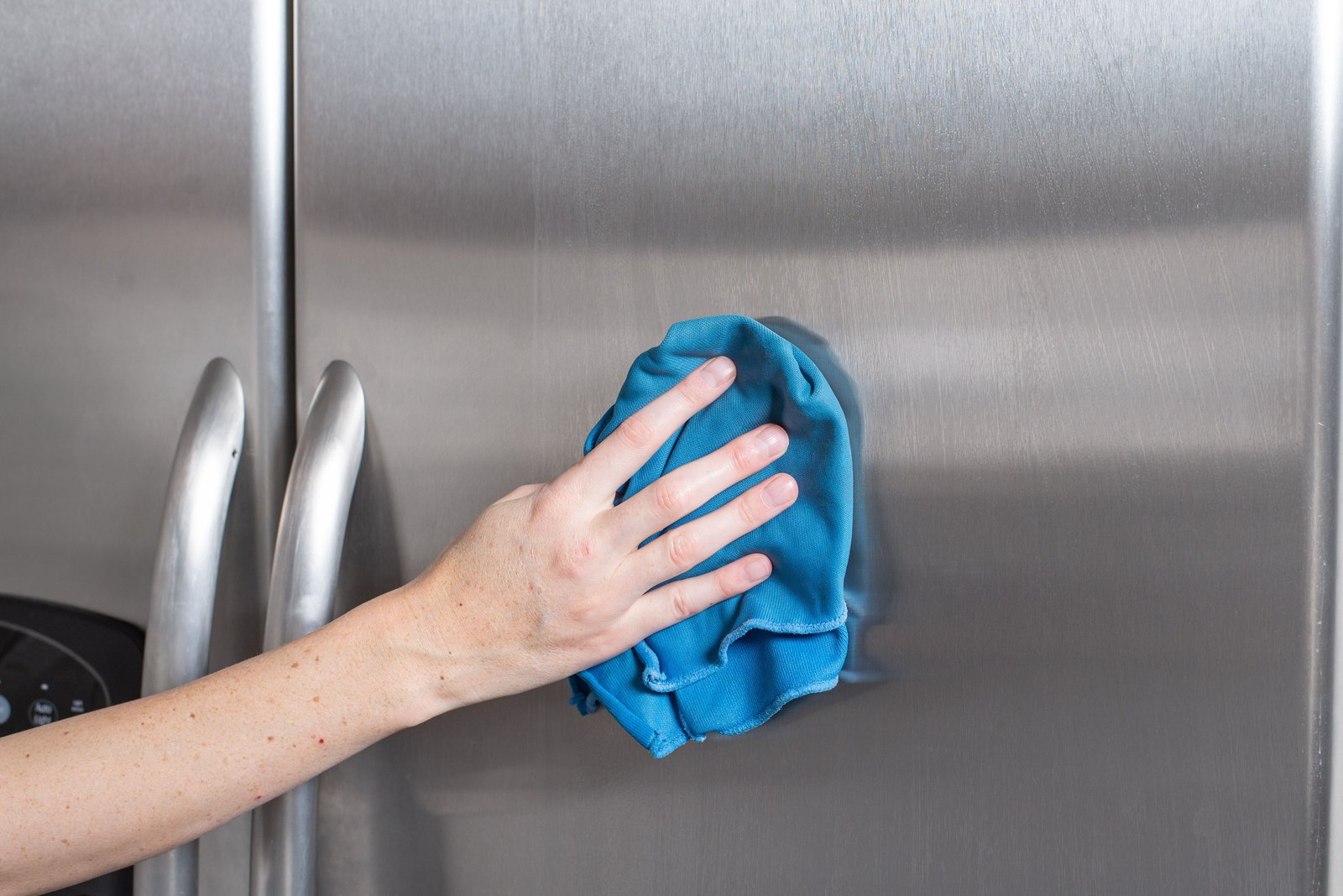
- Rub along the grain using a dry microfiber cloth with firm pressure for about 60 seconds, which shows success when the fine mark fades into the background metal.
- Wipe clean and inspect the area using a damp towel followed by a dry cloth, confirming the mark is gone and the sheen matches the rest of the appliance.

Rubbing against the grain direction
Scrubbing across the grain or in circular motions is the most common mistake. This ruins the panel by creating visible, cloudy swirl marks that permanently clash with the straight factory lines. Fixing this mistake costs homeowners hundreds of dollars because the entire door panel often requires professional mechanical resurfacing or full replacement. Check the factory lines first by shining a flashlight closely at the steel; rub exclusively in the exact direction those lines point.
When to stop and get help
- Your fingernail drops deeply into the scratch, which means the cut sits too deep for home blending pads.
- The steel shows peeling clear film, because torn protective coatings need professional panel recoating.
- The appliance features a high-gloss mirror finish, as non-factory tools destroy the reflective polish instantly.
Contact the appliance manufacturer or a licensed metal restoration specialist when these problems appear.
Frequently asked questions
Can toothpaste remove scratches from stainless steel?
Yes, non-gel whitening toothpaste can work on very faint surface lines. It contains mild polishing agents that gently smooth the steel. Rub it strictly along the grain with a soft cloth for about one minute, then wash it off with warm water.
Why did buffing leave a cloudy spot on my appliance?
A cloudy spot appears because the abrasive pad scratched across the grain or stripped a factory coating. Standard home abrasives can’t match fine machine finishes. A damaged protective layer can’t be rubbed clear again once broken.
How long does it take to buff out a light mark?
About five minutes is typical for a shallow hairline mark on bare steel. This covers two minutes of cleaning the panel, one minute of rubbing with the grain, and two minutes to wash and dry the metal completely.
Is it safe to use steel wool on stainless steel appliances?
No, standard steel wool is never safe on stainless appliances. It leaves carbon steel particles behind that embed in the surface and cause orange rust spots. Only use synthetic nylon blending pads designed specifically for stainless steel.
What happens if you buff black stainless steel?
Buffing cuts through the thin outer color film and reveals raw silver steel underneath. The dark color doesn’t run through the metal. Once that dark coating is scratched away, buffing turns a small scratch into a wide silver patch.
Does olive oil remove scratches from stainless steel?
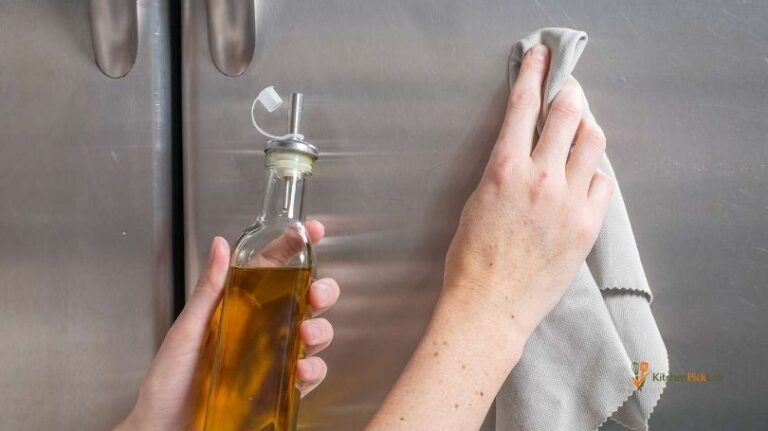
No, olive oil can’t remove metal scratches. Oil only hides the scratch by filling the shallow groove with liquid and making light reflect differently for a few days. The scratch returns as soon as the oil dries or washes away.
What to do next
Start by checking your appliance manual to confirm the metal has no clear synthetic topcoat. You should expect light surface marks to blend smoothly into the surrounding grain after gentle rubbing with a paste. Stop working and call a technician if the metal turns dull, changes color, or begins peeling away.