Can Porcelain Go In The Microwave? Safety Rules Explained
Last Updated on September 21, 2026
Yes, plain porcelain can go in the microwave without burning or melting. The main condition that flips this answer is metallic trim or paint on the rim, which causes immediate arcing and fire. Check the bottom of your dish right now for a “microwave-safe” stamp or shiny lines before heating your food.
When porcelain is safe for the microwave
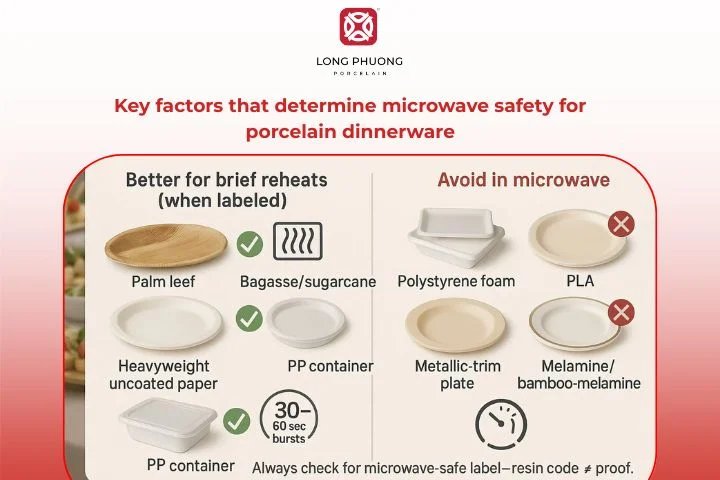
Your dish’s glaze and decoration decide whether it can safely handle heat.
| Your situation | Answer | Why |
|---|---|---|
| Plain white porcelain | Yes | Clay and clear glaze don’t absorb microwaves |
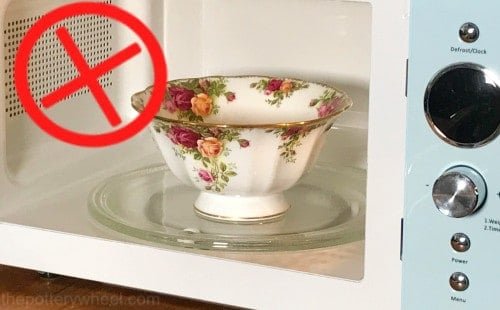
| Gold or silver rim | No | Metal causes sparks and cracks the glaze |
| Dish stamped microwave-safe | Yes | Tested by maker for high heat tolerance |
| Antique or vintage plate | No | Glaze might contain lead or hidden crazing |
| Chipped or hairline-cracked rim | No | Trapped moisture expands and shatters the piece |
| Cold dish straight from fridge | Yes | High-quality porcelain is generally resistant to thermal shock |
How density and metal trim decide safety
Porcelain is fired at very high temperatures, usually between 2,200°F and 2,600°F. This intense heat turns the refined kaolin clay into a glass-like, non-porous material. Because it’s vitreous, plain porcelain doesn’t absorb water into its inner body. Microwaves work by vibrating water molecules inside your food to produce friction. Since dense, vitrified porcelain holds no moisture of its own, the microwave energy passes right through it. The dish only gets warm because the hot food transfers heat onto its surface.
The problem begins with metallic decor and glaze flaws. Metallic paints, gold leaf, and silver trims contain conductive metals. When hit by microwave radiation, electric currents build up rapidly along the metal edges, producing visible sparks and arcing. Furthermore, low-grade glazes or tiny hairline fractures let washing water soak deep into the clay. When heated, this trapped moisture turns to steam, expands instantly, and splits the dish in half. Heavy porcelain absorbs contact heat from your meal, making it hard to handle without oven mitts.
Safe heating steps
- Inspect the entire surface. Check both sides under bright light for metallic paint, chips, or tiny spiderweb cracks, which confirms the dish is structurally sound.
- Read the factory bottom mark. Look for wavy lines or explicit safety text; this confirms the manufacturer verified heat tolerance, though this varies by model — check the label.
- Run a one-minute water test. Place the empty dish beside a microwave-safe glass filled with one cup of cold tap water, then run the unit on high for 60 seconds (based on a standard 1,000-watt microwave). The dish worked if the water in the cup is hot while the empty porcelain remains completely cool to the touch.
- Bring cold dishes to room temperature. Let refrigerated plates sit on the counter for about 15 minutes before heating; a condensation-free dish shows it has adjusted safely.
- Use a silicone trivet or mitts. Pull the heated plate out using thick cloth mitts, because contact with steaming food makes the porcelain body very hot.
Heating cold plates straight from the fridge
This sudden shift triggers thermal shock, causing the dish to crack. This mistake costs you the entire piece when the bowl cracks cleanly into pieces, spilling scalding food and ruining your meal. Touch the base of the container with your palm.
When to stop and get help
- The plate shows black burn marks, arcing spots, or pitted glaze along the edges.
- The microwave sparks, smells like burning wire, or shuts down mid-cycle.
- Liquid leaks through the bottom of the dish even without visible surface cracks.
Stop using the dish immediately if you notice these signs. The Food and Drug Administration explains safe home kitchen practices on its FDA food safety guidelines page. This guide covers how to handle broken dishes and prevent chemical contamination from damaged glazes.
Frequently asked questions
Can fine china go in the microwave?
Only if it has no metallic trim and carries an official microwave-safe label. Fine china is thin and often features real gold or platinum detailing. These decorative borders spark within seconds inside a running appliance, scorching the rim and permanently ruining delicate family heirlooms.
Why did my porcelain plate crack in the microwave?
Because trapped moisture expanded or the plate suffered severe thermal shock. If a small hairline crack exists beneath the glaze, water from dishwashing seeps inside. When heated, this water turns to steam, expands rapidly, and forces the dish apart along weak stress points.
Is it safe to microwave chipped porcelain bowls?
No. Chipped rims expose the raw, porous clay core beneath the smooth waterproof glaze. Dish water collects in these exposed spots each time you wash the bowl. Heating that trapped water causes the exposed edge to fracture, shedding sharp ceramic shards directly into your food.
Does porcelain get hot in the microwave?
Yes, but only from conduction transferred by hot food. Plain porcelain doesn’t absorb microwave radiation on its own. However, food sitting directly on the surface heats up and passes its thermal energy into the ceramic body, requiring you to handle it with dry oven mitts.
How long can porcelain stay in the microwave?
As long as normal food heating takes, usually two to three minutes. There’s no set time limit for plain, solid porcelain since the ceramic doesn’t absorb the waves.
What happens if you microwave porcelain with gold trim?
The metallic paint arcs, sparks, and creates miniature fire hazards. Gold accents are made from actual conductive metal. Microwaves bounce off this thin paint, building concentrated electrical charges that burn the ceramic, leave permanent black marks, and crack the outer protective glaze.
What to do next
Look at the bottom of your dish to find a microwave-safe stamp or confirm the absence of shiny metallic rims. If you see clean, plain porcelain with no chips, you can proceed with heating your food safely. Stop immediately and move your meal into a plain glass bowl if you notice any sparks, burning smells, or tiny glaze cracks.