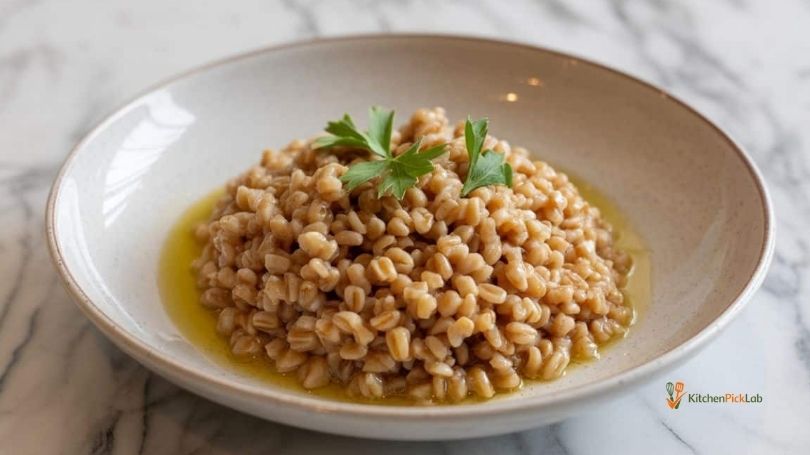
Can You Cook Farro In A Rice Cooker? The Simple Method
Yes, you can cook farro in a rice cooker without any special tools. The single condition that flips this result is using whole farro without soaking it first, which leaves the grain hard. Check your grain package right now to see if the label says pearled, semi-pearled, or whole.
When to cook farro in your rice cooker
Your farro type and cooker settings decide whether the grains turn out tender or hard.
| Your situation | Answer | Why |
|---|---|---|
| Pearled farro on white rice setting | Yes | The bran is gone, so it cooks fast. |
| Semi-pearled farro on brown rice setting | Yes | Partial bran layer needs more heat and time. |
| Whole farro soaked for 8 hours | Yes | Soaking softens the hard outer bran shell. |
| Whole farro with no prior soaking | No | Standard cycle ends while grains stay tough. |
| Basic cooker with only one switch | Yes | It turns off when water fully absorbs. |
| Quick cook setting on pearled farro | No | Cooking ends before water reaches grain core. |
The husk level on your grain
The amount of bran on the kernel determines the water and heat needed to soften it. Farro is an ancient wheat grain sold in three styles: pearled, semi-pearled, and whole. Pearled farro has the outer bran completely scratched off, so water reaches the starch quickly. Whole farro keeps the complete seed coat intact, which creates a tough water barrier that standard cook cycles can’t break down alone.
Rice cookers operate by sensing the temperature of the inner pot. They switch off or drop to a warming setting once the temperature of the pot rises above the boiling point of water, which occurs after the liquid has been absorbed or evaporated. If your grain can’t absorb its cooking liquid before the pot boils dry, you end up with hard, undercooked food. Pearled grains absorb liquid at roughly the same rate as standard white rice, while whole grains need extended cooking times to soften properly. According to whole grain guidance from the USDA, whole grains retain the bran and germ, which naturally increases cooking time compared to refined grains. Whole farro provides more fiber but requires longer prep time.
How to run the cook cycle

- Rinse the dry grains under cold running water in a fine-mesh strainer for 30 seconds to wash away loose dust. The water running through the bottom of the strainer will become significantly clearer.
- Add liquid using the correct ratio by pouring two cups of water for every one cup of pearled farro into the inner pot. The water level will sit evenly across the level grain bed.
- Add one-quarter teaspoon of salt per cup of dry grain directly into the liquid and stir once. The salt crystals will dissolve completely into the water.
- Select the standard cycle on your machine, using the white rice setting for pearled farro or the brown rice setting for semi-pearled farro. The display timer or cooking light will turn on to show the cycle has started.
- Let the cooker rest on the keep-warm setting for 10 minutes after the cycle ends before opening the lid. Opening the cooker releases a burst of steam and reveals plump, tender grains with no pooling water.
Using the wrong water ratio
Too much water turns farro into soggy mush. Unlike white rice, excess moisture stays at the bottom of the cooker. Use a measuring cup rather than the lines inside the pot. Internal lines are calibrated for rice, not wheat berries.
When to stop and get help
Photo: www.theincrediblebulks.com on Google
- Liquid bubbles violently out of the steam vent during cooking, which means the inner steam valve is blocked and needs clearing.
- The machine shuts off within five minutes of starting, showing an internal sensor fault that requires manufacturer support.
- The inner nonstick bowl shows deep peeling or flaking coating, which contaminates food and requires a factory replacement part.
- The power cord feels hot to the touch during the cycle, signaling an electrical hazard that an appliance technician must inspect.
Stop using the appliance immediately if you notice electrical smells or melting plastic; replace the unit or take it to a certified repair shop.
Can you cook farro on the quick rice setting?
No. The quick cook setting cuts the cycle short by skipping the gentle heating phase. Farro needs steady heat to let moisture reach the center of the grain, so quick cycles leave the core chalky and hard.
Why did my farro turn out crunchy?
Your farro stayed crunchy because there wasn’t enough water, or the grains were whole rather than pearled. Whole farro needs either an overnight soak or a longer brown rice cycle to soften its thick outer bran.
How long does farro take in a rice cooker?
About 35 to 45 minutes for pearled farro on a standard white rice setting. Whole farro on a brown rice setting takes about 60 to 75 minutes because the machine heats more slowly to break down tough fibers.
Is it safe to leave cooked farro on keep warm?
Yes, for up to two hours. After two hours on warm, the grain dries out and hardens at the bottom.
What happens if you don’t rinse farro before cooking?
Unrinsed farro leaves excess starch powder in the pot. This starch causes cooking water to foam up toward the steam vent, and the finished grains can turn out sticky instead of separate and pleasantly chewy.
Does chicken broth work instead of water?
Yes. You can swap water for vegetable or chicken broth using the exact same two-to-one ratio. Broth adds savory flavor to the grains, but check the salt content so the final dish doesn’t become overly salty.
Can you cook farro in a basic single-switch cooker?
Yes. Just use two cups of water per cup of grain and let it rest ten minutes after clicking off.
What to do next
Check your grain bag right now to confirm whether your farro is pearled or whole. Expect a pot of plump, chewy grains with no pooled water once the 10-minute resting period finishes. If your rice cooker smells like burning plastic or clicks off within five minutes, stop cooking and unplug the machine immediately.